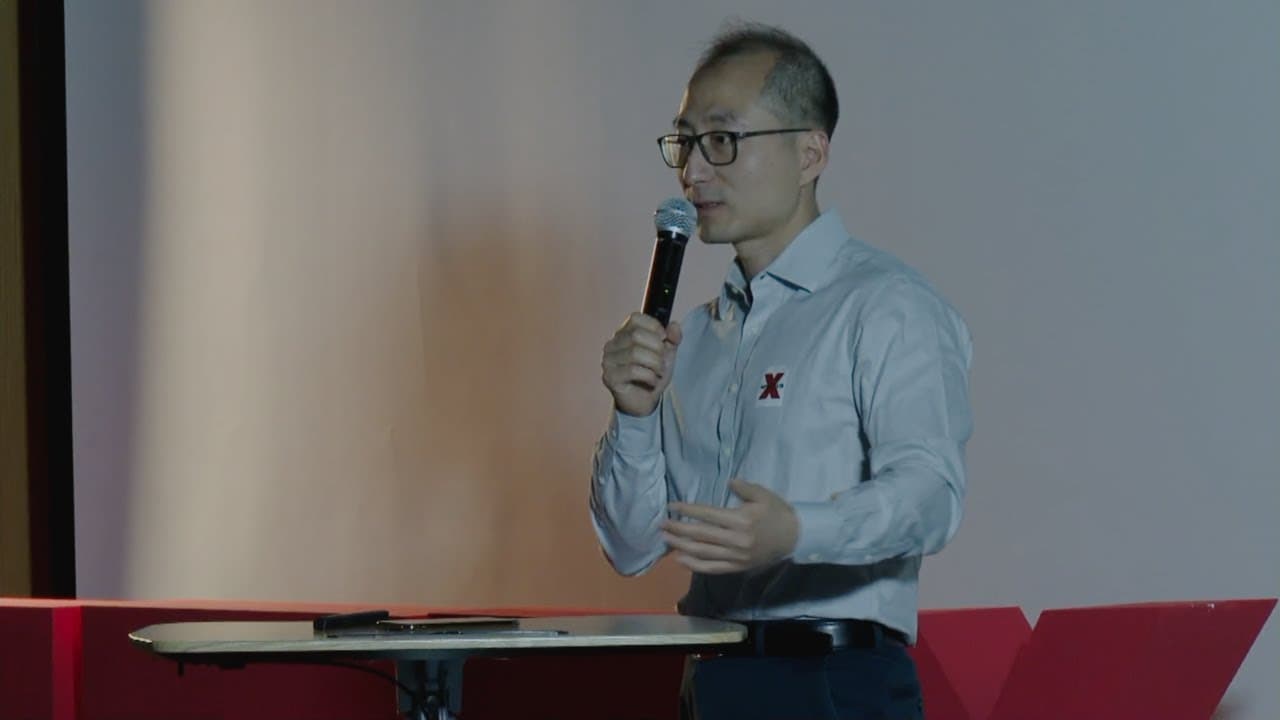
The Art of Nietzsche | Zhongyao Sun | TEDxKeystoneAcademyBJ
TL;DR
Meaning, free will, and consciousness are presented as three illusions, yet the absence of universal meaning leaves people free to create meaning in their own lives. Zhongyao Sun connects Nietzsche’s thought with religion, modern science, brain chemistry, Descartes’ “I think, therefore I am,” and electronic sensory signals. Read on to see why this unsettling argument ultimately becomes a call to live richly and reach for the stars.
Transcript
uh first I need to apologize that uh I have to start with philosophy I hope I won't send everybody to to sleep because this is usually when I take my nap so uh yes this is the art of Nietzsche and so if you know Lisa is a philosopher right and I'm sure nowadays philosophy has become a very popular topic you might have a right over here or seen on y... Read More
Key Insights
- 🧠 Meaning is a human construct shaped by religious beliefs and neural connections in the brain.
- 🧠 Free will is debunked as an illusion, with decisions influenced by brain chemistry.
- 🧠 Consciousness is challenged as a subjective interpretation of electronic signals processed by the brain.
- ⁉️ Nietzsche's nihilistic perspective questions traditional beliefs and values.
- 🤨 The exploration of consciousness raises ethical and existential questions about self-awareness.
- 🛰️ AI development highlights the complexity of replicating human consciousness in artificial intelligence.
- ❓ Motivational quotes from Nietzsche and Marcus Aurelius reflect on the endurance of human spirit amidst existential uncertainties.
Install to Summarize YouTube Videos and Get Transcripts
Explore YouTube Video Summarizer or Get YouTube Transcript Extractor
Questions & Answers
Q: What are the three illusions discussed in The Art of Nietzsche by Zhongyao Sun?
Zhongyao Sun identifies meaning, free will, and consciousness as three illusions. The talk examines each through philosophy, modern science, and the workings of the human brain.
Q: Why does Zhongyao Sun argue that meaning does not objectively exist?
Meaning is described as a word and concept encoded through neural connections in human brains. Because it did not exist before humans, the speaker argues that it is not an independent feature of the universe.
Q: How did religion provide meaning to human life?
Religions such as Christianity and Buddhism gave people guidance about how to behave and offered an end goal. The talk says these religious frameworks supported human existence with meaning for thousands of years.
Q: How does modern science affect Nietzsche’s view of meaning?
The speaker says Nietzsche lived near the end of the 19th century, when science increasingly answered questions that had previously supported religion. As science weakened those religious foundations, Nietzsche confronted the idea expressed as “God is dead.”
Q: Can life still be meaningful if the universe has no permanent meaning?
Yes, the speaker argues that people can write their own meaning precisely because no permanent cosmic meaning is guaranteed. He encourages living to one’s full potential, exploring widely, and making life as rich and fulfilling as possible.
Q: Why is free will described as an illusion?
The talk argues that choices arise from how the brain is formed and from fluctuations of chemicals within it. People may experience a conscious decision, but the speaker suggests that the choice has effectively already been made by those processes.
Q: Does the speaker believe everything is determined by fate?
The speaker says he likes to think events are destined rather than accidental. That belief gives him courage and helps him savor what life offers, including the fact that everyone at the talk has met at that particular moment.
Q: How does the talk question consciousness?
The discussion begins with Descartes’ statement “I think, therefore I am” and asks what it establishes about awareness. It then notes that everything people see, hear, and receive through their sensory organs reaches the brain as electronic signals, challenging simple assumptions about conscious experience.
Summary
In this video, the speaker explores three illusions: meaning, free will, and consciousness. They argue that meaning is non-existent, as it is a concept created by human brains and did not exist before human existence. Despite the eventual demise of the universe, the speaker believes that we can still find meaning by creating our own purpose and fulfilling our lives. They also argue that free will is an illusion, as our decisions are influenced by the fluctuations of chemicals in our brains. However, they find solace in the idea that everything happens for a reason and that life itself is a miracle. Finally, the speaker touches upon the concept of consciousness, questioning what it means to truly be conscious. They suggest that if we are not truly conscious, but rather just programmed beings, then it may be possible to create artificial intelligence that is self-conscious. The video concludes with the speaker sharing two favorite sayings, emphasizing the importance of finding personal meaning and resilience in the face of challenges.
Questions & Answers
Q: Is meaning non-existent?
Yes, the speaker argues that meaning is non-existent because it is a concept created by human brains. It did not exist before human existence and is not inherent in the universe. However, the speaker suggests that we can still find meaning by creating our own purpose and making our lives as fulfilling as possible.
Q: Why is free will considered an illusion?
Free will is considered an illusion because our decisions are influenced by the fluctuations of chemicals in our brains. Even though we may believe that we are making conscious choices, these choices are determined by our brain chemistry. However, the speaker finds comfort in the idea that everything happens for a reason and believes that life itself is a miracle.
Q: What is the speaker's perspective on consciousness?
The speaker suggests that consciousness is a complex topic explored by both philosophers and computer scientists, especially as AI becomes more advanced. They propose that if humans are not truly conscious and are merely programmed beings, then it may be possible to create AI that is self-conscious. This presents a fascinating question about the nature of consciousness and its potential in future technologies.
Q: What is the significance of finding personal meaning and resilience?
Finding personal meaning and resilience is emphasized as a way to endure the challenges and uncertainties of life. The speaker shares two favorite sayings—one by Nietzsche about having a strong why to live, and the other by Marcus Aurelius about how nothing happens to us by chance. These sayings highlight the importance of having a strong motivation and perspective to navigate life's ups and downs.
Q: How does the speaker view the eventual demise of the universe?
The speaker acknowledges that in the long run, the universe is destined to die and that we, as individuals, will eventually cease to exist. However, they argue that it is precisely because of this inevitability that we should strive to make our lives as meaningful and fulfilling as possible. The finite nature of our existence is seen as an opportunity to seize the present moment and create our own purpose.
Q: How does the speaker address the idea of meaning provided by religions?
The speaker mentions that various religions have provided meanings for human existence throughout history. However, they argue that these meanings are subjective and are only valid within the context of each particular religion. They suggest that meaning itself is a concept created by human brains and did not exist before human existence, making it non-existent in an objective sense.
Q: How does the speaker differentiate between meaning and purpose?
The speaker seems to use the terms meaning and purpose interchangeably, discussing how meaning is non-existent but can be created by individuals. They emphasize the importance of creating our own purpose and finding fulfillment in life, despite the eventual demise of the universe.
Q: What is the speaker's opinion on the idea of fate?
While acknowledging that free will is an illusion, the speaker finds comfort in the belief that everything happens for a reason and that life itself is a miracle. They suggest that there may be a predestined element to our lives and that each moment is a result of a chain of events leading up to it. This perspective gives them a sense of courage and the ability to fully embrace and savor life.
Q: How does the speaker connect the concept of consciousness to artificial intelligence?
The speaker ponders the idea of whether AI can become self-conscious. If humans are not truly conscious and are merely programmed beings, then it may be possible to program AI to be self-conscious as well. This raises questions about the nature of consciousness and the potential for creating conscious artificial beings.
Q: What is the main takeaway from this video?
The main takeaway from this video is that although meaning may be non-existent in an objective sense, we have the power to create our own purpose and find fulfillment in life. Despite the eventual demise of the universe and the illusion of free will, the speaker encourages viewers to live to their fullest potential, embrace resilience, and find meaning in the present moment. We are reminded of the importance of having a strong motivation and perspective to navigate life's challenges.
Summary & Key Takeaways
-
Meaning is debunked as a concept constructed by human brains through neural connections, with Nietzsche challenging traditional religious foundations.
-
Free will is considered an illusion, with decisions predestined by brain chemistry rather than individual choice.
-
Consciousness is questioned as electronic signals interpreted by the brain, sparking contemplation on self-awareness and AI development.
Read in Other Languages (beta)
Share This Summary 📚
Summarize YouTube Videos and Get Video Transcripts with 1-Click
Try YouTube Summary with ChatGPT & Claude or YouTube Transcript Generator
Explore More Summaries from TEDx Talks 📚

Summarize YouTube Videos and Get Video Transcripts with 1-Click
Try YouTube Summary with ChatGPT & Claude or YouTube Transcript Generator