What Are the Options for Correcting Bad Eyesight?
TL;DR
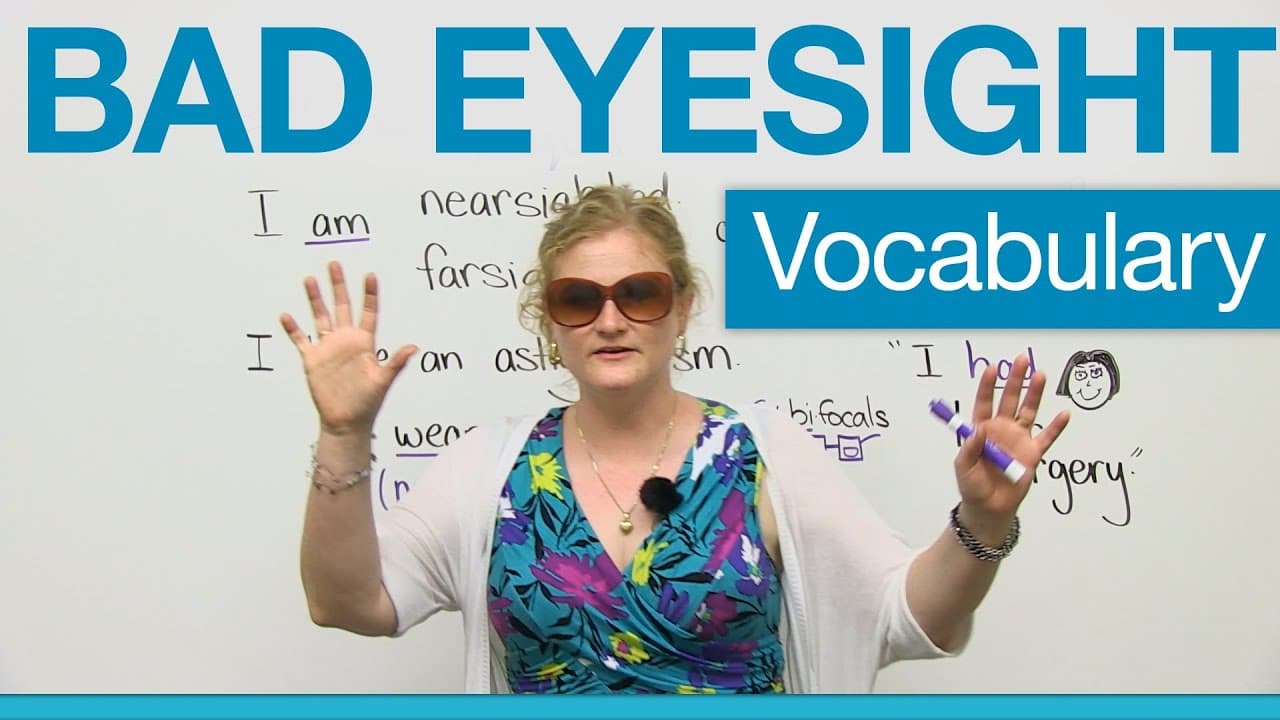
To correct bad eyesight, options include wearing glasses, contact lenses, or undergoing laser eye surgery. Common conditions like nearsightedness, farsightedness, and astigmatism can be addressed by an optometrist, who prescribes the appropriate corrective measures. Laser surgery is a permanent solution for those wanting to eliminate the need for glasses.
Transcript
Hi. Where are you? I can't see anything. Help. Oh, that's better. Hello. Today, I'm going to teach you about glasses. These are sunglasses. But what I'm going to teach you about today is more important than sunglasses. They are glasses for bad eyesight. So if you have bad eyesight, maybe you do this when you try to read something. Or you look far a... Read More
Key Insights
- 👓 Glasses are essential for correcting various eye conditions like nearsightedness, farsightedness, and astigmatism.
- 👓 Optometrists, also known as eye doctors, play a crucial role in diagnosing and prescribing glasses for better vision.
- 👓 Advanced options like bifocals, colored contacts, and laser eye surgery provide alternatives to traditional glasses for vision correction.
- 😃 Understanding the difference between adjectives and nouns in describing eye conditions helps in proper communication with eye care professionals.
- 👓 Laser eye surgery offers a permanent solution for those seeking to eliminate the need for glasses or contacts.
- 🥺 Regular eye check-ups are vital to detecting and addressing vision issues early on.
- ⚾ Patients can choose from a variety of options like contacts or surgery to improve their vision based on personal preferences and lifestyle.
Install to Summarize YouTube Videos and Get Transcripts
Explore YouTube Video Summarizer or Get YouTube Transcript Extractor
Questions & Answers
Q: What are the common eye conditions associated with bad eyesight?
Common eye conditions such as nearsightedness (myopia), farsightedness (hyperopia), and astigmatism are typically associated with bad eyesight.
Q: How do adjectives and nouns differ in describing eye conditions like nearsightedness and farsightedness?
Adjectives like nearsighted and farsighted require the use of the verb "to be," while nouns like myopia and hyperopia require the auxiliary verb "have" when describing eye conditions.
Q: What are bifocals, and why are they commonly used by older individuals?
Bifocals are glasses with two different lenses designed for individuals with deteriorating eyesight, and older people often prefer them to avoid switching between nearsighted and farsighted glasses.
Q: How does laser eye surgery work, and what are its benefits?
Laser eye surgery involves cutting open the eye's protective layer with a laser to correct vision issues, offering a permanent solution for those tired of wearing glasses or contacts.
Summary & Key Takeaways
-
Introduces the importance of glasses for bad eyesight and the role of optometrists in diagnosing eye issues.
-
Explains terms like nearsighted (myopia), farsighted (hyperopia), and astigmatism, emphasizing the need for corrective lenses.
-
Touches on bifocals, colored contacts, and laser eye surgery as alternatives to traditional glasses for vision correction.
Read in Other Languages (beta)
Share This Summary 📚
Summarize YouTube Videos and Get Video Transcripts with 1-Click
Try YouTube Summary with ChatGPT & Claude or YouTube Transcript Generator
Explore More Summaries from English with Ronnie · EnglishLessons4U with engVid 📚




Summarize YouTube Videos and Get Video Transcripts with 1-Click
Try YouTube Summary with ChatGPT & Claude or YouTube Transcript Generator