How does Uber win with AI and Uber One against competitors
TL;DR
Uber’s approach blends strong execution with long term investments in membership. The core idea is that membership drives incremental revenue and loyalty, making it the most efficient long term lever, even as price incentives exist. Over time, member cohorts ride more and boost lifetime value and market resilience.
Transcript
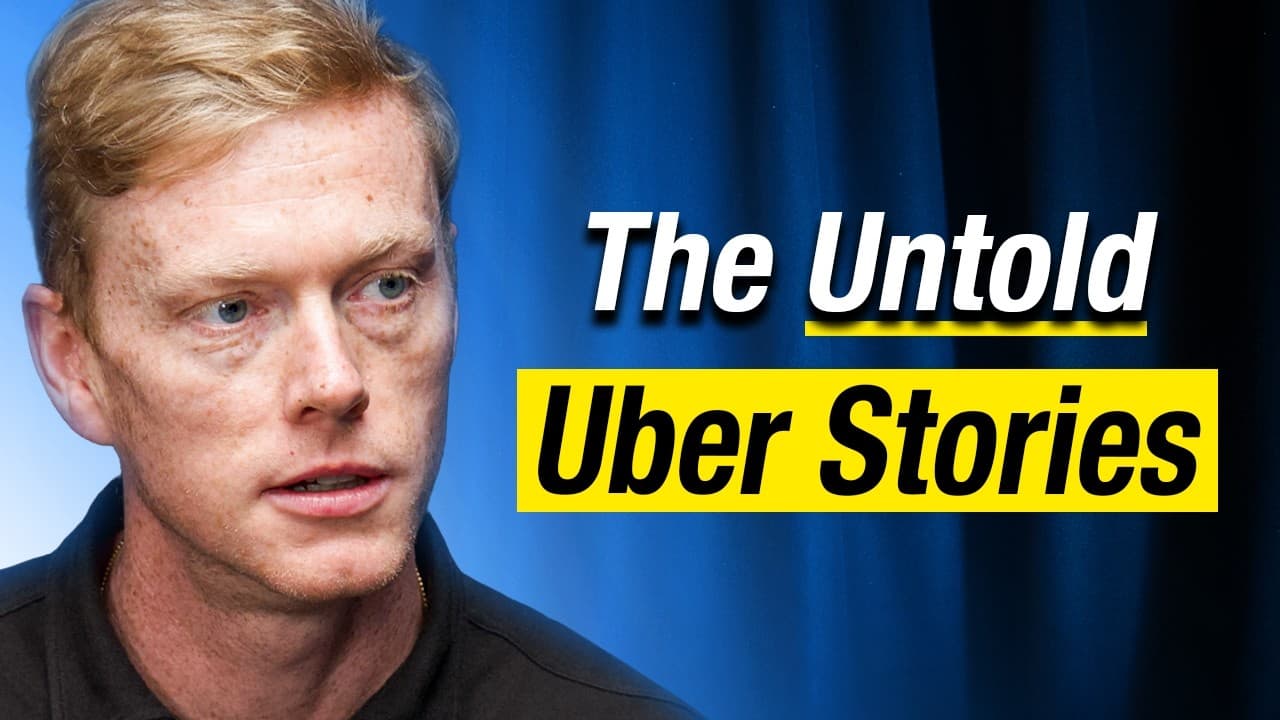
We're doing like 300 million trips a week. We were burning 52 million a week in China. We were competing in China with one hand tied behind our back. >> Andrew Macdonald, he's the president and COO at Uber. He's Uber's longest-tenured active employee. And today, Uber's an absolute monster. They have a market cap of 160 billion, revenues of 52 billi... Read More
Key Insights
- Uber operates at massive scale with 300 million trips per week and 200 million monthly active users.
- The most efficient long term consumer lever is membership, measured by incremental gross bookings and long term lifetime value.
- Membership benefits compound over time, increasing engagement and cross selling with Uber Eats.
- Short term price incentives can boost near term metrics but may underinvest in durable growth like memberships.
- Uber One is strong but not yet at Prime/Costo levels; value delivery and consumer comprehension are key gaps.
- A deep knowledge of the business and a trustworthy decision filter drive Followership and execution.
- The ROI of incentives is often negative on profit margins unless it builds long term engagement and loyalty.
- AI is viewed as a global efficiency driver that will reduce headcount needs while expanding capabilities across the platform.
Install to Summarize YouTube Videos and Get Transcripts
Explore YouTube Video Summarizer or Get YouTube Transcript Extractor
Questions & Answers
Q: What is the core long term lever Uber should rely on for growth
The core long term lever Uber should rely on is membership because it yields the most efficient incremental revenue over time. By increasing engagement, reducing churn, and expanding cross platform benefits like Uber Eats, membership compounds value and raises lifetime value, making it a durable driver of growth beyond price incentives.
Q: How does incremental gross bookings relate to Uber's spending
Incremental gross bookings, or IGB, is the metric used to determine how much revenue is generated from each dollar spent in the marketplace. If a dollar spent on incentives yields $2 in revenue, the ROI might still be modest due to margins, but the overall effect on engagement and lifetime value justifies continued investment in the long term.
Q: What is Uber One’s role in Uber’s strategy
Uber One serves as a core long term consumer lever that improves efficiency and loyalty. While not as dominant as Prime or Costco, it provides benefits that increase ride engagement and Uber Eats usage, which together raise lifetime value and reduce churn, particularly when customers uncover the full range of benefits.
Q: Why did the speaker admit being short term oriented in the past
The speaker admitted being short term oriented because the instinct was to push dollars into price or driver supply to prove marketplace health. However, data showed membership could be a more efficient lever, and over time it became clear that the longer term value from membership outweighed short term price concessions.
Q: What does IGB measure in Uber’s context
IGB measures incremental revenue generated by a dollar invested, such as from incentives to users. It helps assess the true profitability of investments, considering Uber’s margins, and guides decisions on where to allocate capital to maximize long term engagement and value creation.
Q: What factors influence Uber’s decision to invest in membership versus pricing
Investment decisions weigh short term ROI of pricing versus long term membership value. If membership yields higher long term engagement and cross platform use with Uber Eats, the program becomes more efficient, even if initial price promotions provide quick lift, and this shifts capital toward membership.
Q: How does membership affect Uber Eats usage
Membership affects Uber Eats usage by encouraging members to consolidate more mobility and food delivery on Uber’s platform, boosting cross service benefits and lifetime value. This creates a positive feedback loop where higher engagement in one service reinforces usage in the other.
Q: What challenges does Uber face in scaling membership globally
Challenges include consumer perception and understanding of benefits, modest immediate discounts, and designing high perceived value, low cost features that fit a variable cost platform. Overcoming these requires clear communication of benefits, better feature selection, and aligning incentives with long term value creation.
Summary & Key Takeaways
-
Uber operates at scale with hundreds of millions of trips and users, and uses membership as a durable lever to grow revenue and efficiency. The discussion centers on balancing short term pricing with long term investments like Uber One, and the potential of AI to transform operations. The speaker emphasizes trust, alignment with the company’s interests, and deep product knowledge as drivers of success.
-
The interview highlights the tension between short term price incentives and long term membership benefits, and explains how incremental gross bookings measure the ROI of investments. It also covers how Uber One benefits ripple into related services like Uber Eats, increasing lifetime value and reducing churn.
-
Key takeaways include the primacy of a data driven, company wide filter for decisions, the value of membership as a long term lever, and the evolving role of AI in operations and product strategy. It also notes that Uber faces unique challenges in China and the importance of execution and trust within leadership.
Read in Other Languages (beta)
Share This Summary 📚
Summarize YouTube Videos and Get Video Transcripts with 1-Click
Try YouTube Summary with ChatGPT & Claude or YouTube Transcript Generator
Explore More Summaries from 20VC with Harry Stebbings 📚






Summarize YouTube Videos and Get Video Transcripts with 1-Click
Try YouTube Summary with ChatGPT & Claude or YouTube Transcript Generator