How Does ICT Read Fair Value Gaps and SMT Divergence? | 2022 ICT Mentorship Market Review, August 1, 2022
TL;DR
ICT reads fair value gaps and SMT divergence within the daily chart’s higher-timeframe bias, rather than treating either signal in isolation. In the e-mini S&P September contract, price traded into a daily fair value gap and associated order block before rallying through the gap. The review also explains why August’s lower participation calls for less trading, making the full analysis useful for understanding both market direction and restraint.
Transcript
all right folks welcome back this is our monday august 1st 2022 market review and i'm going to cover some brief commentary obviously not in very great detail obviously but i want to teach you a little bit about how i use the tools that i teach my students here on this youtube channel and provided the commentary and analysis that you saw pan out in ... Read More
Key Insights
- The daily chart provides the majority of the bias for the algorithm's buy or sell programs, not the one-minute, five-minute, 15-minute, or hourly charts, which merely refine execution within that higher-timeframe direction.
- A buy program is when price starts gyrating and moving toward a specific higher-timeframe PD array positioned above current market price, such as an old high, a bearish order block, a fair value gap, or a bearish breaker.
- SMT divergence occurs when the e-mini S&P makes a higher high on a given day while the Nasdaq fails to make a higher high, but it should not automatically be read as a top or shorting opportunity when price is drawing into buy side liquidity.
- A fair value gap is defined by the space between one candle's high and another candle's low, and price often trades down into that gap and into an associated order block before tearing off higher.
- An imbalance is not considered balanced until price revisits and closes the inefficiency, meaning price can retrace back into half of the range to revisit and close a candle before continuing higher.
- August is typically a low-volatility month with uncertainty because equities see disinterest during the last month of summer, so traders should plan to do very little and avoid pushing hard for setups.
- One good strong higher-timeframe setup per week is enough to build a business model, so traders should look for one solid delivery and participate in it rather than overtrading.
- Specific price targets like 4075 and 4107.25 were called in advance on July 27 and 28, 2022, and the market delivered into those daily levels, demonstrating that the concepts work with foresight rather than hindsight.
Install to Summarize YouTube Videos and Get Transcripts
Explore YouTube Video Summarizer or Get YouTube Transcript Extractor
Questions & Answers
Q: How does ICT read fair value gaps and SMT divergence in the e-mini S&P?
ICT interprets both concepts within the daily chart’s higher-timeframe direction. In this review, the e-mini S&P traded into a fair value gap and order block before rallying, while a short-term SMT divergence was treated as temporary because price was still drawing toward buy-side liquidity.
Q: What is a fair value gap in ICT trading?
A fair value gap is the space between one candle’s high and another candle’s low, representing an imbalance in price. Price may trade into the gap and an associated order block before moving away, as the e-mini S&P did in this review.
Q: How did the e-mini S&P react to the daily fair value gap?
Price dropped into the daily fair value gap, rallied to its low, and then moved all the way through it. It completely closed the gap and repriced back to its high before moving a little farther through on Friday.
Q: What is SMT divergence between the e-mini S&P and Nasdaq?
SMT divergence occurred when the e-mini S&P made a higher high while the Nasdaq failed to exceed its comparison candle’s high. ICT described this instance as a short-term divergence and expected the market to continue higher.
Q: Does SMT divergence automatically signal a market top or short?
No. ICT warned against treating the short-term SMT divergence as a top or shorting opportunity because the market was still drawing upward into buy-side liquidity.
Q: How does ICT use the daily chart versus lower timeframes?
The daily chart supplies most of the directional bias for the algorithm’s buy or sell program. Lower timeframes, including charts below one minute through the four-hour chart, refine execution within that higher-timeframe direction.
Q: Why does ICT recommend trading less during August?
August can bring uncertainty, disinterest in equities, reduced market participation, and lower volume than spring and fall. ICT therefore recommends reducing activity instead of pushing hard for setups during the summer doldrums.
Q: What trading approach does ICT recommend for the fall months?
ICT planned to conserve capital and activity during August, including doing next to nothing during the first week and taking a two-week vacation. He intended to save his trading effort for September, October, and November, which he expected to be volatile.
Summary & Key Takeaways
-
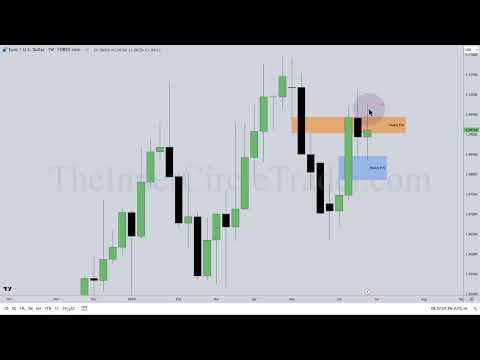
The August 1, 2022 review covers the dollar index, British pound, and e-mini S&P on daily and hourly charts. The dollar dropped into an anticipated area and may go a little lower; the British pound delivered upside as expected, with retracements viewed as further runs into buy side liquidity above.
-
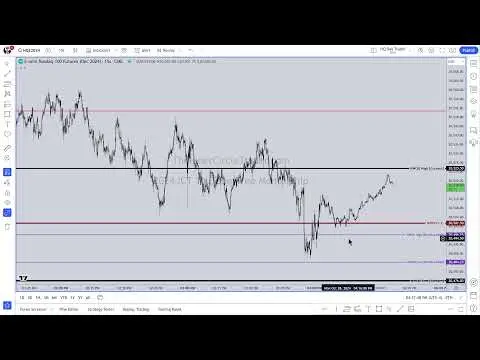
The e-mini S&P September contract ran above a short-term high, and the daily fair value gap between one candle's high and another's low acted as a magnet. Price traded down into that gap and the order block, then rallied higher, closing in and repricing back to the high of the fair value gap.
-
August's summer doldrums, low volume, and non-farm payroll Friday mean the presenter plans minimal trading and a two-week vacation, saving capital for the volatile fall months of September, October, and November. Ideas shared are watched to see if they pan out, not forced.
Read in Other Languages (beta)
Share This Summary 📚
Summarize YouTube Videos and Get Video Transcripts with 1-Click
Try YouTube Summary with ChatGPT & Claude or YouTube Transcript Generator
Explore More Summaries from The Inner Circle Trader 📚
Summarize YouTube Videos and Get Video Transcripts with 1-Click
Try YouTube Summary with ChatGPT & Claude or YouTube Transcript Generator