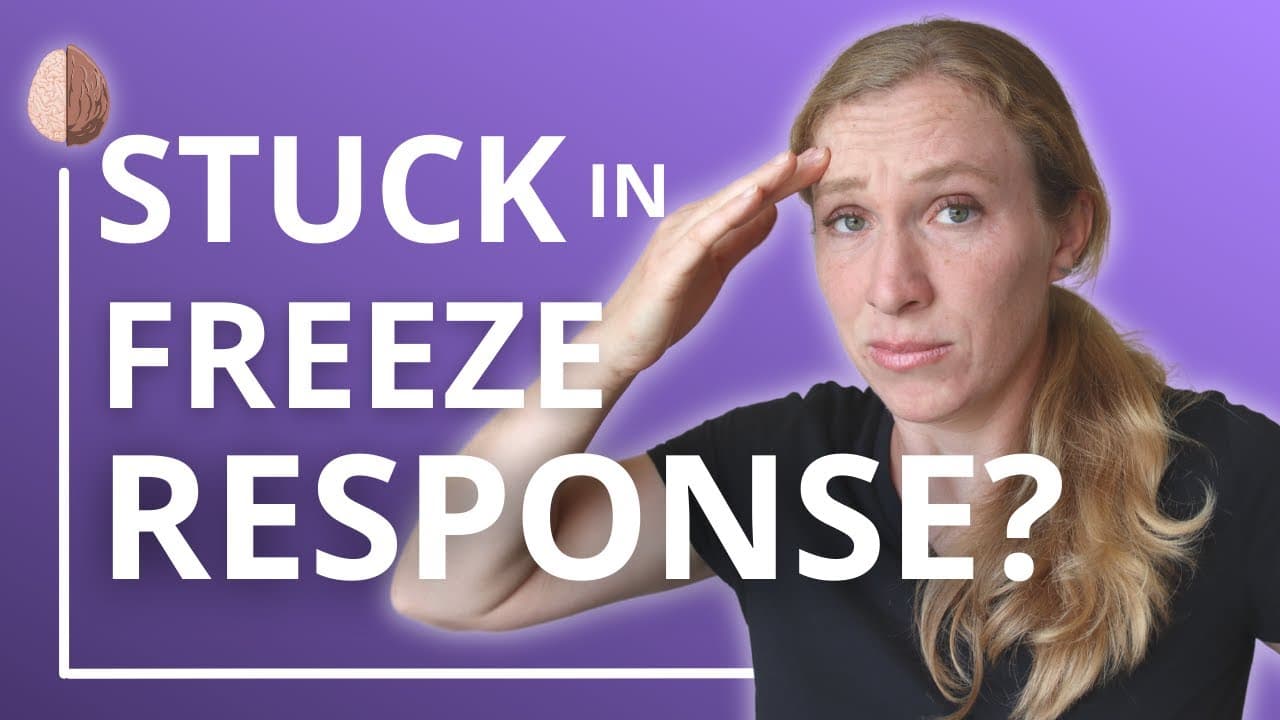
How to Break Out of the Freeze Response Safely
TL;DR
Start with slow, intentional body movement, such as patting your legs, stomping your feet, shaking out your arms, or dancing. Movement can help your body signal safety to your brain, making thinking and processing easier. Identifying triggers, practicing grounding, rehearsing protective responses, and exercising can also strengthen your ability to move through freeze.
Transcript
Hi every one Emma McAdam here, today we are going to talk about a question I got from one of my viewers and they asked, "How do turn off the freeze response?" So that's what we're gonna talk about today. Well, basically the freeze response is a survival instinct stored deep in you brain. It's an automatic response to overwhelming danger, or at leas... Read More
Key Insights
- The freeze response is an automatic survival instinct that activates when the brain perceives danger as too powerful or overwhelming to fight or escape. It is triggered by survival-oriented parts of the brain faster than conscious thought, so it is not a planned or chosen reaction.
- Freeze can appear as dramatic immobility or subtle avoidance. A person may become physically unable to move, but freeze can also look like avoiding homework, withdrawing from stressful tasks, shrinking, holding the breath, feeling heavy, or trying not to think about an overwhelming situation.
- Dissociation is a possible feature of freeze that creates numbness or separation from thoughts and sensations. This response may reduce the felt intensity of unavoidable pain or danger, but it can become disruptive when it disconnects someone from studying, trauma processing, relationships, joy, or the present environment.
- Fawning behavior can be part of the freeze response. Appeasing someone who feels threatening, trying to make that person happy, or giving in to demands may reflect an automatic attempt to stay safe rather than a freely considered decision about what the person genuinely wants.
- Traumatic memories can reactivate the body’s freeze pattern because the brain may respond similarly to actual danger, remembered danger, and perceived danger. When the survival response is active, the thinking part of the brain becomes less available, which can keep a person cycling through traumatic reactions.
- Body movement is a practical way to interrupt freeze because messages travel between the brain and body. Patting the legs, stomping the feet, shaking the arms, or dancing can move the body out of immobility and help signal that the current environment is safe.
- Repeated training can create an accessible response for threatening situations. Practicing a clear action, such as loudly shouting no during self-defense training, gives the person a rehearsed protocol that may be easier to draw upon when automatic freezing would otherwise take over.
- Exercise supports nervous-system regulation by moving the body through activation and subsequent calming. It produces alertness and adrenaline-like arousal, followed by a return toward relaxation and the rest-and-digest response, helping the nervous system practice shifting between activated and settled states.
Install to Summarize YouTube Videos and Get Transcripts
Explore YouTube Video Summarizer or Get YouTube Transcript Extractor
Questions & Answers
Q: What is the freeze response and why does it happen?
The freeze response is an automatic survival reaction to overwhelming danger or the perception of danger. It activates when the brain decides that fighting is unlikely to work and escaping seems impossible. Survival-oriented parts of the brain trigger it faster than conscious thinking, so a person does not deliberately choose to become still, numb, detached, avoidant, or unable to act.
Q: How can you break out of the freeze response?
Begin by reengaging the body with slow, intentional movement. You can pat your legs, stomp your feet while seated, shake out your arms, wave them, or dance. Physical movement interrupts the body’s frozen state and can send the brain a message of present safety. Once the response settles, thinking, planning, discussing difficult experiences, and processing emotions become more possible.
Q: What are the common signs of a freeze response?
Common signs include muscles locking up, stiffness, heaviness, holding the breath, shrinking, trying to disappear, feeling overwhelmed, and avoiding a stressful task. A person may also experience numbness, detachment, or dissociation, meaning they feel separated from their thoughts or surroundings. Appeasing a threatening person, making them feel good, or giving in to demands can also occur.
Q: Why can’t you think your way out of freeze mode?
Freeze is initiated by deep, survival-oriented parts of the brain rather than the prefrontal cortex and other areas responsible for deliberate thought. During fight, flight, or freeze, the thinking part of the brain becomes less available for processing information. A body-up approach is therefore used first, with movement helping the nervous system register safety before reflection, planning, or verbal processing begins.
Q: How does movement help stop the freeze response?
The brain sends messages to the body, and the body also sends messages back to the brain. When someone deliberately begins patting, stomping, shaking, waving, or dancing, the body is no longer behaving as if it is immobilized. That physical change can communicate present safety, reduce the frozen state, and restore enough calm for the person to process information and choose helpful actions.
Q: Why can trauma memories trigger freezing when no danger is present?
Remembering trauma or thinking about danger can activate the same fight, flight, or freeze response that appears during an actual threat. The brain may not effectively distinguish current danger from remembered or perceived danger, so the body can become stiff, powerless, or disconnected even in a safe room. Grounding and movement help reconnect the person with present conditions before trauma processing continues.
Q: How can training reduce the chance of freezing in danger?
Repeated practice provides a familiar protocol that may override habitual freezing. Self-defense training is one example. Practicing how to shout no loudly and repeatedly can make that response easier to access during danger, when spontaneous thinking may be limited. The goal is to rehearse a concrete protective action often enough that the body and brain can draw upon it under pressure.
Q: How do grounding and exercise help with freeze mode?
Grounding helps a person notice triggers, recognize their physical signs of freezing, and reconnect with the present moment. Exercise moves the nervous system through a natural cycle of alert activation and later relaxation. Together, these practices build awareness of freeze, create opportunities to respond earlier, and help the body practice moving between heightened arousal and the calmer rest-and-digest state.
Summary & Key Takeaways
-
The freeze response is an automatic survival reaction that occurs when the brain perceives a threat as too overwhelming to fight or escape. It can involve immobility, numbness, dissociation, heaviness, breath-holding, avoidance, shrinking, or appeasing behavior. Because it is involuntary and may be protective, freezing is not a reason for shame.
-
Breaking freeze begins by reengaging the body because the survival-oriented brain responds more directly to physical signals than to deliberate thought. Slow, intentional actions such as patting the legs, stomping, shaking the arms, or dancing can interrupt immobility and communicate present safety, creating enough calm for reflection and emotional processing.
-
Longer-term strategies include identifying personal triggers and early physical symptoms, using grounding exercises, exercising, and repeatedly practicing protective actions such as shouting no. Exercise moves the nervous system through activation and relaxation, while rehearsal creates a familiar response that may be easier to access when danger or perceived danger activates old freezing habits.
Read in Other Languages (beta)
Share This Summary 📚
Summarize YouTube Videos and Get Video Transcripts with 1-Click
Try YouTube Summary with ChatGPT & Claude or YouTube Transcript Generator
Explore More Summaries from Therapy in a Nutshell 📚



Summarize YouTube Videos and Get Video Transcripts with 1-Click
Try YouTube Summary with ChatGPT & Claude or YouTube Transcript Generator