How to Close More Sales Through Better Discovery
TL;DR
Close more sales by diagnosing the prospect’s problem thoroughly before presenting a solution. Listen for most of the conversation, use the prospect’s exact language, demonstrate a small tailored part of your service, communicate with conviction, and guide the prospect toward a clear yes or no because unresolved delay frequently kills deals.
Transcript
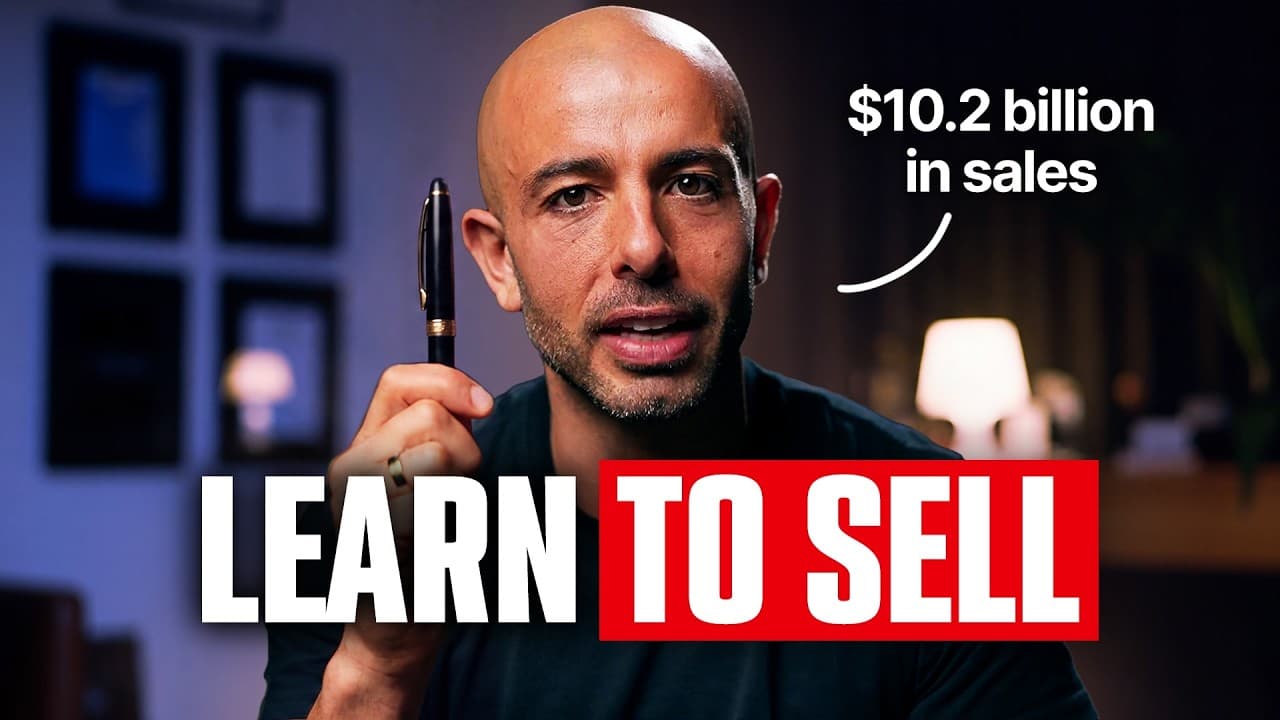
I've been in sales for over 18 years and have done over $300 million in sales in my own companies that I personally operated and have generated over $7.8 billion in sales for my clients. And these are the 13 hacks that I wish I knew earlier. And if you watch this video and actually apply this knowledge, I have no doubt in my mind that you going to ... Read More
Key Insights
- The sale is primarily closed during discovery, because a careful diagnosis reveals the prospect’s problems, previous attempts, successes, failures, and constraints before any solution is presented. Repeated objections near the end can indicate that discovery did not establish enough understanding or relevance.
- Effective salespeople spend about 80% of the conversation listening, according to the speaker’s recommended model. Their objective is not to collect minimal information before rushing into a pitch, but to understand the problem deeply enough to determine whether they are qualified to help.
- A clear decision is more valuable than an unresolved maybe, because delay can prevent a deal from progressing. The salesperson should guide the prospect toward either yes or no without becoming pushy, while establishing early that the conversation will conclude with defined next steps.
- Decision resistance is driven by fear of making the wrong choice, according to the speaker. A salesperson can address that resistance by clarifying the cost of making no decision, reducing attachment to closing, and concentrating on helping the prospect evaluate the situation accurately.
- Selling like a doctor means diagnosing before prescribing. The salesperson should examine what happened, how long the problem has persisted, what has already been attempted, and what currently works or fails before recommending a product, service, or next step.
- Value is presented as the antidote to skepticism. A salesperson can demonstrate capability by delivering a small, tailored portion of the service during the call, such as identifying a conversion problem or reviewing relevant dashboards, statistics, scans, or other visual evidence.
- A customized pitch uses the prospect’s exact language to connect the diagnosed problem with the proposed solution. Writing down the prospect’s words during discovery allows the salesperson to explain the recommendation in terms that directly reflect the prospect’s stated needs and experiences.
- Sales delivery depends heavily on tonality and conviction, not only on the words being spoken. Upward inflection can communicate less certainty, while a deeper, more authoritative delivery may convey confidence. Prospects can detect when a salesperson lacks belief in the proposed solution.
Install to Summarize YouTube Videos and Get Transcripts
Explore YouTube Video Summarizer or Get YouTube Transcript Extractor
Questions & Answers
Q: How can better discovery improve sales close rates?
Better discovery improves the sales process by uncovering the prospect’s specific problems, previous attempts, current results, and unresolved obstacles before any recommendation is made. When a salesperson can describe the problem as clearly as, or more clearly than, the prospect, the prospect is more likely to believe that the salesperson understands the situation and may have an appropriate solution.
Q: Why do prospects raise many objections at the end of a sales call?
A wall of objections at the end of a call can indicate that the salesperson performed an incomplete diagnosis. If the conversation did not thoroughly identify the prospect’s problem, failed attempts, working approaches, and constraints, the recommendation may appear generic or risky. No objection-handling phrase can fully compensate for a proposal that was built without sufficient discovery and understanding.
Q: How should a salesperson structure a discovery conversation?
A salesperson should spend most of the conversation listening and asking questions that reveal the prospect’s problem, how long it has existed, what caused it, what has already been tried, and what did or did not work. The salesperson should record the prospect’s exact language, assess whether the service is genuinely suitable, and present a recommendation only after completing that diagnosis.
Q: What does it mean to sell like a doctor?
Selling like a doctor means investigating the situation before prescribing a solution. Just as a doctor examines symptoms, history, scans, mobility, and possible causes, a salesperson should examine the prospect’s challenges and previous efforts. Only after understanding the problem should the salesperson recommend a product or service, connecting each relevant element of the recommendation to the diagnosed need.
Q: How can a salesperson demonstrate value during a sales call?
A salesperson can demonstrate value by delivering a small, relevant portion of the service during the call. This might involve reviewing a dashboard, examining statistics, identifying a landing-page issue, or showing another brief analysis tied directly to the diagnosed problem. The demonstration should take no more than about two minutes and should not become a lengthy presentation that gives away the entire service.
Q: Why should salespeople seek a yes or no instead of a maybe?
A clear yes or no gives both parties a definite outcome, while a maybe often creates delay and prevents the deal from progressing. The salesperson should establish early that the call will identify the problem, determine whether the service is a good fit, and define the next steps. This approach moves the prospect toward a decision without requiring pressure or excessive attachment to closing.
Q: How should a salesperson use a prospect’s own words in a pitch?
The salesperson should write down the prospect’s exact descriptions of the problem, previous attempts, and desired result during discovery. When presenting the solution, those same words can be connected to the relevant parts of the product or service. This makes the pitch sound specifically tailored because it directly addresses the situation as the prospect described it, rather than relying on generic features and benefits.
Q: How do tonality and conviction affect a sales conversation?
Tonality communicates certainty, authority, and belief in the proposed solution. The speaker argues that how something is said accounts for much of the sale and warns that constant upward inflection can weaken perceived confidence. A salesperson who lacks genuine conviction may be influenced by the prospect’s reasons for delaying, while confident delivery helps communicate that making a decision now is worthwhile.
Summary & Key Takeaways
-
Effective selling begins with discovery rather than objection handling. The salesperson should uncover the prospect’s problems, previous attempts, current results, and obstacles before proposing anything. A thorough diagnosis builds trust, demonstrates understanding, and makes the eventual recommendation feel directly connected to the situation instead of resembling a generic feature presentation.
-
The recommended approach resembles a doctor’s process: investigate first, diagnose the underlying problem, and prescribe only after gathering enough evidence. During the presentation, the salesperson can provide a brief, visual demonstration of how the service would address the identified issue, using the prospect’s own words to make the recommendation feel specifically tailored.
-
Sales conversations should move toward a definite decision rather than an indefinite maybe. The salesperson can establish this expectation early, remain unattached to winning the deal, and explain the cost of taking no action. Delivery also matters because tone, certainty, authority, and genuine conviction influence whether the prospect trusts the proposed solution.
Read in Other Languages (beta)
Share This Summary 📚
Summarize YouTube Videos and Get Video Transcripts with 1-Click
Try YouTube Summary with ChatGPT & Claude or YouTube Transcript Generator
Explore More Summaries from Sabri Suby 📚
Summarize YouTube Videos and Get Video Transcripts with 1-Click
Try YouTube Summary with ChatGPT & Claude or YouTube Transcript Generator