How to detect AI generated text and humanize it
TL;DR
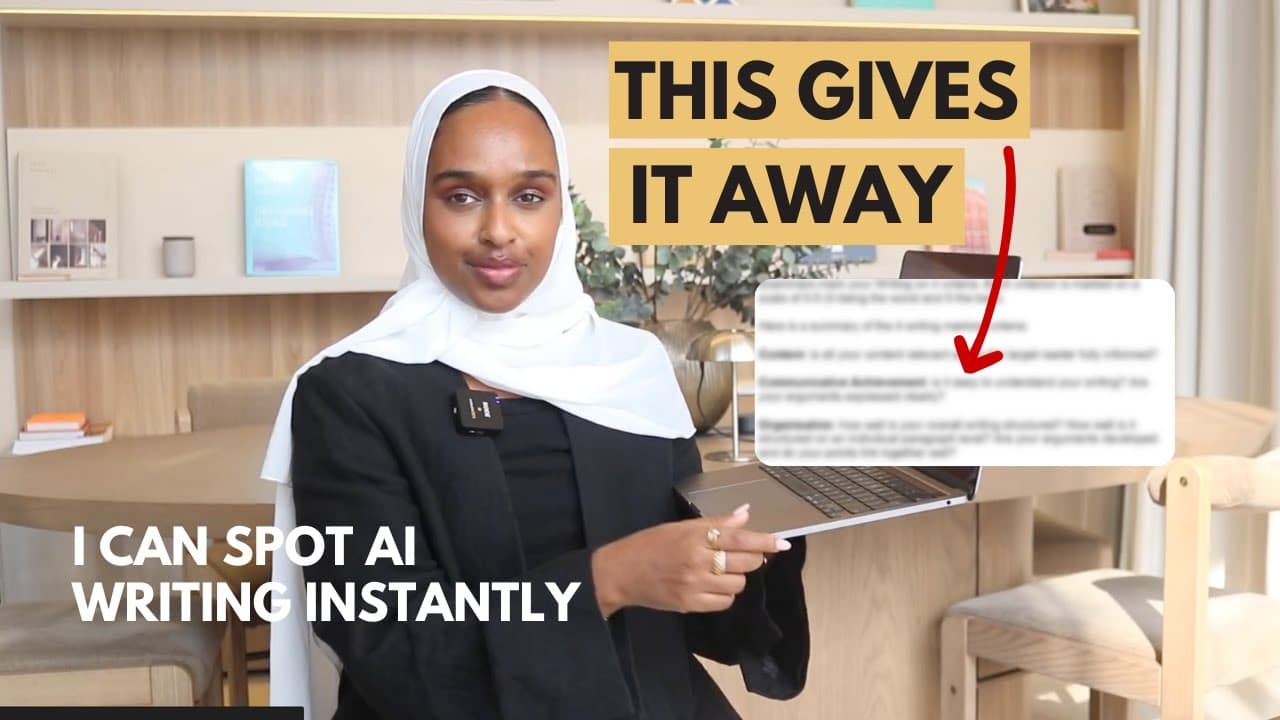
AI generated writing often looks too perfect, lacks nuance, and follows rigid structures. To make text read as human, add personality, imperfect length variation, niche language, tone changes, and self reflective questions, then rewrite sections manually for a unique voice. These strategies reduce robotic feel and improve readability without relying on detectors.
Transcript
One of my most asked questions is how can I identify AI generated text without using a website or is there a website and I would say the answer is there isn't a website. They are all untrustworthy. I wouldn't recommend any of them to be able to identify any kind of AI generated text. Sometimes they have false negatives, sometimes you have false pos... Read More
Key Insights
- AI writing can be too uniform and perfect, which is a common giveaway that the text was machine generated.
- Lack of nuance and overly generic conclusions make AI text feel flat compared to human writing.
- Robotic transitions occur when linking words repeat and sentence connections feel repetitive.
- Over structured content with perfectly aligned headings often signals AI generated text.
- Contextual errors and abrupt topic jumps are signs that AI missed real world grounding.
- AI writing typically lacks creativity and humor unless prompted to include them.
- Adding personality, personal stories, and relatable ideas helps the text read as human.
- Varying tone, embedding questions, and manual rewriting are effective to humanize writing.
- More videos from this channel:
- More from this channel: Dr Amina Yonis
Install to Summarize YouTube Videos and Get Transcripts
Explore YouTube Video Summarizer or Get YouTube Transcript Extractor
Questions & Answers
Q: What are the main signs that text was AI generated besides perfect language?
The main signs include a lack of nuance with flat perspectives and generic conclusions, robotic transitions due to repeated linking words, and an overly organized structure with perfectly placed headings. These indicators point toward AI authorship because human writing tends to be more varied in structure, more nuanced in argument, and less regimented in formatting.
Q: How can you identify AI text through context and topic flow?
Contextual errors or unusual jumps between topics can reveal AI text. AI may miss subtle connections between ideas or present incomplete sentences, which breaks the natural flow of reasoning. Humans typically guide readers through a topic with coherent, context rich transitions that align with real world understanding.
Q: What strategies help make AI generated text feel more human?
Strategies include adding personality and a personal story, incorporating niche language, referencing recent events, and injecting a distinct tone. These elements create a sense of lived experience and individuality, making the writing feel less machine produced and more like a human author crafted it.
Q: Why is humor often missing in AI writing and how to fix it?
Humor is often missing because AI does not automatically include jokes unless prompted. To fix this, prompt the AI to include humor or revise sections manually to insert lightness, witty observations, or relatable anecdotes that fit the topic and audience while preserving accuracy.
Q: What is the role of imperfections in making text appear human?
Imperfect lengths in paragraphs, varied sentence counts, and occasional awkward phrasing mimic natural human writing. Introducing deliberate but tasteful imperfections disrupts the machine like uniformity and helps the reader feel a more authentic voice, enhancing readability and engagement.
Q: How can you use tone and questions to reduce AI characteristics in writing?
Adjusting tone to suit the audience and purpose, and embedding questions within the text creates a more conversational and reflective flow. This approach mirrors human writing, where writers pause to pose questions and consider reader perspective, adding depth and personality that AI often lacks.
Q: What practical steps can you take to rewrite AI text from scratch?
A practical method is to read sentences out loud, then rewrite them in your own words with different structure and word choice. Start fresh when needed, ensure páragraph variety, and maintain the core meaning while infusing your voice, which reduces the sense of machine authorship.
Q: How can you balance source synthesis with a human voice in academic writing?
Blend sources by paraphrasing in your own words and weaving citations into a narrative that reflects your viewpoint and analysis. This creates a synthesis that acknowledges evidence while preserving a distinctive voice, making the writing credible and engaging rather than a mere aggregation of ideas.
Summary & Key Takeaways
-
A writer can spot AI text by its overpolished language, uniform sentence length, and lack of personal anecdotes, which signals machine authorship. By introducing personality and real world context, the text gains authenticity and relatability. Manual rewriting reinforces the human touch and improves clarity without sacrificing accuracy.
-
Guidelines to humanize AI influenced text include injecting tone, adding self reflection, and using niche language to reflect real world experiences. This combination helps texts feel more personal and credible, while retaining original information.
-
A practical workflow involves assessing text for rigidity and context gaps, then applying targeted edits such as varied sentence length, added jokes or stories, and re structuring sections to resemble natural human writing. This makes the piece more engaging and trustworthy.
Read in Other Languages (beta)
Share This Summary 📚
Summarize YouTube Videos and Get Video Transcripts with 1-Click
Try YouTube Summary with ChatGPT & Claude or YouTube Transcript Generator
Explore More Summaries from Dr Amina Yonis 📚


Summarize YouTube Videos and Get Video Transcripts with 1-Click
Try YouTube Summary with ChatGPT & Claude or YouTube Transcript Generator