How to do a literature review with AI agents
TL;DR
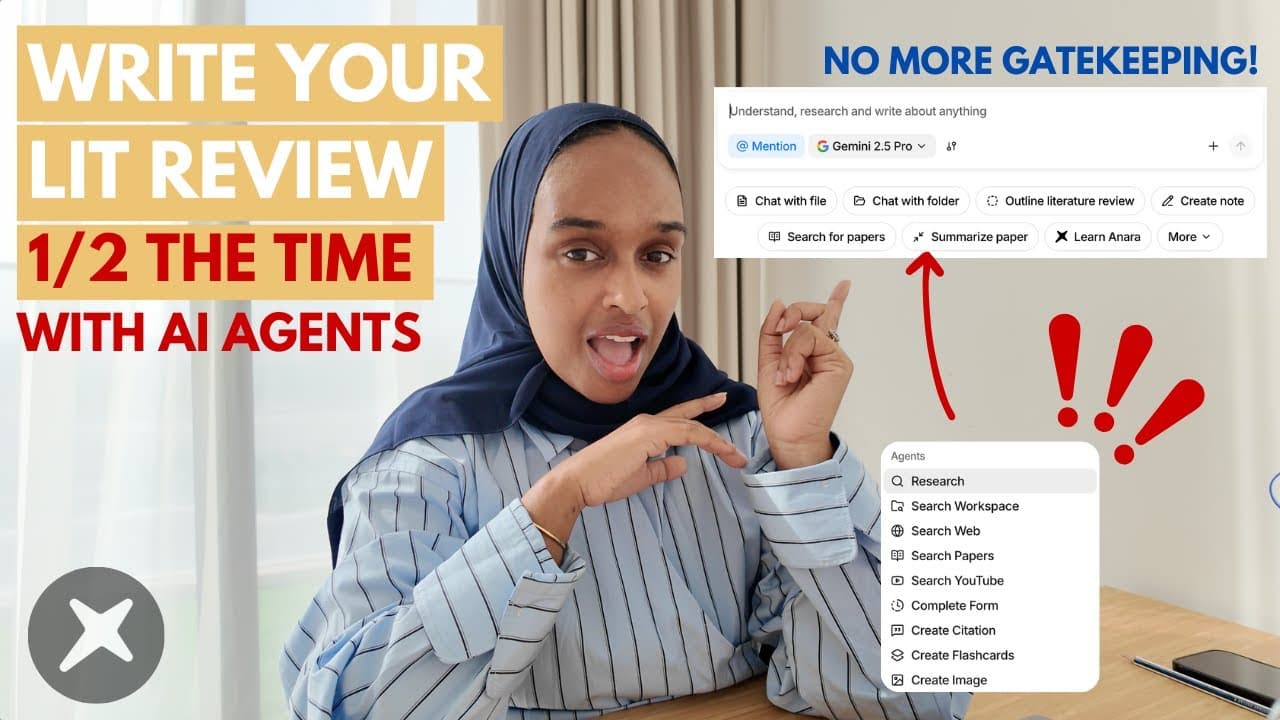
The video explains a four step process for literature reviews using AI agents. It covers gathering and organizing sources, analyzing and synthesizing the literature, structuring and writing the review, and ensuring accurate citations. The narrator demonstrates how to use Anara and its agents to search, filter, annotate, and generate a draft outline and citations.
Transcript
PhDs and researchers have been gatekeeping how to write a literature review like a pro. And I have a PhD and I don't want to gatekeep anymore. So, in today's video, I'm going to be going through how to organize your sources, how to synthesize your literature, and even how to site your sources accurately. And guess what? You do not need to be a pro ... Read More
Key Insights
- AI aids organization by grouping papers into folders for targeted questions
- Anara allows model and source source control to tailor information scope
- AI assists with source evaluation by listing trustworthy papers and providing direct references
- Questions can reference specific papers to avoid ambiguity
- Key findings can be extracted quickly from multiple papers via the agent
- Draft outlines can be generated and opened as notes for revision
- Citation creation is supported by an agent to ensure proper sourcing
- Flashcards and questions help in outlining and studying the literature
- More videos from this channel:
- More from this channel: Dr Amina Yonis
Install to Summarize YouTube Videos and Get Transcripts
Explore YouTube Video Summarizer or Get YouTube Transcript Extractor
Questions & Answers
Q: A real search query question about the video (e.g. 'How to...', 'What is...', 'Why does...', 'When should...'). Question 1
How can AI agents streamline a literature review from gathering sources to writing the draft? The video demonstrates using an AI workspace to collect and organize papers, search the web and YouTube, and build a focused library. It then shows how to analyze the literature, identify gaps, and produce a draft outline with fully referenced content, all supported by AI tools that trace every citation to its source.
Q: Question 2
What are the four main steps outlined for a literature review using AI agents? The steps are gathering and organizing sources, analyzing and synthesizing the literature, structuring and writing the review, and ensuring accurate citations. Each step is illustrated with practical tasks such as tagging papers, asking targeted questions, and generating notes and citations within the AI platform.
Q: Question 3
How does the video suggest organizing sources for a literature review? It shows creating folders like climate papers, grouping related papers, and then asking the AI agent to search within that group. This narrows the information scope, helps compare specific sources, and keeps notes aligned with the papers being reviewed, ensuring targeted and verifiable results.
Q: Question 4
What role do AI agents play in analyzing and synthesizing literature? The agents extract key findings, allow tagging of specific sources, and facilitate cross referencing between papers. They help you see what a given paper contributes, how it relates to others, and where contradictions or gaps may lie, all while displaying exact citations from the text.
Q: Question 5
How is drafting and outlining handled with AI in the video? After gathering and analyzing, you request a draft outline based on selected papers, and the system returns a structured outline with references. You can open the outline as a note for further editing, ensuring the outline aligns with the evidence and sources you have collected.
Q: Question 6
What features help ensure the reliability of sources in the workflow? The video demonstrates direct linking to sources, visible citations, and the ability to verify highlighted sections in papers. It also shows adding papers to a library and citing them precisely, reducing the risk of hallucinations and increasing transparency of where information originates.
Q: Question 7
How does the video address creating citations and study aids? The workflow includes a citation creation agent that tags sources in the library and generates properly formatted citations. It also mentions tools like flashcard generation to test understanding and retention, which supports building a robust literature framework and studying for exams or assignments.
Q: Question 8
What is the overall value proposition of using AI agents for literature reviews according to the video? The main benefits are time savings, better organization, precise sourcing, and a clear path from initial search to a ready to write outline. The AI tools are presented as a way to democratize access to professional-level review workflows without gatekeeping.
Summary & Key Takeaways
-
The video outlines a four step method for literature reviews and shows how AI agents organize sources, identify gaps, and summarize findings. It emphasizes trustworthy sourcing and precise citations, with examples of tagging sources and opening notes for revision. The material is practical for researchers and students seeking a cleaner workflow.
-
The presenter demonstrates selecting models and sources, combining workspace and internet information, and using notes to capture and verify evidence. The workflow includes creating flashcards, drafting outlines, and generating citations, all supported by AI agents. The result is a structured, verifiable review ready for writing.
-
The content stresses that AI tools can reduce time spent on reading and synthesis while preserving traceability to original sources. It provides a concrete path from initial search to a draft outline and finalized citations, with features like grouped papers, targeted queries, and direct linking to sources.
Read in Other Languages (beta)
Share This Summary 📚
Summarize YouTube Videos and Get Video Transcripts with 1-Click
Try YouTube Summary with ChatGPT & Claude or YouTube Transcript Generator
Explore More Summaries from Dr Amina Yonis 📚

Summarize YouTube Videos and Get Video Transcripts with 1-Click
Try YouTube Summary with ChatGPT & Claude or YouTube Transcript Generator