How to do a literature review in 30 minutes
TL;DR
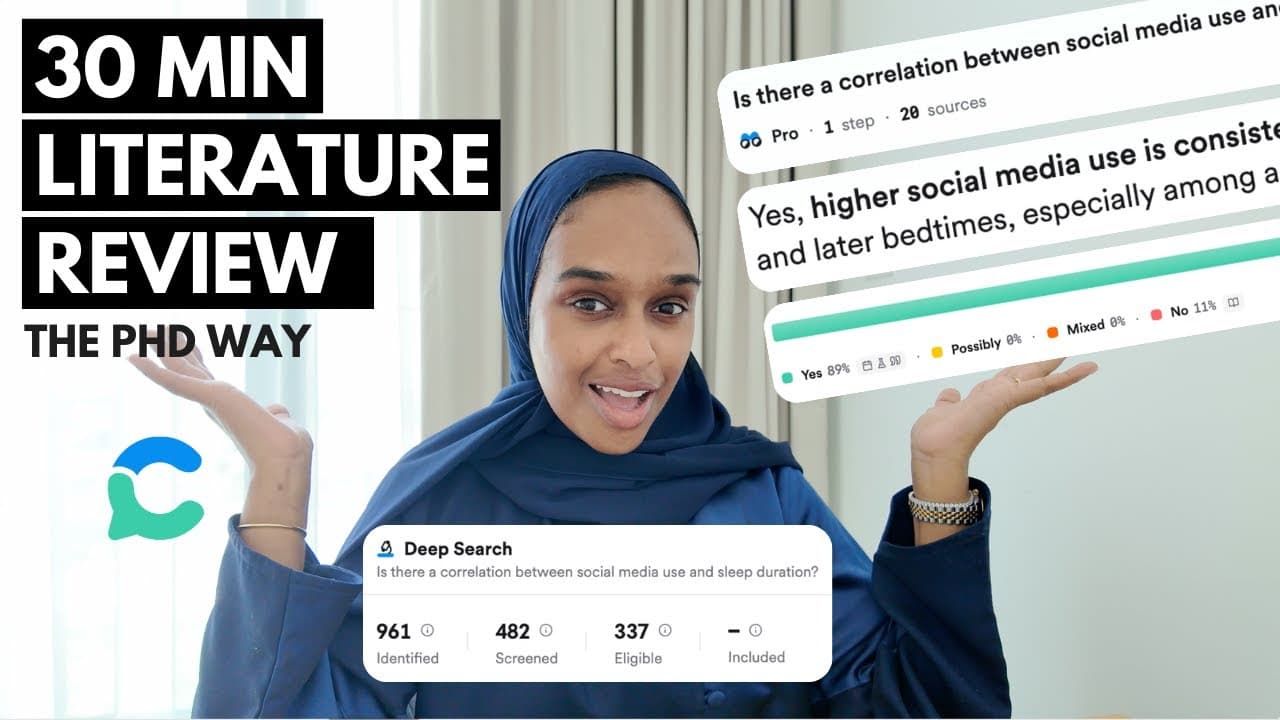
The video presents a five step method to create a literature review quickly. It uses Consensus AI to search, filter, and extract evidence from papers, then uses Threads for follow up questions, and finally drafts an outline to write the review in about 30 minutes to an hour. A strong outline and organized sources are emphasized for top marks.
Transcript
Writing a literature review does not have to be a difficult and daunting process. I have four degrees, so I've written my fair share of literature reviews in my time, and I've perfected how to do it perfectly. And in today's video, I'm going to be going through the five key steps to take you from a research question, a topic, a couple of keywords t... Read More
Key Insights
- The five steps are search, compare, analyze, draft, and write.
- Consensus AI is used to extract and synthesize information from scientific papers with searchable summaries.
- Filters on year, journal ranking, and methods help narrow results to relevant literature.
- Consensus provides a paper snapshot and a claim and evidence table for quick understanding.
- The platform allows exporting results to Excel, Menly, EndNote, or Zotero for referencing.
- Follow up questions via Threads help explore specific aspects and gaps in the literature.
- Papers can be opened, saved, and organized into lists or folders for later use.
- Drafting an outline in Consensus consolidates findings and provides citations for writing.
- More videos from this channel:
- More from this channel: Dr Amina Yonis
Install to Summarize YouTube Videos and Get Transcripts
Explore YouTube Video Summarizer or Get YouTube Transcript Extractor
Questions & Answers
Q: A real search query question about the video (e.g. 'How to...', 'What is...', 'Why does...', 'When should...'). Question 1
The method starts by defining a strong research question and keywords, then performing an initial search on Consensus to gather relevant papers. This search uses filters such as year, journal ranking, and methods to narrow results. The goal is to identify a manageable set of high quality sources that will underpin the literature review.
Q: Question 2
Step one focuses on gathering sources with Consensus, followed by using its deep search option for more exhaustive results. The deep search creates a comprehensive search strategy, screens papers for eligibility, and builds a theoretical background. The process saves time and ensures that only pertinent studies contribute to the review.
Q: Question 3
Step three emphasizes analyzing the papers by accessing open access versions when possible and using the paper snapshot to summarize key elements. You can save papers to lists, compare multiple papers in a table, and extract four main results. This structured analysis supports a coherent narrative in the final write up.
Q: Question 4
What role do Threads play in the workflow? Threads are used for follow up questions to probe specific aspects like which social media platforms affect sleep or what gaps exist in the literature. They help identify nuanced factors and drive deeper understanding beyond the initial search results.
Q: Question 5
How does the video propose organizing sources for writing? Papers can be saved into lists or folders, details can be explored with direct questions to each paper, and a detailed outline can be drafted. This organization culminates in a strong literature review outline that guides the drafting stage.
Q: Question 6
Why is an outline important in this method? The outline translates the gathered evidence into a structured framework, highlighting sections, arguments, and citations. It acts as a blueprint for writing and ensures that all sources are integrated coherently to support the research question and conclusions.
Q: Question 7
What is the role of filtering in Consensus during the initial search? Filtering narrows results by publication year, journal ranking, and research methods, helping to balance breadth and relevance. This reduces time spent on irrelevant papers and increases the likelihood of capturing high quality, evidence based sources.
Q: Question 8
What is the expected outcome after following these steps? By completing the five steps and drafting a detailed literature review outline, you should have a ready to write basis with cited sources. The process aims to yield a well organized draft suitable for attaining strong academic evaluation within a limited timeframe.
Summary & Key Takeaways
-
A strong literature review starts with a clearly defined research question and keywords to guide the search.
-
The method centers on using Consensus AI to perform initial searches, apply filters, and gather evidence from scholarly papers.
-
Drafting a detailed outline and organizing papers into a table or folder streamlines the writing process and supports citation management.
Read in Other Languages (beta)
Share This Summary 📚
Summarize YouTube Videos and Get Video Transcripts with 1-Click
Try YouTube Summary with ChatGPT & Claude or YouTube Transcript Generator
Explore More Summaries from Dr Amina Yonis 📚


Summarize YouTube Videos and Get Video Transcripts with 1-Click
Try YouTube Summary with ChatGPT & Claude or YouTube Transcript Generator