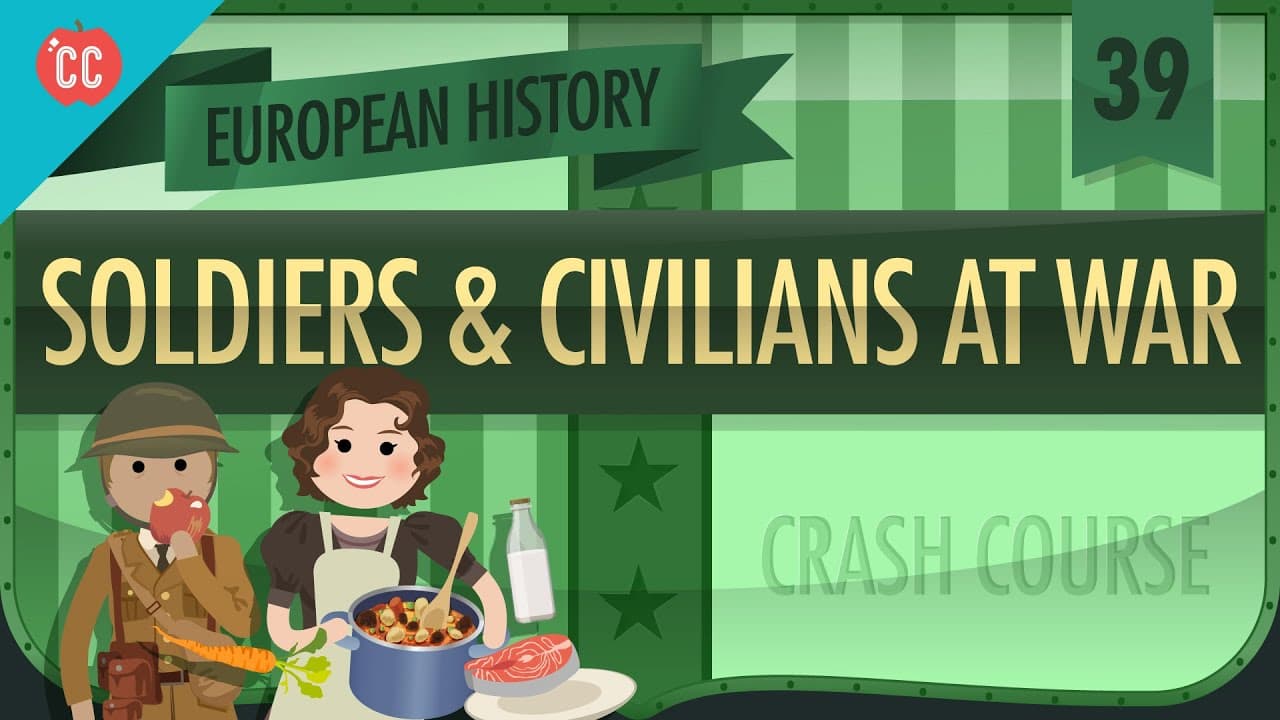
How Did World War II Impact Civilians and Soldiers?
TL;DR
World War II deeply affected both civilians and soldiers, blurring traditional roles as entire populations were engaged in the war effort. Soldiers faced extreme hardship driven by camaraderie, while civilians endured bombings and resource shortages, leading to widespread suffering and changes in governance. Gender roles also evolved, with women stepping into critical roles in the workforce and combat as necessity dictated.
Transcript
Hi I’m John Green and this is Crash Course European History. So, total war involves the participation of entire populations, as we saw with World War I. But if anything, populations participated far more—both willingly and unwillingly—across Eurasia and Africa during World War II. Lethal weapons played a huge role, of course, but so did human labor... Read More
Key Insights
- 🤪 World War II went beyond weaponry, involving human labor and resource systems.
- 🪛 Soldiers endured extreme suffering, driven by loyalty to comrades.
- 🛟 Governments expanded control over civilians, affecting their daily lives and ideas about governance.
- 🧔♀️ Gender roles varied, with Nazis promoting domestic roles for women and Soviets emphasizing equality in combat.
- 🫱 Atrocities such as famines in Leningrad and India highlighted human-inflicted suffering during the war.
- 🫱 Heroes emerged amidst the war, showing acts of selflessness and resistance.
- 🍃 World War II reshaped governance structures and societal beliefs, leaving a lasting impact on European history.
Install to Summarize YouTube Videos and Get Transcripts
Explore YouTube Video Summarizer or Get YouTube Transcript Extractor
Questions & Answers
Q: How did World War II involve entire populations beyond just weaponry?
World War II entailed human labor, resource allocation, and civilian experiences, showing the impact beyond lethal weapons.
Q: What motivated soldiers to fight amidst unendurable conditions in World War II?
Soldiers were motivated by loyalty to comrades, forming strong bonds that transcended ideologies or nations, keeping them fighting in harsh environments.
Q: How did World War II reshape ideas about governance and control over civilians?
Governments expanded control over civilians, rationing goods, organizing transportation, and shaping ideas about governance and responsibility during the war.
Q: How did gender roles change and impact the war, especially in Nazi and Soviet ideologies?
Gender roles differed significantly, with Nazis promoting women's domestic roles and Soviets emphasizing equality in heavy industry and combat, showcasing varied societal beliefs.
Summary & Key Takeaways
-
World War II saw widespread participation across Eurasia and Africa, involving not just weapons but also human labor and resource systems.
-
Soldiers and civilians endured immense suffering, with soldiers driven by loyalty to comrades amidst unendurable conditions.
-
Governments expanded control over civilians, shaping their lives and ideas about governance during the war.
Read in Other Languages (beta)
Share This Summary 📚
Summarize YouTube Videos and Get Video Transcripts with 1-Click
Try YouTube Summary with ChatGPT & Claude or YouTube Transcript Generator
Explore More Summaries from CrashCourse 📚





Summarize YouTube Videos and Get Video Transcripts with 1-Click
Try YouTube Summary with ChatGPT & Claude or YouTube Transcript Generator