What Are the Origins of Life on Earth?
TL;DR
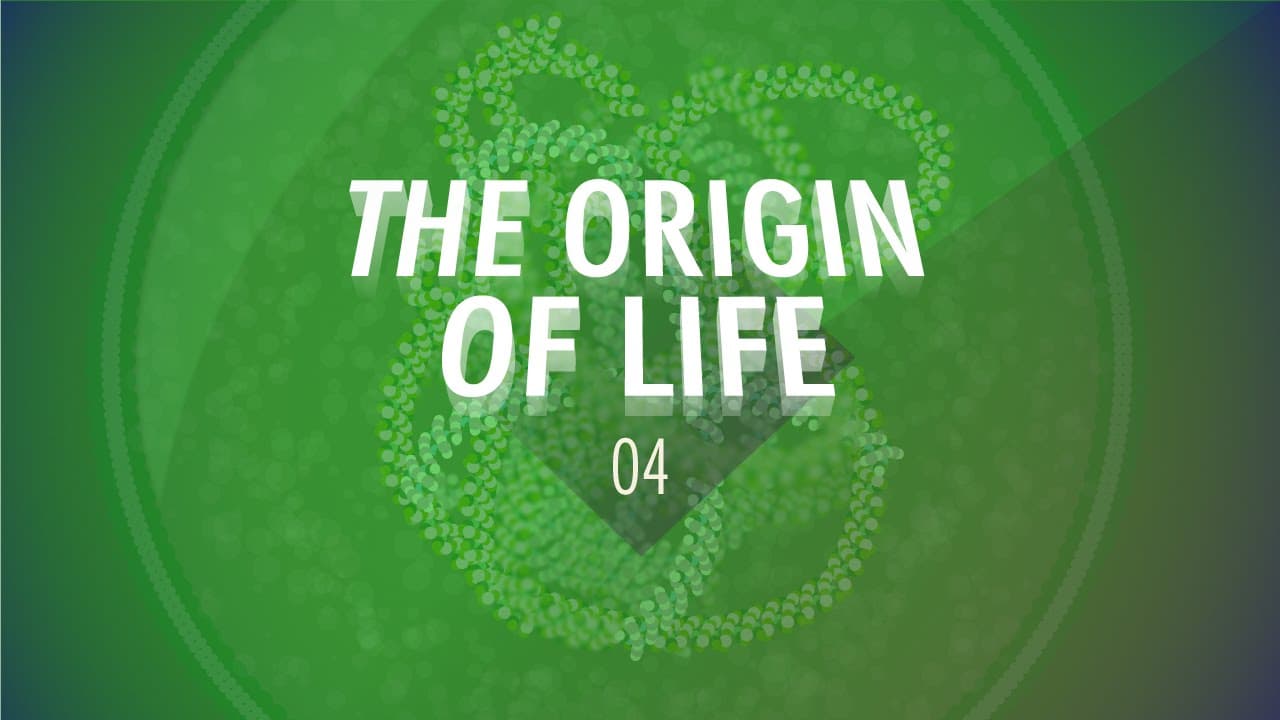
Life on Earth originated between 3.5 and 4 billion years ago, starting with single-celled organisms called prokaryotes. The evolution of photosynthesis in these organisms significantly increased atmospheric oxygen, leading to the rise of more complex eukaryotes and introducing genetic diversity through sexual reproduction. Current theories about the origin of life include Darwin's warm pond hypothesis, underwater volcanoes, and panspermia.
Transcript
Hi, I'm John Green and welcome to Crash Course Big History where today we are going to get a life. Or at least the Earth is going to get a life. But first, today we have to start with a disclaimer. The origin of life is in many ways a "blank spot" in the pages of history. Like, the mystery surrounding the big bang or dark matter - the origin of lif... Read More
Key Insights
- The origin of life remains a mystery, with scientific research providing a general framework but lacking detailed understanding.
- Life on Earth began between 3.5 and 4 billion years ago, with the earliest forms being single-celled organisms called prokaryotes.
- Prokaryotes dominated for over half of life's history, eventually evolving into more complex eukaryotes.
- The emergence of photosynthesis by prokaryotes led to increased atmospheric oxygen, causing a massive die-off of anaerobic organisms.
- Sexual reproduction in eukaryotes introduced genetic diversity, enhancing evolutionary processes.
- Theories on the origins of life include Darwin's warm pond, underwater volcanoes, and panspermia.
- DNA and RNA play crucial roles in the replication and evolution of life, with mutations driving species development.
- Understanding the mechanisms of life is essential for grasping historical narratives and future implications.
Install to Summarize YouTube Videos and Get Transcripts
Explore YouTube Video Summarizer or Get YouTube Transcript Extractor
Questions & Answers
Q: What is the significance of prokaryotes in the history of life?
Prokaryotes are significant because they represent the earliest forms of life on Earth, dominating for over 2 billion years. They played a crucial role in the evolution of life, eventually giving rise to more complex eukaryotic cells. Their ability to adapt and thrive in various environments laid the foundation for the diversity of life we see today.
Q: How did photosynthesis impact early life on Earth?
Photosynthesis, developed by some prokaryotes, significantly impacted early life by increasing atmospheric oxygen levels. This led to the Oxygen Holocaust, where many anaerobic organisms perished due to their inability to survive in oxygen-rich environments. However, it also paved the way for the evolution of aerobic organisms, marking a major turning point in the history of life.
Q: What role does DNA play in the evolution of life?
DNA plays a critical role in the evolution of life by serving as the blueprint for living organisms. It allows for the replication and transmission of genetic information across generations. Mutations in DNA, though rare, can lead to genetic diversity, driving the process of natural selection and the emergence of new species over time.
Q: What are the main theories about the origin of life on Earth?
The main theories about the origin of life include Darwin's hypothesis of life evolving in a 'warm little pond,' the idea of organic chemicals forming near underwater volcanoes, and the panspermia theory, which suggests life might have originated elsewhere in the solar system and arrived on Earth via asteroids. Each theory offers different perspectives on how life may have started.
Q: How did sexual reproduction influence evolutionary processes?
Sexual reproduction introduced a significant evolutionary advantage by increasing genetic diversity. By combining genetic material from two parents, sexually reproducing organisms have a broader range of traits for natural selection to act upon. This diversity accelerates evolutionary processes, allowing species to adapt more rapidly to changing environments and increasing their chances of survival.
Q: What is the RNA World Hypothesis?
The RNA World Hypothesis suggests that early life forms may have relied solely on RNA for genetic information and catalytic functions before DNA and proteins evolved. RNA's ability to both store genetic information and catalyze chemical reactions could have enabled primitive life forms to replicate and evolve, eventually leading to the more complex DNA-based life we see today.
Q: Why is understanding the mechanisms of life important for historical narratives?
Understanding the mechanisms of life is crucial for historical narratives because it provides insights into how life evolved and adapted over time. This knowledge helps explain past events and their consequences, enabling us to predict future biological trends and challenges. It also informs our understanding of human history and the development of complex societies.
Q: What challenges remain in understanding the origin of life?
Challenges in understanding the origin of life include the lack of direct evidence from the early Earth, the complexity of biochemical processes involved, and the difficulty in replicating these processes in laboratory settings. Despite advances in scientific research, many questions remain unanswered, making the origin of life one of the most intriguing and elusive topics in science.
Summary & Key Takeaways
-
The video discusses the beginnings of life on Earth, focusing on the emergence and evolution of single-celled organisms. It highlights the transition from prokaryotes to eukaryotes and the role of photosynthesis in atmospheric changes.
-
Key concepts include the role of DNA and RNA in replication, the significance of sexual reproduction, and the various theories about the origins of life, such as Darwin's warm pond and panspermia.
-
The video emphasizes the importance of understanding life's mechanisms to comprehend historical events and their future impact, while acknowledging the ongoing mysteries surrounding the origin of life.
Read in Other Languages (beta)
Share This Summary 📚
Summarize YouTube Videos and Get Video Transcripts with 1-Click
Try YouTube Summary with ChatGPT & Claude or YouTube Transcript Generator
Explore More Summaries from CrashCourse 📚


Summarize YouTube Videos and Get Video Transcripts with 1-Click
Try YouTube Summary with ChatGPT & Claude or YouTube Transcript Generator