Why Did Americans Start Drinking So Much Milk?
TL;DR
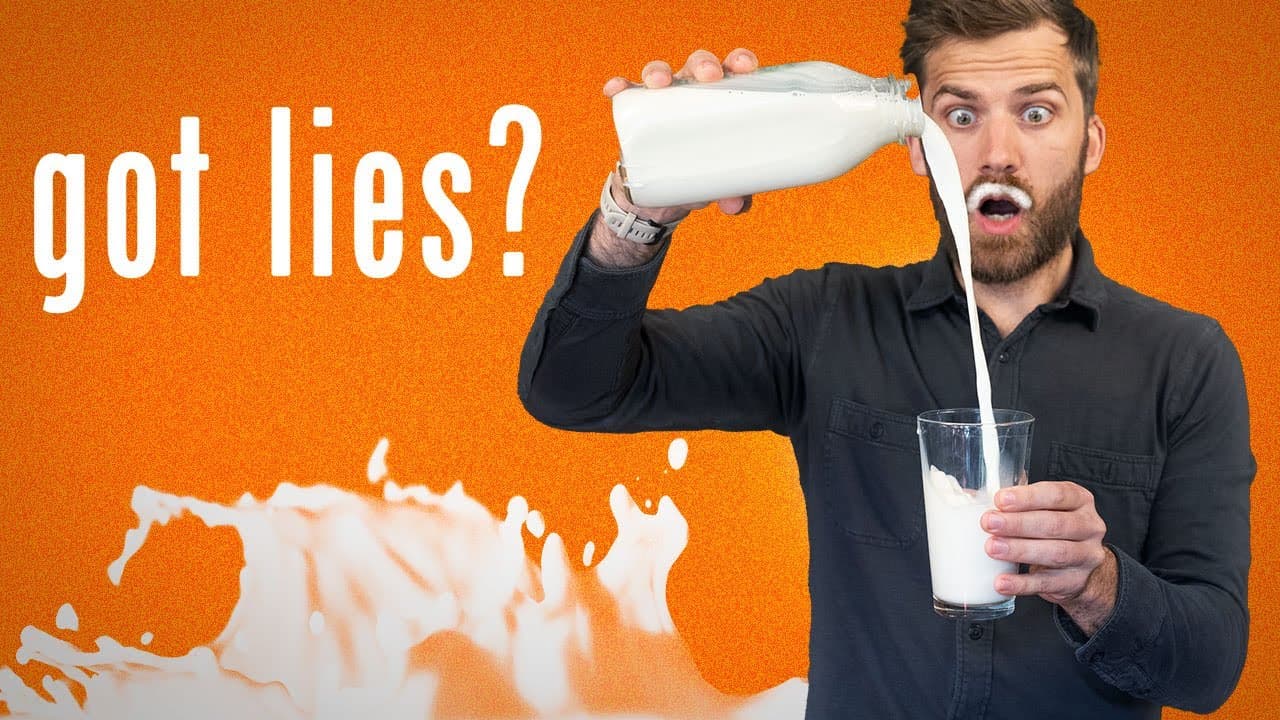
American milk consumption was shaped by dairy promotion, scientific claims, government policy, and technologies such as pasteurization, not simply by nutritional necessity. The National Dairy Council presented dairy as vital to health, while later government support contributed to enormous cheese surpluses, including the stockpile distributed through welfare programs under President Reagan.
Transcript
- I like milk for all the good, healthy things that are in it. - [Narrator] Mankind's most nearly perfect food. - Good, fresh, healthy milk. - The year is 1981. Raiders of the Lost Ark is the number one movie, and everyone is wearing leg warmers. You've got this former actor turned politician who's now the president, and he loves free markets and h... Read More
Key Insights
- Milk consumption is partly determined by human biology because populations differ in their ability to digest lactose after childhood. Long reliance on animal milk helped some populations develop enzymes that enabled continued digestion, while many people elsewhere remained unable to tolerate it as adults.
- Cheese and yogurt are methods of processing milk that helped people preserve it and make it easier to consume. Humans used rennet from a cow's stomach to begin breaking down milk, then fermented it in caves to produce foods that lasted longer than raw milk.
- Pasteurization is a heating process that kills dangerous pathogens in milk and extends its shelf life. Before pasteurization, raw milk spoiled quickly and provided a favorable environment for microorganisms, making it particularly risky when consumed by children.
- Dairy science became a commercial defense against competing foods such as margarine. Dairy companies supported research that connected milk with stronger growth in rats and identified vitamin A, giving the industry scientific language for presenting its products as protective and nutritionally important.
- The National Dairy Council is an industry organization formed to promote dairy products. It helped transform milk's public image from an optional food into something portrayed as scientifically proven and essential to health, especially through messages about nutrition and strong bones.
- American childhood milk consumption was reinforced by both families and schools. The narrator recalls receiving milk at breakfast, in school cartons, and again at dinner while advertising repeatedly associated calcium and dairy consumption with building strong bones.
- Government cheese was created from a vast surplus of processed cheese held by the United States government. By 1981, officials were struggling to find a market for the stockpile, and one official reportedly suggested dumping the excess cheese into the ocean.
- President Reagan's cheese distribution program moved surplus dairy products from government storage into the welfare system. The resulting cheese became associated with the experience of poor and underserved Americans, later appearing as a cultural reference in films and hip-hop lyrics.
Install to Summarize YouTube Videos and Get Transcripts
Explore YouTube Video Summarizer or Get YouTube Transcript Extractor
Questions & Answers
Q: Why did Americans start drinking so much cow's milk?
Americans were encouraged to drink cow's milk through a combination of industry promotion, scientific research, family habits, school distribution, and government support for dairy. Dairy companies responded to competition from products such as margarine by funding research and forming the National Dairy Council, which promoted milk as scientifically vital for health and repeatedly connected its calcium content with strong bones.
Q: Was milk always considered essential for human health?
Milk was not always treated as an essential adult food. Human bodies originally lacked the enzymes needed to digest another animal's milk after childhood. Some populations developed greater tolerance after relying on dairy for thousands of years, while many others did not. In early twentieth-century America, dairy promotion increasingly recast milk as a nearly perfect food that was vital for health.
Q: Why can some adults digest milk while others cannot?
Adult milk digestion differs because populations adapted differently to dairy consumption. People in northern Europe relied on animals during cold winters when crops were difficult to grow, while some nomadic communities in the Sahara depended on milk during hot summers. Over thousands of years, these groups developed enzymes that helped break down milk, while many populations elsewhere did not develop the same tolerance.
Q: How did cheese and yogurt make milk more useful?
Cheese and yogurt allowed people to preserve milk and begin breaking it down before consumption. Humans mixed milk with rennet, a digestive enzyme taken from a cow's stomach, and then fermented the mixture in caves. This process turned rapidly spoiling milk into longer-lasting foods. Butter offered another durable dairy product and extended the usefulness of milk beyond immediate consumption.
Q: Why was pasteurization important to milk consumption?
Pasteurization made fluid milk safer and increased its shelf life. Raw milk spoiled quickly and became a hospitable environment for microorganisms, which made drinking it risky, especially for children. Heating milk killed dangerous pathogens and allowed it to remain usable longer. The process was named after the French scientist whose last name supplied the term, not after a cow's pasture.
Q: How did dairy companies promote milk as a health food?
Dairy companies used scientific research and coordinated messaging to defend dairy against competing products such as margarine. A study found that rats given dairy grew stronger and larger, and researchers linked the result to a newly identified substance called vitamin A. The National Dairy Council then promoted claims that milk corrected dietary deficiencies and was vital for public health.
Q: Why did the United States have caves full of cheese?
The United States government had accumulated an enormous surplus of processed cheese for which officials could not find a market. In 1981, the stockpile included hundreds of millions of pounds stored in a cave in Kansas and was beginning to deteriorate. One official reportedly suggested dumping the cheese into the ocean, illustrating the scale of the storage problem.
Q: What was government cheese and why was it distributed?
Government cheese was processed cheese taken from the United States government's large surplus stockpile and distributed through the welfare system. President Reagan decided to give it to poor Americans rather than leave it unused in storage. The giveaway began in California, where needy people lined up for the cheese, and the product later became a cultural symbol of the welfare experience.
Summary & Key Takeaways
-
Milk became an important human food only in certain populations. Some communities developed the ability to digest lactose after childhood, while others processed milk into longer-lasting cheese, yogurt, and butter. Pasteurization later made fluid milk safer by using heat to kill dangerous pathogens and extend its limited shelf life.
-
In the early 1900s, margarine threatened butter, prompting dairy companies to defend their products through research and organized promotion. Studies connecting dairy with growth and vitamin A helped producers portray milk as scientifically essential. The National Dairy Council reinforced the message that dairy was vital rather than merely optional.
-
By 1981, the United States government possessed an enormous stockpile of processed cheese stored in caves in Kansas. President Reagan authorized its distribution to poor Americans through welfare programs. Government cheese subsequently became a recognizable symbol of poverty and appeared in movies and hip-hop lyrics by artists familiar with it.
Read in Other Languages (beta)
Share This Summary 📚
Summarize YouTube Videos and Get Video Transcripts with 1-Click
Try YouTube Summary with ChatGPT & Claude or YouTube Transcript Generator
Explore More Summaries from Johnny Harris 📚




Summarize YouTube Videos and Get Video Transcripts with 1-Click
Try YouTube Summary with ChatGPT & Claude or YouTube Transcript Generator