What future shifts will reshape Earth as new oceans and anomalies emerge
TL;DR
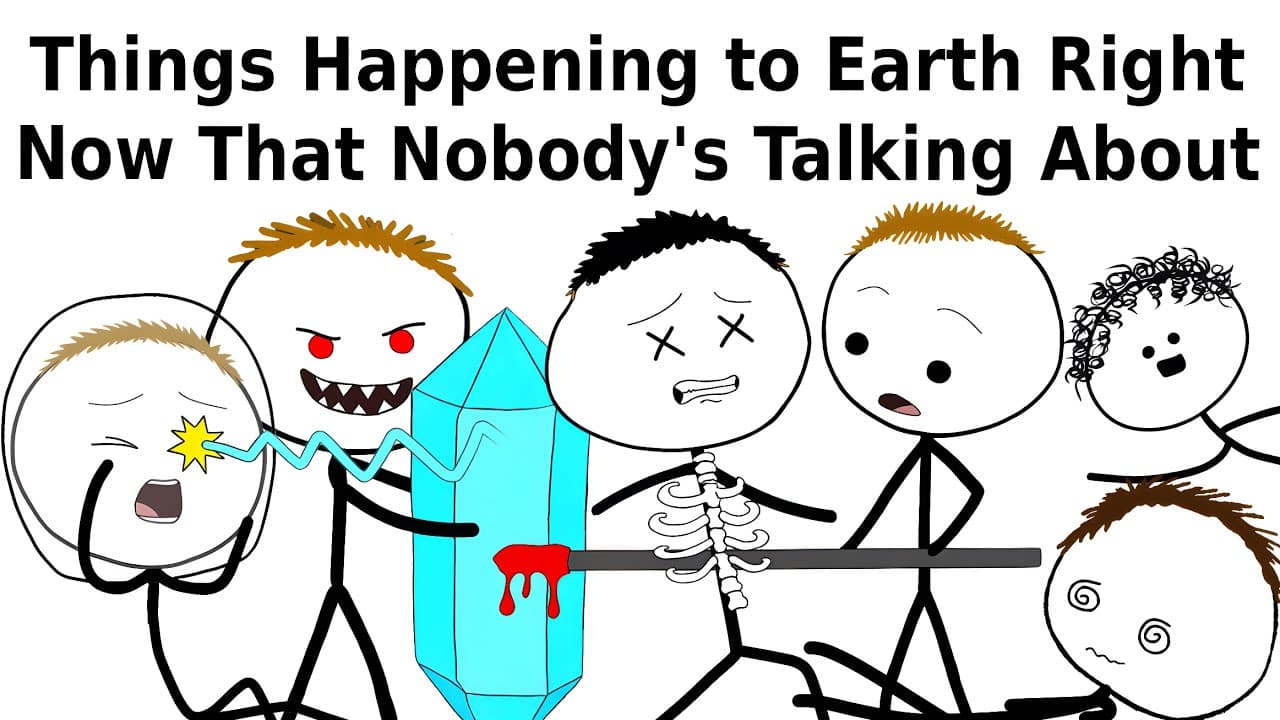
The video highlights dramatic Earth processes now unfolding: Africa is slowly ripping apart, potentially creating a new ocean, while space hurricanes and a hidden underground ocean also reshape our planet. Slow earthquakes, dark lightning, and a weakening magnetic shield add to a picture of a dynamic world under change, with signs spanning from the atmosphere to the deep interior.
Transcript
Let's get right into it. Number 10. A new ocean is being born. Right now, Africa is slowly tearing itself apart. And I don't mean politically, I mean literally. Physically splitting in two. In Ethiopia, there's a massive crack in the ground that stretches for miles. That's not just any crack. It's the beginning of a new ocean. Scientists call this ... Read More
Key Insights
- Africa is pulling apart from below, which may form a new ocean in the Afar region.
- Space hurricanes are large plasma storms that can disrupt satellites and GPS signals.
- A hidden ocean exists about 400 miles beneath the surface, stored in ringwoodite minerals.
- Silent earthquakes release energy gradually and can occur where major quakes happen.
- Dark lightning inside storms generates gamma rays and can affect aircraft exposure.
- A global hum is a low frequency sound heard by a minority of people and its origins are uncertain.
- The South Atlantic Anomaly is a thinning magnetic shield that exposes satellites to higher radiation.
- Earth is getting shorter days as it spins faster, potentially requiring a negative leap second.
- Underwater mountain building shows rapid seafloor changes and new volcanic formations.
- The planet has a mechanism of water recycling through subduction and volcanic activity.
- More videos from this channel:
- More from this channel: Chill Dude Explains
Install to Summarize YouTube Videos and Get Transcripts
Explore YouTube Video Summarizer or Get YouTube Transcript Extractor
Questions & Answers
Q: What is causing Africa to crack and how could it create a new ocean
Africa is slowly tearing itself apart from below due to a massive plume of hot rock pushing up against the continent in the Afar Triangle. The crack is stretching for miles and moving apart at a rate mentioned as similar to fingernail growth over time. If this continues, the gap may widen enough to fill with seawater, effectively forming a new ocean and altering weather patterns and shipping routes.
Q: How do space hurricanes differ from ordinary hurricanes and what do they do
Space hurricanes are massive plasma storms that occur above Earth, moving much faster than typical weather systems and producing a rain of electrons instead of water. They can disrupt GPS signals and radio communications and even alter satellite orbits. They were identified recently in 2021 and mostly occur over the polar regions, generating auroras as a byproduct.
Q: What is the hidden ocean and why is it significant
The hidden ocean is a vast reservoir of water trapped about 400 miles below the surface, stored in the mineral ringwoodite under high pressure. It contains three times more water than all surface oceans combined. This water cycles with surface oceans through tectonic processes, and its discovery came from seismic studies showing differences in how waves travel through wet versus dry rocks.
Q: What are silent earthquakes and why are they important
Silent earthquakes are slow-slip events where fault movement occurs over days to weeks rather than seconds. They release the same amount of energy as major earthquakes but are not felt on the surface. They tend to occur in regions with big quakes, such as the Pacific Northwest, and may either release strain gradually or load it for later larger events.
Q: What is dark lightning and how does it relate to flight safety
Dark lightning refers to gamma rays produced inside thunderclouds when energetic electrons are accelerated to near light speed. This radiation can be intense, with aviation implications if a plane intercepts it, though most events occur too high to affect people on the ground. The phenomenon was identified in the 1990s and happens tens to thousands of times daily globally.
Q: What is the global hum and who hears it
The global hum is a low frequency, persistent sound reported by about 2 percent of people, often in older demographics. Its source is not clearly detectable with standard instruments, and it has driven some people to relocate. Scientists are studying its origins, noting that its existence has been observed since the 1950s, but measurements are challenging.
Q: What is the South Atlantic Anomaly and why is it significant for space systems
The South Atlantic Anomaly is a region where Earth’s magnetic field is weaker, reducing protection from space radiation. It spans from Brazil to Zimbabwe and has grown to form two separate weak spots. Passing through this area can affect satellites and the ISS may power down some computers due to increased radiation exposure.
Q: Why is Earth’s day shorter and what is a negative leap second
Earth’s day has shortened recently as the planet spins faster, on a timescale that affects precise timing systems used in technology. Traditionally, leap seconds have been added to keep clocks in sync, but the observed acceleration could lead to a negative leap second where seconds are subtracted to maintain alignment with atomic time, a scenario not previously implemented.
Q: What triggers underwater mountain building near Mayotte and why is it notable
Near Mayotte, repeated earthquakes revealed a nascient volcanic activity where the seafloor rose to form a new underwater mountain estimated at half a mile high, formed rapidly within months due to a large magma bubble pushing upward. This shows Earth can rapidly build new volcanic features even in uninhabited ocean regions, reshaping the seafloor topography.
Summary & Key Takeaways
-
The video walks through ten phenomena including a developing ocean in Africa, space hurricanes, a hidden ocean beneath Earth, silent earthquakes, dark lightning, the global hum, the South Atlantic Anomaly, a shortening day, underwater mountain building, and the iron snow. Each item shows how interconnected Earth systems respond to internal and external forces.
-
The overview connects surface events to deep interior processes, highlighting how tectonics, magnetism, and atmospheric phenomena interact, sometimes with rapid and surprising effects. It notes that discoveries about these processes have emerged over recent decades and continue to unfold under ongoing observation.
-
Overall, the content emphasizes that Earth is an active, changing system with multiple cutting edge discoveries that challenge our understanding of stability and risk, urging continued monitoring of both atmospheric and deep Earth processes.
Read in Other Languages (beta)
Share This Summary 📚
Summarize YouTube Videos and Get Video Transcripts with 1-Click
Try YouTube Summary with ChatGPT & Claude or YouTube Transcript Generator
Explore More Summaries from Chill Dude Explains 📚




Summarize YouTube Videos and Get Video Transcripts with 1-Click
Try YouTube Summary with ChatGPT & Claude or YouTube Transcript Generator