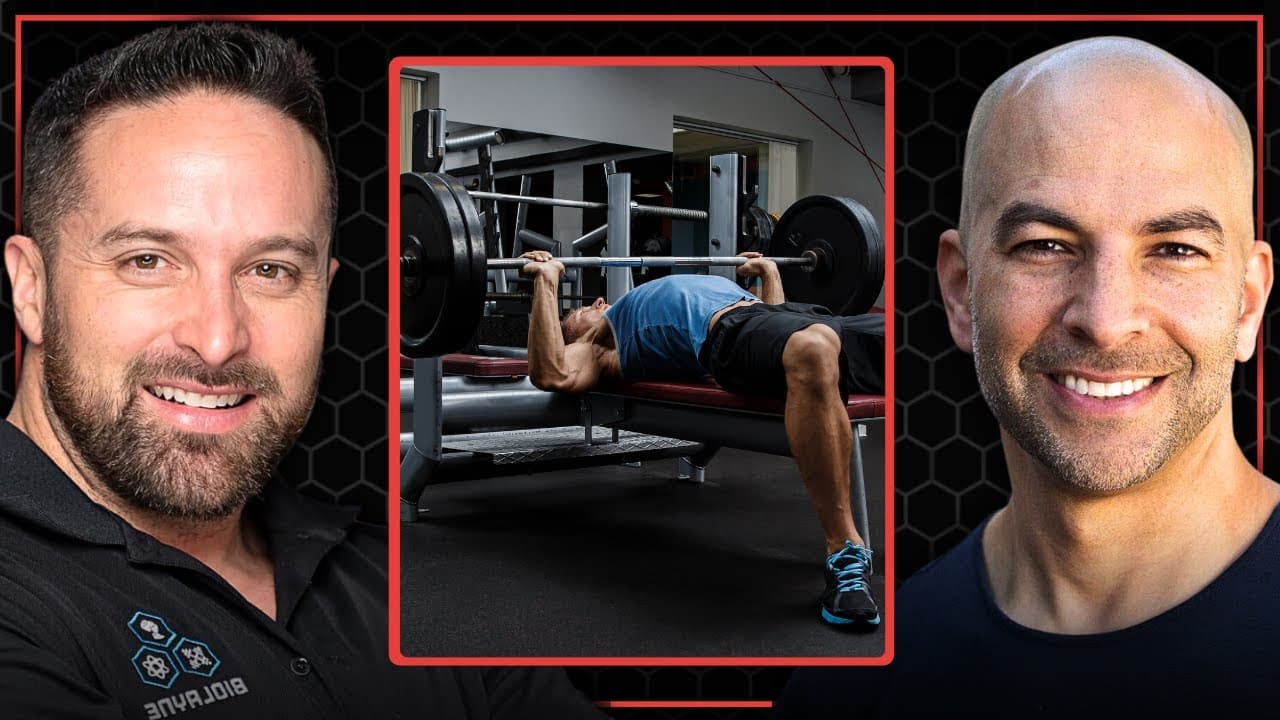
How to train for strength to boost longevity
TL;DR
Strength training boosts longevity primarily by improving cardiorespiratory fitness and muscle strength, with muscle mass closely linked to strength. Progressive overload is the core principle, and you can progress by increasing weight, reps, or sets while balancing stimulus and fatigue to avoid injury. Even older adults can benefit from gradual overload.
Transcript
what can the rest of us who aren't powerlifters learn just about strength because if I wanted to frame this for a listener because people have heard me talk about this but the two metrics that are most significantly associated with longevity uh so if we were to stack up every possible known risk factor smoking type 2 diabetes high blood pressure co... Read More
Key Insights
- Strength and cardiorespiratory fitness are the two most significant factors tied to lower mortality risk.
- Muscle mass is closely tied to strength; increasing one often increases the other.
- Progressive overload is the core training principle for strength gains, applicable to beginners and advanced athletes alike.
- Weight on the bar is a common way to progressive overload, but reps and volume are important alternatives.
- Early gains in novices often come from adding weight on the bar almost every week, especially at the start.
- As lifters advance, gains become nonlinear, requiring adjustments to volume and intensity.
- Volume can be increased by adding more hard sets or slightly higher reps, not just by lifting heavier.
- Understanding proximity to failure (RPE) helps optimize stimulus while managing fatigue and injury risk.
Install to Summarize YouTube Videos and Get Transcripts
Explore YouTube Video Summarizer or Get YouTube Transcript Extractor
Questions & Answers
Q: How does strength relate to longevity beyond just lifting weights?
Strength relates to longevity by reflecting greater cardiorespiratory fitness and muscle mass, both of which correlate with lower risk of mortality across conditions like hypertension, diabetes, and cardiovascular disease. The best evidence shows that being strong, and having high fitness, significantly reduces hazard ratios compared with weaker states, making strength a practical marker for healthspan and lifespan.
Q: What is progressive overload and why is it essential for beginners?
Progressive overload is the gradual increase of training demands to stimulate adaptation. For beginners, adding weight on the bar week by week is a simple, effective approach, often yielding strength gains quickly. This method establishes a foundation of strength and eventually teaches the body to handle higher loads, which is essential for long term progress.
Q: Can older adults benefit from strength training and how should they start?
Yes, older adults can benefit substantially from strength training. Begin with lighter movements and focus on gradual overload, such as low loads and higher repetitions, then slowly increase weight or volume. This approach improves functional abilities like squatting to a chair, which translates into better daily life performance and independence.
Q: What role does volume play in building strength as you advance?
As you advance, simply lifting heavier becomes harder due to non linear progress. Increasing volume by adding more sets or reps allows continued stimulus without excessive loads, helping to maintain gains while reducing injury risk. This balance between stimulus and fatigue is key to sustainable progression.
Q: How should squat and other lifts be used in a beginner program?
Begin with basic compound lifts and use progressive overload by modestly increasing weight or reps over time. Early programs typically see easy gains as you can add weight almost every week while maintaining good form, which reinforces technique and builds a solid strength base.
Q: What is RP and how should beginners use it in training?
RP, or rate of perceived exertion, is a scale to gauge how hard a set feels. Beginners should start with conservative estimates, aiming for sets that leave some reps in reserve, and gradually train closer to failure as experience builds. This helps maximize stimulus while keeping fatigue manageable.
Q: Why is there a caution about training to failure even for strength gains?
Training to failure can significantly increase fatigue for relatively small gains, especially if repeated frequently. Most hypertrophy and strength benefits occur within a few reps of failure, so staying a few reps shy of failure and increasing volume can produce similar or better gains with less fatigue and injury risk.
Q: What practical tips help balance stimulus and fatigue during training?
Practical tips include using RP ranges that allow multiple sets at lower effort, gradually adding sets, and monitoring form to prevent breakdown. A key idea is to maximize stimulus while minimizing fatigue, which often means adjusting volume and intensity based on experience, recovery, and daily readiness.
Summary & Key Takeaways
-
A strong body supports longevity through better fitness and muscle preservation, making progressive overload the central idea for getting stronger.
-
Adapting overload methods over time, such as adding reps or sets, helps manage fatigue and minimize injury while still growing strength.
-
Even frail or older individuals can gain functional improvements by starting with lighter movements and progressively overloading over weeks and months.
Read in Other Languages (beta)
Share This Summary 📚
Summarize YouTube Videos and Get Video Transcripts with 1-Click
Try YouTube Summary with ChatGPT & Claude or YouTube Transcript Generator
Explore More Summaries from Peter Attia MD 📚



Summarize YouTube Videos and Get Video Transcripts with 1-Click
Try YouTube Summary with ChatGPT & Claude or YouTube Transcript Generator