How to Use the Unicorn Model for Trading Success
TL;DR
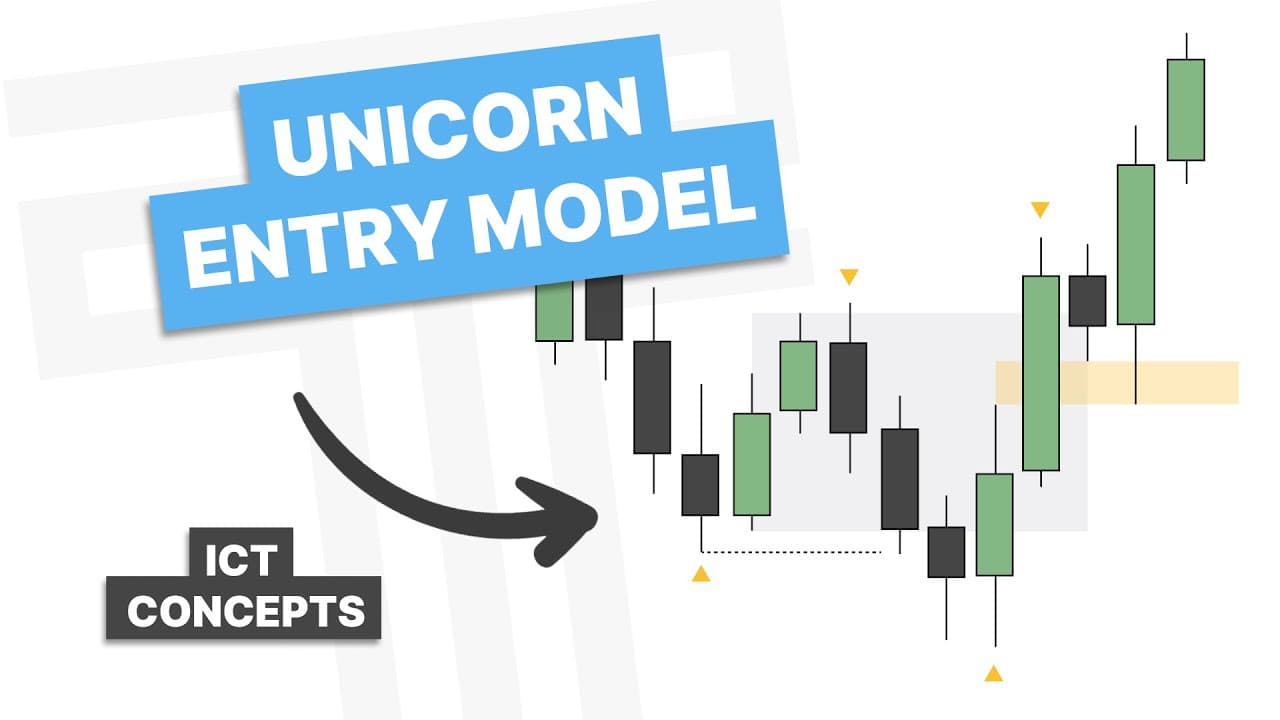
The Unicorn model effectively combines Breaker Blocks and Fair Value Gaps to enhance trading entries. By focusing on market structures and imbalances, traders can identify optimal entry points and strategically place stop-loss levels. The video features practical examples on NASDAQ charts, illustrating the model's real-world applicability and potential for success.
Transcript
how's it going everyone this video is going to be over the Unicorn entry model the Unicorn is a breaker block paired with a fair value Gap so the first thing we're going to do is hop into a PDF go over that explain it and then we'll hop into the chart and find some examples so with this model being made up of fair value gaps and breaker blocks we'r... Read More
Key Insights
- The Unicorn entry model integrates Breaker Blocks with Fair Value Gaps, providing a structured approach to market entry.
- Fair Value Gaps are identified using a three-candlestick pattern, highlighting imbalances in market prices.
- Breaker Blocks are structural patterns that indicate shifts in market trends, crucial for identifying potential entry points.
- The Unicorn model uses overlapping Fair Value Gaps and Breaker Blocks to determine optimal entry zones in trading.
- Examples using NASDAQ charts illustrate the practical application of the Unicorn model, showing its effectiveness in real trades.
- The model emphasizes the importance of identifying liquidity zones, such as equal highs or lows, for potential market moves.
- Stop-loss placement is crucial in the Unicorn model, with options to place it either at the low or below the Breaker Block.
- The video references additional resources and traders like Tyler and Ash, who provide further insights into the Unicorn model.
Install to Summarize YouTube Videos and Get Transcripts
Explore YouTube Video Summarizer or Get YouTube Transcript Extractor
Questions & Answers
Q: What is the Unicorn entry model?
The Unicorn entry model is a trading strategy that combines Breaker Blocks and Fair Value Gaps. It aims to identify optimal entry points by analyzing structural patterns and market imbalances. The model uses these concepts to create a systematic approach to entry, focusing on areas where these two elements overlap.
Q: How are Fair Value Gaps identified?
Fair Value Gaps are identified using a three-candlestick pattern. In a bearish example, the first candlestick's low does not overlap with the third candlestick's high, creating a gap. Similarly, in a bullish example, the first candlestick's high does not overlap with the third candlestick's low, indicating an imbalance in the market.
Q: What role do Breaker Blocks play in the Unicorn model?
Breaker Blocks are crucial in the Unicorn model as they represent structural patterns indicating potential market reversals. By identifying these patterns, traders can anticipate shifts in market trends. Breaker Blocks help in pinpointing entry points by marking areas where price action suggests a change in direction, often confirmed by Fair Value Gaps.
Q: How is the Unicorn model applied in real trading scenarios?
The Unicorn model is applied by analyzing charts for overlapping Breaker Blocks and Fair Value Gaps. Traders look for liquidity zones, such as equal highs or lows, and use these areas to predict market moves. The model provides guidelines for stop-loss placement and potential profit targets, demonstrated through examples using NASDAQ charts.
Q: What are liquidity zones, and why are they important?
Liquidity zones are areas on a chart where there is a concentration of buy or sell orders, often seen as equal highs or lows. These zones are important because they represent potential areas where the market is likely to react, either by reversing or continuing its trend. Identifying these zones helps traders anticipate market movements.
Q: What are the options for stop-loss placement in the Unicorn model?
In the Unicorn model, traders have the option to place stop-losses either at the low of the entry pattern or below the Breaker Block and Fair Value Gap. This flexibility allows traders to manage risk according to their risk tolerance and market conditions, ensuring protection against adverse price movements.
Q: Who are Tyler and Ash, and what is their relevance to the Unicorn model?
Tyler and Ash are traders who specialize in the Unicorn model. They provide additional insights and resources for traders interested in this strategy. The video mentions their contributions to the model, including a detailed 40-page PDF that outlines their approach, making them valuable resources for learning more about the Unicorn model.
Q: What additional resources are available for learning about the Unicorn model?
The video references several additional resources for learning about the Unicorn model, including links to related content on Fair Value Gaps and Breaker Blocks. It also mentions traders like Tyler and Ash, who offer detailed explanations and materials, such as a comprehensive PDF, to help traders understand and apply the Unicorn model effectively.
Summary & Key Takeaways
-
The Unicorn model combines the concepts of Breaker Blocks and Fair Value Gaps to create a robust entry strategy for traders. It focuses on identifying structural patterns and imbalances in the market to pinpoint potential entry points.
-
Through examples using NASDAQ charts, the video demonstrates how to apply the Unicorn model in real trading scenarios. The model emphasizes the importance of identifying liquidity zones and strategically placing stop-losses.
-
Additional resources and traders such as Tyler and Ash are mentioned for those interested in learning more about the Unicorn model. The video also provides links to related content on Fair Value Gaps and Breaker Blocks.
Read in Other Languages (beta)
Share This Summary 📚
Summarize YouTube Videos and Get Video Transcripts with 1-Click
Try YouTube Summary with ChatGPT & Claude or YouTube Transcript Generator
Explore More Summaries from TTrades 📚
Summarize YouTube Videos and Get Video Transcripts with 1-Click
Try YouTube Summary with ChatGPT & Claude or YouTube Transcript Generator