How to Learn 10 Remote Skills for Free at Home
TL;DR
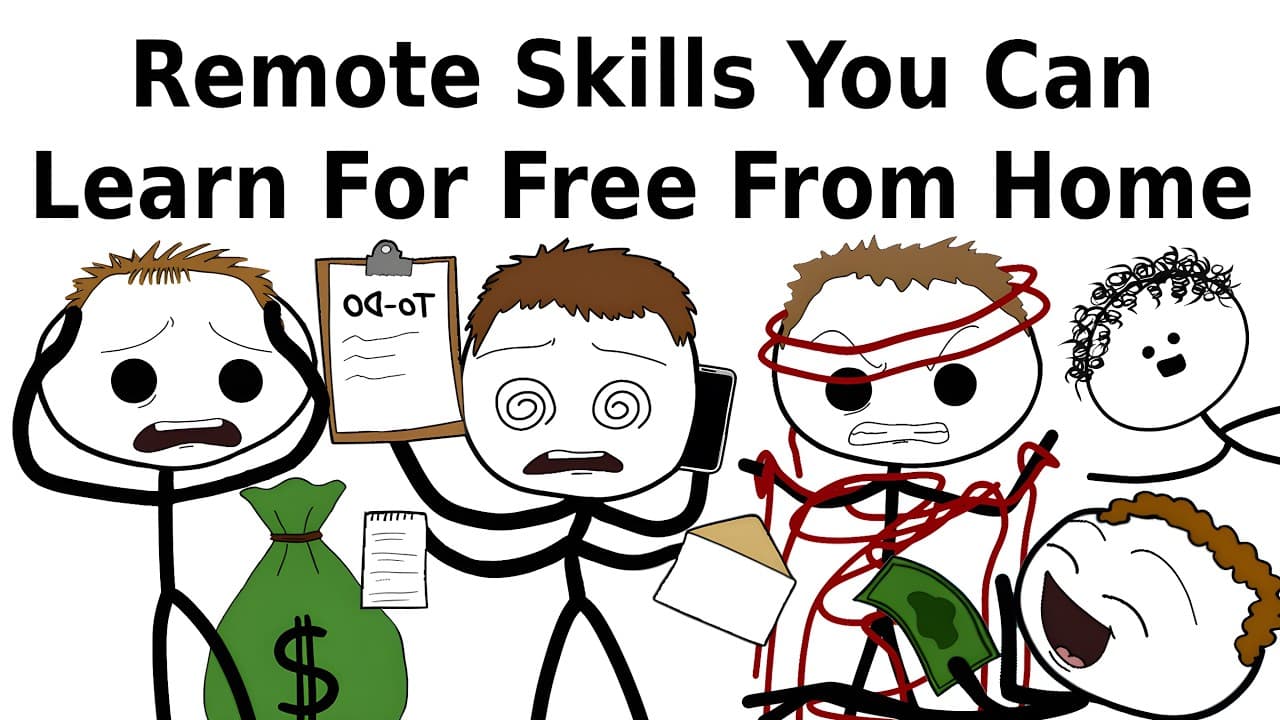
Start by choosing one marketable remote skill, using its free learning tools, and creating a realistic portfolio project that demonstrates practical value. Options include ethical hacking, Blender modeling, AI prompting, no-code automation, ghostwriting, app building, thumbnail design, Notion consulting, photo restoration, and chatbot building, all of which can be practiced from home.
Transcript
Let's get right into it. Number 10, ethical hacking. Companies will literally pay you to break into their systems, not their buildings, their computers. It's called ethical hacking or penetration testing. A company builds a website, thinks it's secure, and hires you to prove them wrong. You find the holes, write a report, and get paid. The ethical ... Read More
Key Insights
- Ethical hacking is authorized security testing in which a company permits someone to find weaknesses, document them, and submit a report. TryHackMe, Hack the Box, and Cybrary provide free learning paths, while CompTIA Security Plus is presented as a certification learners can work toward.
- Blender is free 3D modeling software used to create graphics for games, architecture, and films. Beginners can learn lighting, textures, and three-dimensional shapes through the well-known donut tutorial, then use completed models as portfolio evidence because employers care about what applicants can produce.
- Effective AI prompting is a structured, iterative conversation rather than a single vague request. Useful prompts assign the AI a role, provide relevant context, specify the desired output format, and refine the first response through instructions such as shortening it or producing several alternatives.
- No-code automation works by connecting triggers to actions across different applications. Make and Zapier can process contact forms, update spreadsheets, send emails, create tasks, issue receipts, update email lists, and post Slack messages, reducing work that would otherwise require repetitive manual copying.
- Ghostwriting is paid writing published under another person's name, often for executives who need LinkedIn posts or books. Aspiring ghostwriters can practice matching different voices and create sample posts for fictional CEOs, founders, and marketing directors when confidential client work cannot be displayed.
- No-code app building turns disorganized business information into accessible tools without conventional software development. Glide can build an app around spreadsheet data, allowing learners to create systems for schedules, inventory, class registrations, client details, photographs, and special instructions through its free plan.
- Thumbnail design is intended to generate an immediate emotional response and encourage a click. The transcript recommends combining elements such as a face, a number, and a reason to feel curiosity, confusion, or excitement, then studying successful thumbnails and rebuilding them in Canva.
- Chatbot building uses visual flows to automate customer conversations, email collection, and appointment booking. ManyChat allows learners to connect message and response boxes on its free plan, then offer systems that answer Instagram direct messages and support local businesses outside normal working hours.
- More videos from this channel:
- More from this channel: Chill Dude Explains
Install to Summarize YouTube Videos and Get Transcripts
Explore YouTube Video Summarizer or Get YouTube Transcript Extractor
Questions & Answers
Q: How can beginners learn ethical hacking for free?
Beginners can open a free TryHackMe account and practice attacking simulated systems, including pretend banks or hospitals, without targeting real organizations. Hack the Box offers a similar practice model, while Cybrary provides a free course about how criminals think. After completing TryHackMe's pre-security path, learners can work toward employer-valued certifications such as CompTIA Security Plus.
Q: How can someone build a 3D modeling portfolio with Blender?
A beginner can download Blender for free and follow the popular tutorial that teaches users to create a 3D donut. Completing it introduces lighting, textures, and three-dimensional shapes. The next step is producing original models that demonstrate practical ability. These finished creations become the portfolio, which the transcript describes as the applicant's resume for game, architecture, or film work.
Q: What makes an AI prompt produce more useful results?
A useful AI prompt gives specific direction instead of requesting something generally good. Start by assigning a role, such as marketing expert, then provide background about the task and audience. State the required format, such as bullet points, short paragraphs, or three sentences. Finally, treat the first response as a draft and request revisions, shorter wording, or multiple versions.
Q: How does no-code automation reduce repetitive work?
No-code automation connects an event in one application to actions in other applications. With Make, a submitted contact form can add a person to a spreadsheet, send a welcome email, and create a task. Zapier uses similar rules, allowing a purchase to trigger a receipt, an email-list update, and a Slack message without repeated manual copying.
Q: How can a new ghostwriter create a portfolio without client work?
A new ghostwriter can invent several executive personas, such as a CEO, founder, and marketing director, then write sample posts in a distinct voice for each one. This approach demonstrates voice matching without exposing confidential assignments. Free learning options mentioned in the transcript include YouTube searches about LinkedIn ghostwriting and courses on Coursera and Skillshare about matching another person's voice.
Q: How can someone make money building no-code apps with Glide?
Glide turns data in a Google Sheet into a functioning app, so a learner can begin by choosing a fictional business and organizing one of its messy processes. Examples include dog-walking schedules, restaurant inventory, or gym class registrations. The transcript says small businesses may pay $500 to $1,000 for a custom Glide app instead of paying a developer $10,000.
Q: How can beginners practice designing YouTube thumbnails?
Beginners can use Canva with a 1280 by 720 pixel canvas and conduct thumbnail autopsies instead of relying only on courses. They can visit a major YouTube channel, compare its most-viewed thumbnails with its least-viewed ones, identify the visual differences, and reverse engineer the successful examples. The design should create curiosity, confusion, or excitement almost immediately.
Q: How can someone start offering chatbot services to local businesses?
A beginner can use ManyChat's free plan to build visual conversation flows by connecting a user-message box to a bot-response box. A practical demonstration could answer common Instagram direct messages, collect emails, or book appointments. The learner can then approach businesses such as hair salons, gyms, and dentists with a system that continues handling inquiries while staff members sleep.
Summary & Key Takeaways
-
Ten remote skills can be learned from home through free software, courses, tutorials, and practice platforms. The options span cybersecurity, creative production, artificial intelligence, writing, business systems, and customer service. Beginners can start with a laptop, select one discipline, and practice through projects that resemble genuine client assignments.
-
Several opportunities rely on no-code platforms that replace programming with visual interfaces. Make and Zapier connect applications through triggers and actions, Glide transforms spreadsheet data into functional apps, Notion organizes business operations, and ManyChat creates chatbot flows. Their commercial value comes from saving time and organizing previously manual processes.
-
A strong portfolio demonstrates ability more effectively than merely describing training. Suggested projects include Blender models, posts for fictional executives, a Glide app for an imaginary business, reconstructed YouTube thumbnails, a complete Notion workspace, restored family photographs, or an automated chatbot. Each project should solve a clear, recognizable problem for clients.
Read in Other Languages (beta)
Share This Summary 📚
Summarize YouTube Videos and Get Video Transcripts with 1-Click
Try YouTube Summary with ChatGPT & Claude or YouTube Transcript Generator
Explore More Summaries from Chill Dude Explains 📚
Summarize YouTube Videos and Get Video Transcripts with 1-Click
Try YouTube Summary with ChatGPT & Claude or YouTube Transcript Generator