How to build a SaaS with six proven acquisition playbooks
TL;DR
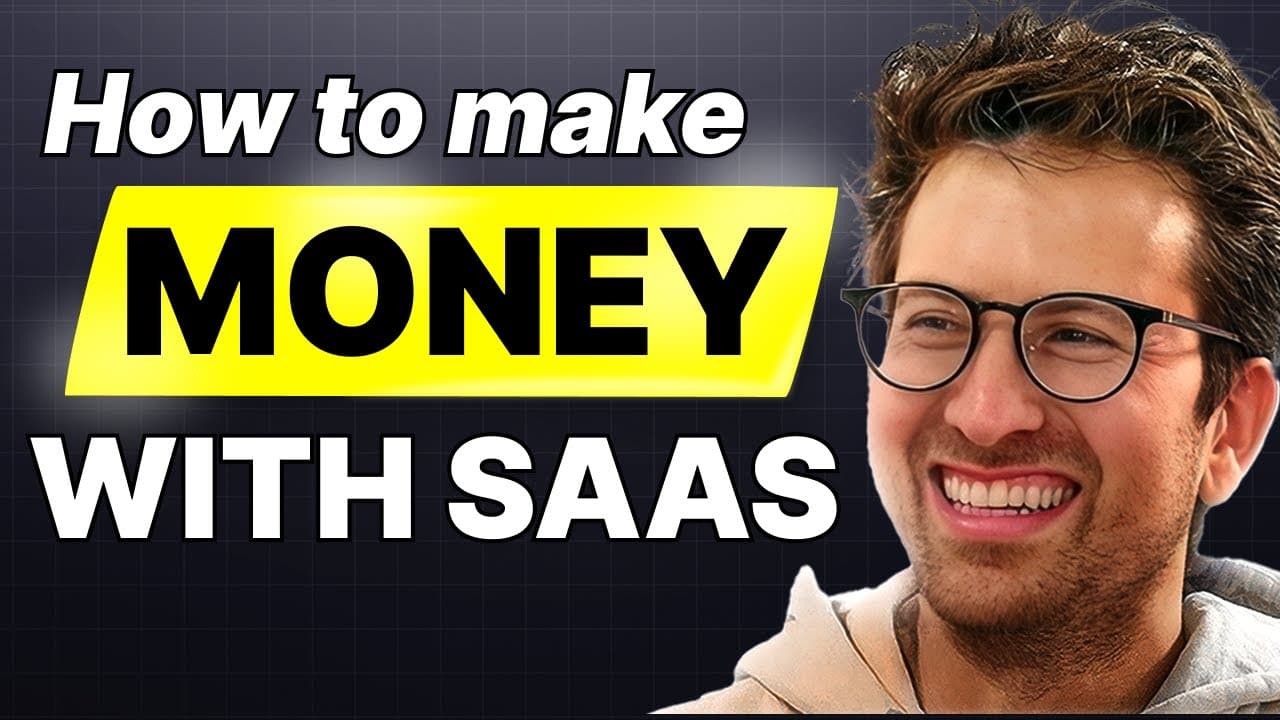
Six repeatable customer acquisition playbooks help SaaS founders scale. The episode shares real-case examples from Kleo, Mentions, Tally, and others, showing how waitlists, trend riding, language arbitrage, AI search, signal search, and high ticket ads drive early MRR growth. Pick a playbook that matches your skills and apply the steps to attract customers.
Transcript
If you've ever wanted to build a SAS that pays your bills, today's episode is for you. I brought on my friend Rob, who has a portfolio of bootstrap profitable SAS businesses, and together we go through a bunch of apps that do anywhere between 20,000 MR and $300,000 MR. And we basically reverse engineer how you can copy what they're doing and get cu... Read More
Key Insights
- There are six proven SaaS customer acquisition playbooks discussed.
- Waitlist Strategy combines edgy content with email nurturing, scarcity, and beta cohorts to build early MRR.
- Cleo and Mentions used the weightless strategy to reach 60K MR and 20K MR respectively in short windows.
- Wave Surfer Strategy is demonstrated by TrustMRR in the episode as a means to ride existing demand.
- Language Arbitrage Strategy is illustrated by Teachizy as a way to tap into multilingual or cross-language opportunities.
- AI Search Strategy is shown through Tally as a method to surface demand and opportunities.
- Signal Search Strategy is used by LocalRank to identify signals that indicate buying intent.
- High Ticket Ad Strategy is demonstrated by MailScale as a way to scale with paid advertising.
- More videos from this channel:
- More from this channel: Greg Isenberg
Install to Summarize YouTube Videos and Get Transcripts
Explore YouTube Video Summarizer or Get YouTube Transcript Extractor
Questions & Answers
Q: What are the six SaaS customer acquisition playbooks discussed in the video?
The video outlines six repeatable playbooks for acquiring customers in SaaS settings. These include the Waitlist Strategy, Wave Surfer Strategy, Language Arbitrage Strategy, AI Search Strategy, Signal Search Strategy, and High Ticket Ad Strategy. Each playbook is demonstrated with real company examples and specific steps, such as content approaches, onboarding sequences, and channel choices, to guide bootstrap founders in reproducing similar growth in their own products.
Q: How does the Waitlist Strategy work according to the episode?
The Waitlist Strategy blends edgy sales content with email nurturing, scarcity tactics, and beta cohorts to generate early traction and MRR. It emphasizes subtle product mentions within value-driven content, using posts and social proof to build trust before directing audiences to a weight list or waitlist. The approach is designed to lower resistance and convert interested readers into early adopters.
Q: Which companies are used as case studies for the six playbooks?
The episode features real examples including Cleo, Mentions, Tally, Teachizy, LocalRank, and MailScale. Each company is shown applying one of the six playbooks to acquire customers, with concrete metrics or narratives illustrating how their chosen strategy contributed to growth. These case studies provide practical templates listeners can adapt.
Q: What role does edgy content play in the strategies presented?
Edgy content is used to attract attention and engage an audience without overtly selling the product. By focusing on value, perspectives, and provocative ideas, the content reduces resistance and builds trust. The product is introduced subtly, often through comments or later posts, allowing interested viewers to explore the offering in a low-pressure context.
Q: How can bootstrap SaaS founders apply AI or language based strategies?
AI or language based strategies involve identifying demand through AI powered analysis and creating content or tools that address multilingual or cross language opportunities. By surfacing ideas with AI and validating them through content and offers, founders can reach wider audiences and tailor messaging to different language markets, thereby expanding potential customer pools.
Q: What is the purpose of the six playbooks beyond initial customer acquisition?
Beyond initial acquisition, the playbooks are intended to create repeatable, scalable systems that can be adapted to different products and markets. They provide structured paths for moving from early traction to sustainable growth, including steps for content creation, demand signaling, and paid channels, enabling founders to raise prices and expand their customer base.
Q: How should a founder choose which playbook to start with?
Founders should choose based on their own skills, interests, and the market signals they observe. The episode suggests selecting a playbook that aligns with personal strengths, then testing it with real customers and metrics. Iteration and learning from results are emphasized to optimize the chosen approach before scaling.
Q: What are practical next steps recommended in the episode for listeners?
Listeners are encouraged to download the six playbooks, study the real company examples, and start applying the tactics to their own SaaS. Practical steps include creating value driven content, setting up a waitlist or beta program, and experimenting with the suggested channels and messaging. The emphasis is on structured, repeatable actions rather than vague advice.
Summary & Key Takeaways
-
The episode presents six repeatable SaaS customer acquisition playbooks, each illustrated with real companies and metrics to show how they unlocked growth. It emphasizes structured marketing systems over vague hype, with practical steps you can copy and adapt to your product. The discussion targets bootstrap SAS builders seeking reliable traction.
-
A key takeaway is to combine content led approaches with targeted channels, using techniques like edgy sales content, email nurture, and beta cohorts to accelerate signups and MRR. The hosts stress choosing a playbook aligned with your strengths and market signals, then iterating based on results.
-
The episode ends with a framework for stealing proven playbooks and applying them to new niches, encouraging iterative experimentation and validation before scaling, so listeners can build a predictable customer funnel and raise prices as they gain traction.
Read in Other Languages (beta)
Share This Summary 📚
Summarize YouTube Videos and Get Video Transcripts with 1-Click
Try YouTube Summary with ChatGPT & Claude or YouTube Transcript Generator
Explore More Summaries from Greg Isenberg 📚



Summarize YouTube Videos and Get Video Transcripts with 1-Click
Try YouTube Summary with ChatGPT & Claude or YouTube Transcript Generator