How to Build a Holding Company Portfolio
TL;DR
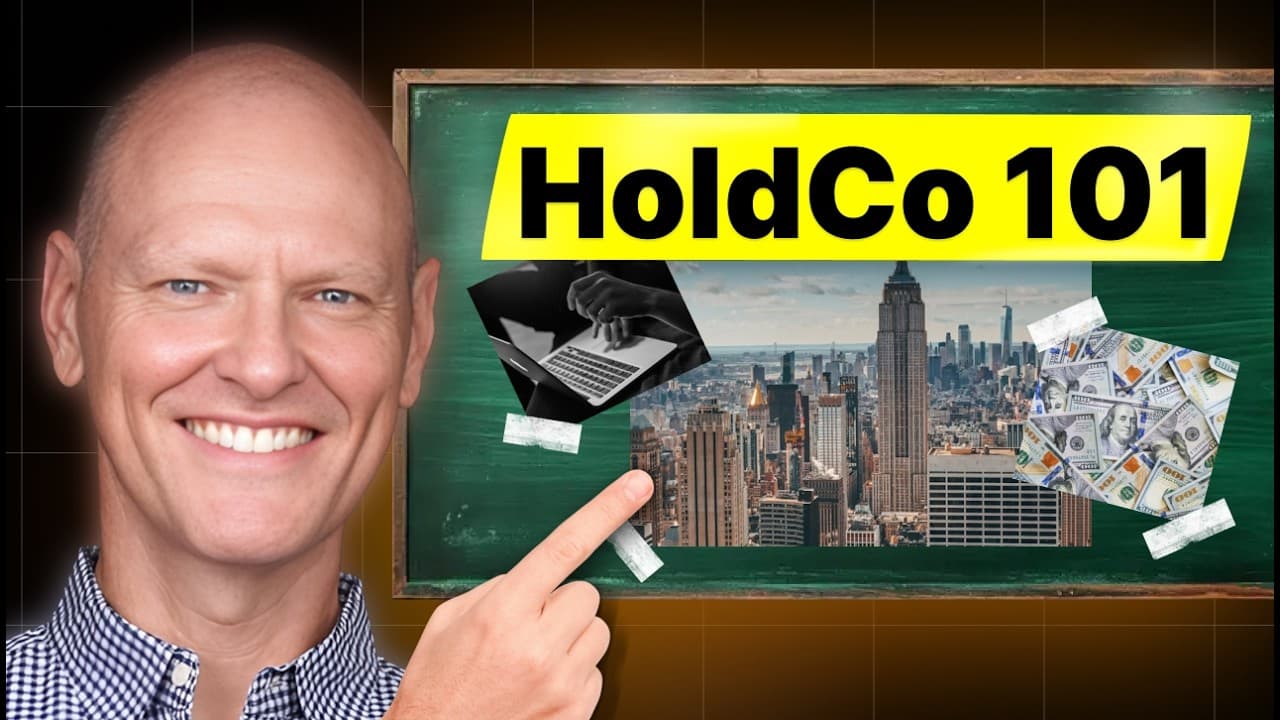
A holding company lets you own significant stakes in multiple businesses without running their daily operations. Start by defining your goals, preferred lifestyle, investment thesis, and organizational structure, then consult legal and tax professionals, assemble trusted advisers, execute the plan, and refine it over time. The model can diversify risk and align your portfolio with your interests.
Transcript
I describe hold coing as you own multiple businesses and you don't run any of them uh is is the way I think about it and the way most people practice kind of this idea of being an being a hco entrepreneur and you have to understand if you're going to get into whole coing or entrepreneurship or anything like you know what drives you in terms of your... Read More
Key Insights
- A holding company is a portfolio in which an entrepreneur owns significant stakes in multiple businesses but does not manage their daily operations. The owner instead supports management, serves on boards, allocates attention across assets, and maintains meaningful influence or control.
- A HoldCo owner differs from an angel investor or venture capitalist because ownership is substantial rather than fractional. Stakes might be large enough to create control or meaningful influence, while owning 0.5% of many startups represents a distinctly different investment strategy.
- A holding company can contain many kinds of assets, including technology startups, agencies, service businesses, and directly controlled real estate. The defining characteristic is meaningful equity ownership, not adherence to one industry, business model, or asset class.
- The main HoldCo structures include roll-ups, platforms, pure holding companies, and conglomerates. A roll-up combines similar businesses across locations, a platform groups related companies, and a pure holding company may own unrelated businesses selected according to the owner’s interests.
- The value of a HoldCo includes diversified risk, asymmetric bets, and the ability to design work around personal passions. Instead of allowing one operating company to dictate daily life, the entrepreneur can shape a portfolio that supports preferred activities and responsibilities.
- The HoldCo owner’s role is closer to an adviser or supportive board member than a day-to-day operator. The owner can help CEOs and general managers creatively without personally handling routine execution, operational optimization, or making the trains run on time.
- A HoldCo should begin with a plan, defined goals, and a deliberately designed organizational structure. Legal and tax professionals should review the structure, while an advisory team provides expertise that the owner and individual operating companies may not possess internally.
- A successful HoldCo strategy requires execution, iteration, and optimization for happiness. The model provides considerable freedom, but it is not automatically suitable for everyone, so founders should assess their motivations, passions, desired lifestyle, and willingness to oversee multiple substantial holdings.
Install to Summarize YouTube Videos and Get Transcripts
Explore YouTube Video Summarizer or Get YouTube Transcript Extractor
Questions & Answers
Q: What is a holding company for an entrepreneur?
A holding company is an entrepreneurial structure in which one person or parent organization owns meaningful equity stakes in multiple businesses without running their daily operations. The owner may hold controlling interests or other substantial positions, serve on company boards, support management teams, and influence major decisions while CEOs or general managers handle routine execution.
Q: How is a HoldCo different from angel investing?
A HoldCo owner holds substantial stakes that provide control or meaningful influence over portfolio businesses. An angel investor may instead own very small percentages across many startups and remain largely passive. The example given is that owning 0.5% of 42 startups is a valid strategy, but it is materially different from being deeply involved as a significant business owner.
Q: What types of businesses can a holding company own?
A holding company can own technology startups, agencies, service businesses, real estate, or a mixture of technology and non-technology companies. Its assets do not need to follow a single business model. The important feature is direct, meaningful equity ownership, such as substantial company stakes or real estate controlled by the HoldCo owner rather than through someone else’s fund.
Q: What are the main types of holding companies?
The main types discussed are roll-ups, platforms, pure holding companies, and conglomerates. A roll-up combines the same kind of business across different locations. A platform contains related businesses, while a pure holding company may contain unrelated companies. A conglomerate is presented as the larger version. The appropriate form depends on the owner’s interests and expertise.
Q: How do you start a holding company?
Start by creating a plan and defining the goals the holding company should serve. Design the organizational structure, then consult lawyers and tax professionals about that structure. Build a strong advisory team, execute the plan, and revise it as experience produces new information. The final step is to keep optimizing the portfolio and the owner’s role for happiness.
Q: Why would an entrepreneur choose a HoldCo strategy?
An entrepreneur may choose a HoldCo to diversify risk, create asymmetric bets, pursue several interests, and design a preferred lifestyle. Instead of tying most personal wealth and daily work to one company, the owner builds a portfolio of substantial holdings. The model can also let the owner advise management teams without personally managing every operational detail.
Q: What does a HoldCo owner do day to day?
A HoldCo owner supports the CEOs and general managers who operate individual portfolio companies. That support may include board participation, advice, creative problem-solving, and involvement in important decisions. The owner generally avoids routine operational work, such as continually optimizing processes or ensuring every daily task runs on schedule, because operating leaders carry those responsibilities.
Q: How can someone decide whether a HoldCo is right for them?
Someone considering a HoldCo should identify what drives them, which industries or assets genuinely interest them, and how they want to spend each working day. They should also decide whether advising multiple leaders and overseeing significant holdings is more appealing than operating one company directly. The portfolio and role should reflect their mission, passions, goals, and desired lifestyle.
Summary & Key Takeaways
-
A HoldCo entrepreneur owns meaningful stakes in several businesses while delegating their daily operation to CEOs or general managers. This differs from traditional entrepreneurship, where one owner runs one company, and from angel investing, where an investor may hold very small positions without significant control or influence over individual businesses.
-
Holding companies can contain technology startups, agencies, service companies, real estate, or a mixture of unrelated assets. Common approaches include roll-ups, platforms, pure holding companies, and conglomerates. The portfolio should reflect the owner’s interests, expertise, preferred activities, and broader vision for how work should support a fulfilling lifestyle.
-
Starting a holding company requires a plan, clear goals, an appropriate organizational structure, professional legal and tax guidance, and a capable advisory team. Owners must then execute, learn, iterate, and optimize for happiness. The strategy offers diversification and asymmetric opportunities, but prospective owners should determine whether its responsibilities fit them personally.
Read in Other Languages (beta)
Share This Summary 📚
Summarize YouTube Videos and Get Video Transcripts with 1-Click
Try YouTube Summary with ChatGPT & Claude or YouTube Transcript Generator
Explore More Summaries from Greg Isenberg 📚






Summarize YouTube Videos and Get Video Transcripts with 1-Click
Try YouTube Summary with ChatGPT & Claude or YouTube Transcript Generator