What Did JD Vance Say at the September Briefing?
TL;DR
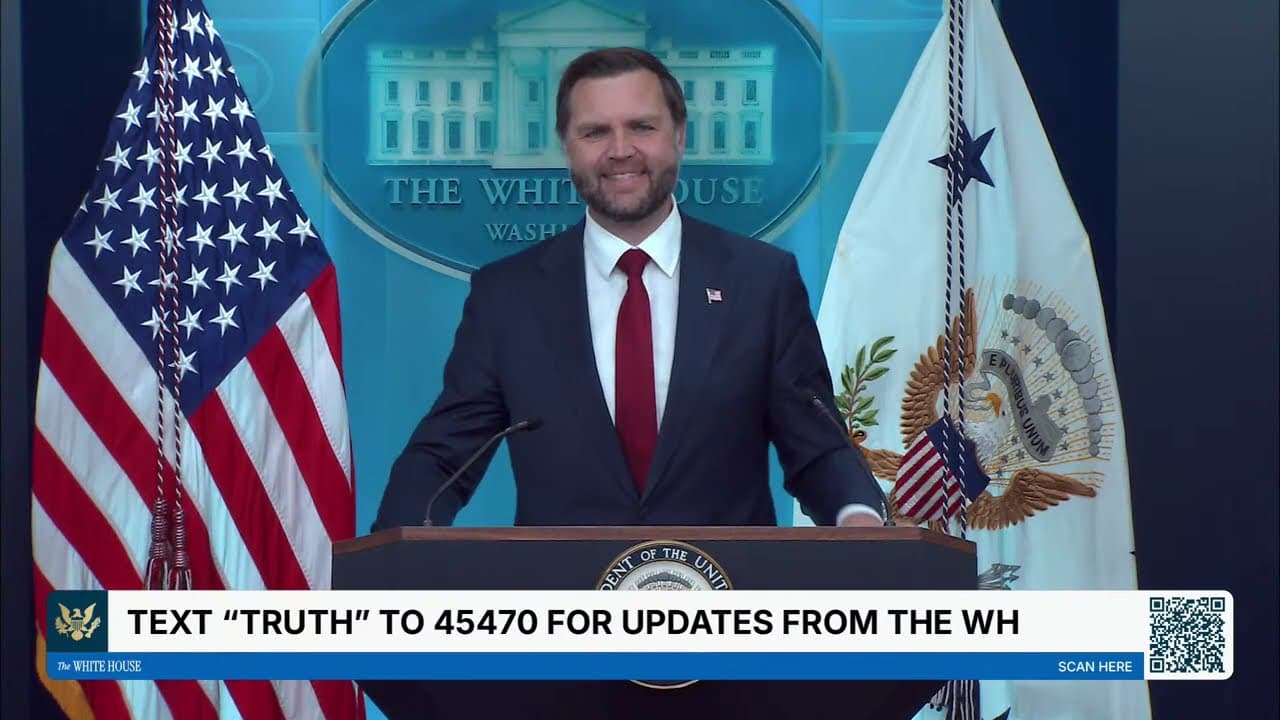
JD Vance said the administration had closed more than 2,000 fraudulent commercial driver's license mills, identified over $200 billion in fraud, and developed a Venezuela oil arrangement intended to expand supply and return royalties to Americans. He also defended broader access for digital media, praised former press secretary Caroline Leavitt, and argued that public accessibility is part of governing a constitutional republic.
Transcript
All right, good morning everybody. Guess good afternoon now. Good to see you guys. So, let me give a few updates on a few things that uh really matter to the administration that we're very proud of. So, first of all, you probably saw the announcement earlier in Michigan earlier this week in Michigan that we have taken over 2,000 fraudulent CDL mill... Read More
Key Insights
- Vance said more than 2,000 fraudulent commercial driver's license mills had been taken out of business. He presented the enforcement campaign as a way to improve road safety, protect American trucking jobs, and prevent unqualified drivers from obtaining commercial credentials through fraudulent methods.
- Trucker wages had risen by 7.5%, according to Vance. He associated that increase with the administration's campaign against fraudulent commercial licensing, although the supplied remarks did not provide supporting data, a measurement period, or a detailed explanation establishing why the enforcement effort caused the wage change.
- The administration had identified more than $200 billion in fraud, according to Vance. He framed commercial licensing enforcement, Medicaid eligibility, and Medicare eligibility as parts of one broader effort to ensure that public benefits and government credentials go only to people who legally qualify for them.
- The Venezuela oil arrangement was described by Vance as creating an effective 65-billion-barrel reserve for the United States. He said private American companies could develop oil revenue while increasing global supply, providing money to Venezuelans, and sending some royalties directly to the American people.
- Energy supply stability was a central justification for the Venezuela agreement. Vance argued that the availability of oil, critical minerals, and other resources matters to economic security, and he said the administration was attempting to reverse what he characterized as a long period of underinvestment.
- Digital technology has broadened access to publishing and public communication, according to Vance. He argued that people can now tell stories because they have something interesting to say, rather than because they possess prestigious credentials, significant financial resources, or established institutional connections.
- Media access was presented as a First Amendment concern. Vance reasoned that the formal right to speak has reduced practical value when only selected organizations receive microphones and government access, so he promised that nontraditional media would continue receiving opportunities alongside established outlets.
- Government accessibility is part of governing a constitutional republic, according to Vance. He said the president, vice president, and senior White House team had provided unusually extensive media access and promised that both traditional and nontraditional journalists would remain included in the administration's communications approach.
- More videos from this channel:
- More from this channel: The White House
Install to Summarize YouTube Videos and Get Transcripts
Explore YouTube Video Summarizer or Get YouTube Transcript Extractor
Questions & Answers
Q: What anti-fraud results did JD Vance announce?
JD Vance said the administration had taken more than 2,000 fraudulent commercial driver's license mills out of business and had identified more than $200 billion in fraud. He portrayed both figures as evidence of a wider campaign to protect taxpayer money, institutional trust, road safety, and eligibility systems for programs such as Medicaid and Medicare.
Q: Why did JD Vance discuss commercial driver's licenses?
Vance used commercial driver's license enforcement to illustrate the administration's broader anti-fraud agenda. He said some drivers had obtained credentials through fraudulent means and were not properly qualified to operate semi-trucks. He argued that closing fraudulent licensing operations made roads safer, protected American trucking jobs, and contributed to a reported 7.5% increase in trucker wages.
Q: What did JD Vance say about the Venezuela oil deal?
Vance said the Venezuela oil deal would allow private American companies to generate oil revenue and add supply to world energy markets. He described the arrangement as an effective 65-billion-barrel reserve for the United States, with revenue going to Venezuelans and some royalties going directly to the American people. He presented it as beneficial to fuel buyers, taxpayers, and Venezuela.
Q: How could the Venezuela oil arrangement affect Americans?
According to Vance, increased oil supply from the arrangement could lower costs for Americans who buy gasoline. He also said the agreement would allow the American people to receive part of the royalties directly. Beyond prices and revenue, he argued that the deal would improve supply stability in an energy market where access to oil and other critical resources matters.
Q: What did JD Vance say about the Strategic Petroleum Reserve?
Vance accused the Biden administration of draining the Strategic Petroleum Reserve to lower gasoline and oil costs rather than responding to an international crisis or an attempt by a foreign country to disrupt energy markets. He said that policy left the reserve extraordinarily low and contrasted it with the administration's plan to use Venezuelan oil relationships to expand available supply.
Q: Why did JD Vance support access for new media?
Vance said digital technology had enabled people to obtain information and tell stories without needing prestigious credentials, substantial money, or institutional connections. He argued that excluding nontraditional media would limit the range of Americans represented in public reporting. He therefore promised continued access for digital and new-media participants alongside members of the traditional press.
Q: How did JD Vance connect media access to the First Amendment?
Vance argued that the First Amendment allows everyone to speak, but practical access remains unequal when only certain media organizations receive microphones or direct access to officials. He said expanding participation in the briefing room helps democratize access to information and gives more Americans an opportunity to hear perspectives they may not find in traditional media coverage.
Q: What did JD Vance say about Caroline Leavitt?
Vance praised Caroline Leavitt as an excellent colleague, mother, and member of the White House team. He thanked her for her service, friendship, and performance answering questions. He also identified her decision to open the briefing room to nontraditional media as an important part of her legacy that the administration intended to continue and build upon.
Summary & Key Takeaways
-
Vance opened the briefing by highlighting the administration's anti-fraud campaign. He said more than 2,000 fraudulent commercial driver's license mills had been closed, American roads had become safer, and trucker wages had risen by 7.5%. He connected that work to efforts addressing improper access to government benefits and taxpayer money.
-
Vance described a Venezuela oil agreement as a way to create what he called an effective 65-billion-barrel reserve for the United States. He said American companies could generate oil revenue, additional supply could reduce costs, Venezuelans would receive revenue, and American taxpayers would directly receive part of the resulting royalties.
-
During questions, Vance praised Caroline Leavitt and promised continued access for nontraditional media. He argued that digital technology allows people without prestigious credentials or institutional connections to reach the public. He linked broad media access to First Amendment participation and described official accessibility as a responsibility within a constitutional republic.
Read in Other Languages (beta)
Share This Summary 📚
Summarize YouTube Videos and Get Video Transcripts with 1-Click
Try YouTube Summary with ChatGPT & Claude or YouTube Transcript Generator
Explore More Summaries from The White House 📚
Summarize YouTube Videos and Get Video Transcripts with 1-Click
Try YouTube Summary with ChatGPT & Claude or YouTube Transcript Generator