What Is the White House Strategy on Iran?
TL;DR
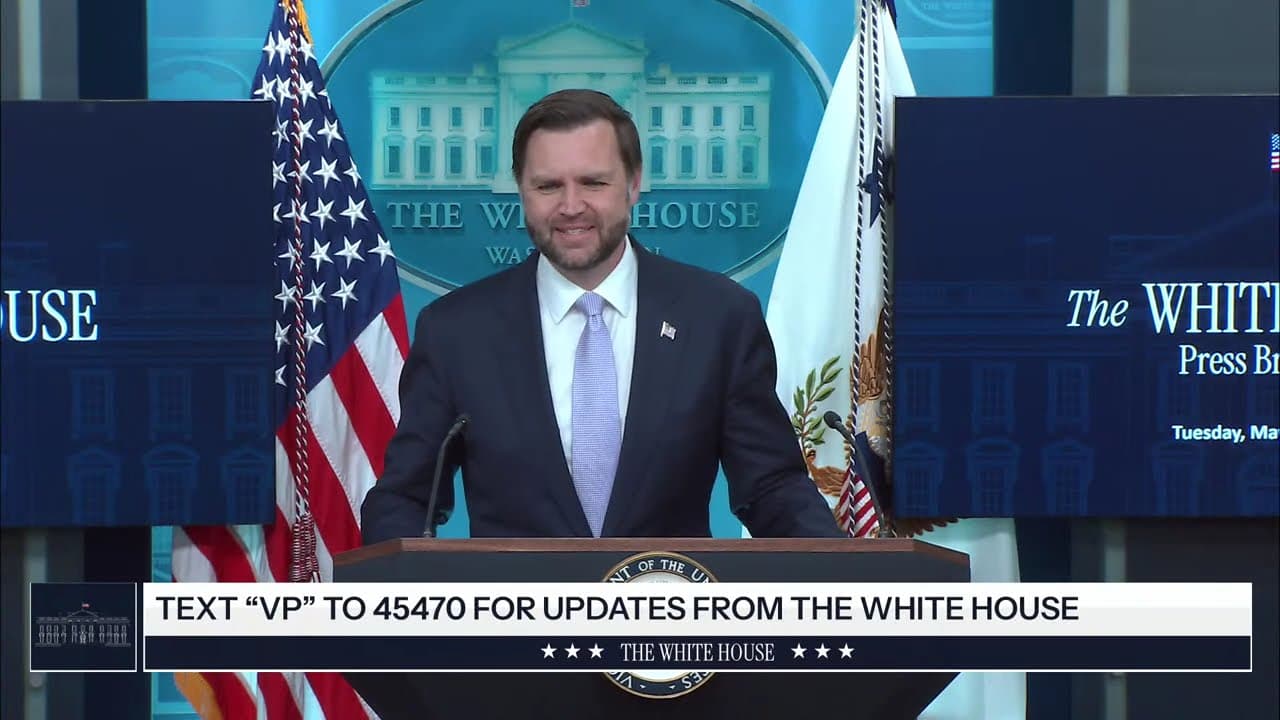
The White House says Iran must never obtain a nuclear weapon and is pursuing negotiations while retaining the option of restarting military action. Vice President JD Vance also highlighted investigations into alleged fraud across federal benefit, immigration, and small-business programs, and argued that Republican officials must serve the voters who elected them rather than corporate or financial interests.
Transcript
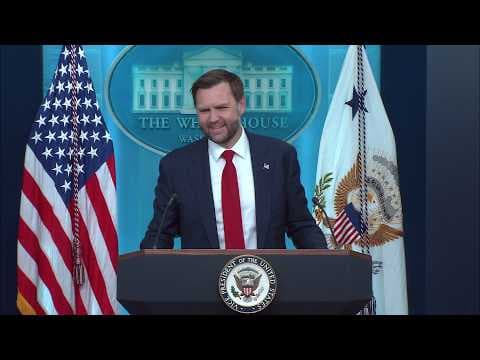
All right. Good afternoon, everybody. How you guys doing? Good. Good. Okay, I've got my cheat sheet here so I know who to call on, most importantly, who not to call on. Um, let me start out with a few things. So, first of all, proud to announce that next week I will be speaking at the Air Force Academy commencement ceremony. Last year I spoke at th... Read More
Key Insights
- The administration's stated position is that Iran must never possess a nuclear weapon. Vance argued that Iranian nuclear capability could encourage other countries across the Gulf and elsewhere to seek weapons, producing an international arms race and making the United States and the wider world less safe.
- Negotiation is the White House's preferred path for addressing Iran's nuclear program. Vance said he traveled to Islamabad and spent 21 hours there negotiating as a sign of good faith, while requiring Iran to accept both a commitment and a process designed to prevent nuclear weapon acquisition.
- Renewed military action remains an alternative if negotiations with Iran fail. Vance said the administration could restart its military campaign to pursue American objectives, although he emphasized that neither the president nor, in his assessment, the Iranians wanted that outcome.
- Iran's internal political structure complicates negotiations, according to Vance. He described the country as fractured, with a supreme leader, subordinate officials, and negotiators who may express different positions, making it difficult for American representatives to determine precisely what Iran wants from the talks.
- Federal fraud harms both taxpayers and intended program beneficiaries, according to Vance. He said fraudulent activity takes money from people who fund public programs and from low-income children, patients, and other eligible recipients who may lose assistance when resources are diverted to fraudsters.
- The anti-fraud task force is examining multiple federal systems. Vance said the administration had identified billions of dollars in alleged fraud involving hospice, Medicaid, Medicare, and immigration programs, along with hundreds of millions of dollars in fraudulent Small Business Administration loans.
- Trump's endorsement of Ken Paxton reflects a demand for political loyalty and voter representation, according to Vance. He said Paxton supported both the country and the president when it mattered, and he portrayed Paxton as a stronger candidate and prospective senator than John Cornyn.
- Republican officeholders must serve the voters who elected them, according to Vance. He argued that politicians who become aligned with corporate lobbyists, Wall Street, or special interests risk falling out of step with both Republican voters and the president, creating serious political consequences.
- More videos from this channel:
- More from this channel: The White House
Install to Summarize YouTube Videos and Get Transcripts
Explore YouTube Video Summarizer or Get YouTube Transcript Extractor
Questions & Answers
Q: What is the White House strategy for preventing an Iranian nuclear weapon?
The White House strategy combines aggressive negotiations with the possibility of renewed military action. Vice President JD Vance said the administration's nonnegotiable objective is preventing Iran from obtaining a nuclear weapon. The preferred outcome is an agreement containing both an Iranian commitment and a continuing process that ensures compliance beyond Donald Trump's presidency. Military operations could resume if negotiations fail.
Q: Why does the White House oppose Iran obtaining a nuclear weapon?
Vice President JD Vance said an Iranian nuclear weapon could become the first domino in a broader nuclear arms race. He argued that countries across the Gulf and then other parts of the world might pursue their own weapons. Such proliferation, particularly among regimes he described as dangerous or sympathetic to terrorists, would make the United States and the world less safe.
Q: What happens if negotiations between the United States and Iran fail?
Vice President JD Vance said the administration retains an option to restart its military campaign and continue pursuing American objectives. He described that course as option B and emphasized that it is not the outcome President Donald Trump wants. However, he also said the president is willing and able to choose that path if Iran will not accept the central condition regarding nuclear weapons.
Q: Why did JD Vance travel to Islamabad for negotiations with Iran?
JD Vance said he traveled to Islamabad to demonstrate that the United States was negotiating in good faith and was willing to make a deal. He described spending about 22 hours flying there, 21 hours on the ground negotiating, and 24 hours returning. The proposed agreement remained conditional on Iran meeting the administration's demand that it never obtain a nuclear weapon.
Q: Why are negotiations with Iran difficult?
Vice President JD Vance characterized Iran as a complicated and fractured country whose negotiating position is sometimes unclear. He said the supreme leader, officials below him, and members of the negotiating team may exert different influences or express conflicting positions. Vance declined to determine whether the uncertainty resulted from poor communication or bad faith, but said it obscured Iran's objectives.
Q: What fraud did the White House anti-fraud task force identify?
Vice President JD Vance said the task force identified billions of dollars in alleged fraud involving hospice care, Medicaid, Medicare, and the immigration system. He also cited hundreds of millions of dollars in fraudulent loans issued through the Small Business Administration. According to Vance, the administration stopped such loans and began investigating and prosecuting some related criminal activity.
Q: Why does JD Vance say government fraud has two victims?
JD Vance said fraud first victimizes taxpayers, who expect their payments to support troops, food access for low-income children, and medical benefits for people unable to afford care. He identified intended program recipients as the second victims because diverted money can exhaust available resources. In his account, fraud therefore steals from both those financing public services and those depending on them.
Q: Why did Donald Trump endorse Ken Paxton over John Cornyn?
Vice President JD Vance said Ken Paxton earned Donald Trump's endorsement because Paxton supported the country and the president when that support mattered. Vance said Trump viewed Paxton as both a better candidate and a better prospective senator. He presented the endorsement as a message that Republican officials must serve their voters and resist influence from corporate lobbyists, Wall Street, and special interests.
Summary & Key Takeaways
-
Vice President JD Vance opened by announcing that he would speak at the Air Force Academy commencement ceremony. He then highlighted the administration's anti-fraud task force, saying it had identified alleged fraud involving hospice care, Medicaid, Medicare, immigration, and Small Business Administration loans, while beginning investigations and prosecutions related to criminal activity.
-
Vance described preventing Iran from obtaining a nuclear weapon as the administration's central objective. He argued that an Iranian weapon could trigger wider nuclear proliferation, said Iran's conventional military capability had been degraded, and presented continued negotiations as the preferred course while maintaining that renewed military action remained available.
-
During questions, Vance discussed President Donald Trump's endorsement of Ken Paxton over John Cornyn in the Texas Senate race. He said the endorsement reflected Paxton's support for the president and argued that Republican officials should represent their voters instead of corporate lobbyists, Wall Street, or other special interests in Washington.
Read in Other Languages (beta)
Share This Summary 📚
Summarize YouTube Videos and Get Video Transcripts with 1-Click
Try YouTube Summary with ChatGPT & Claude or YouTube Transcript Generator
Explore More Summaries from The White House 📚
Summarize YouTube Videos and Get Video Transcripts with 1-Click
Try YouTube Summary with ChatGPT & Claude or YouTube Transcript Generator