How can you cultivate wisdom through deliberate work and reflection
TL;DR
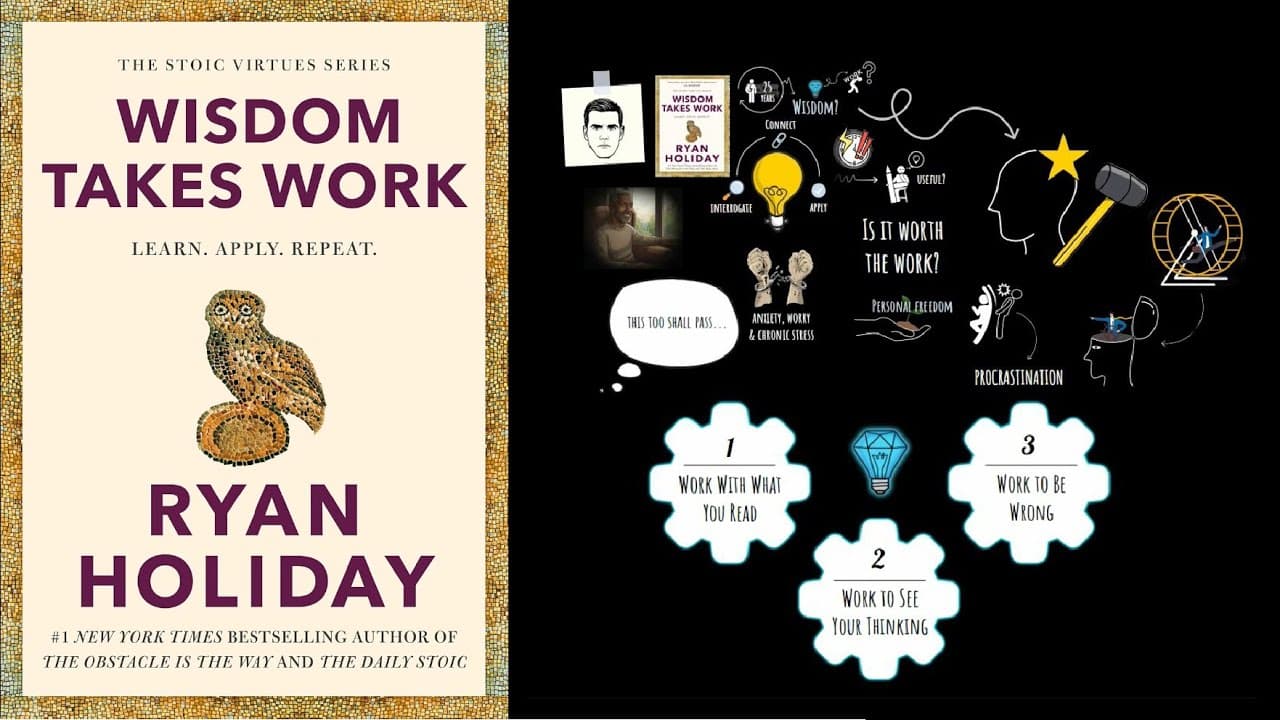
Wisdom comes from deliberate practice, not long schooling. Learn to extract value from what you read, then reflect and apply it to life. Write to clarify thinking and invite critique, and use AI to challenge your assumptions. Consistent, structured effort cultivates personal freedom and calmer happiness.
Transcript
People go to school for 25 years and have very little wisdom to show for it. That's because wisdom requires a certain type of work. Work that most either don't know to do or aren't willing to do. As Ryan Holidayiday explains in his new book, it's not enough to learn new ideas. You need to interrogate them for value. Connect them to what you already... Read More
Key Insights
- Wisdom requires a specific kind of work beyond schooling, involving active evaluation of new ideas. Wisdom is earned by interrogating value and applying insights to life.
- Extraction is the key differentiator between casual reading and wise practice. Notes should be concise, connected by themes, and revisited after a delay to filter out low-impact ideas.
- Reading should be purposeful and categorized into human condition, timeless philosophy, and self knowledge to maximize insight extraction.
- Writing clarifies thinking and reveals biases or gaps in logic. It is essential to articulate what you think before speaking to ensure accuracy and growth.
- Deliberate use of AI to test opposing viewpoints helps prevent confirmation bias and reveals where thinking may be wrong rather than right.
- The three methods to gain wisdom are extracting from texts, refining thinking through writing, and inviting critique and contradiction through AI and feedback.
- Procrastination and self-sabotage are major barriers to wisdom; awareness of these internal forces helps in choosing actions that support growth.
- Wisdom leads to personal freedom and calmer happiness by reducing unnecessary anxiety and focusing on controllable factors.
- More videos from this channel:
- More from this channel: Productivity Game
Install to Summarize YouTube Videos and Get Transcripts
Explore YouTube Video Summarizer or Get YouTube Transcript Extractor
Questions & Answers
Q: What is the core idea behind making wisdom through work
The core idea is that wisdom comes from a deliberate, three part practice rather than just accumulating information. It starts with extracting meaningful insights from what you read, then forces you to articulate and test your thinking through writing, and finally invites constructive critique, including AI driven challenges, to reveal blind spots and improve judgment.
Q: How does extraction differ from casual reading
Extraction differs from casual reading in that it requires actively selecting the most memorable insights and recording them on notes or cards. This process connects ideas to overarching themes like stoicism or apprenticeship, and involves a deliberate delay before review to ensure only impactful concepts are retained and ready for application.
Q: What are the three book categories recommended for reading
The three categories are human condition and resilience, timeless philosophy, and books that deepen self knowledge. Examples include diaries and works on strength in adversity, Meditations by Marcus Aurelius, Walden by Henry David Thoreau, and The Untethered Soul by Michael A Singer, all chosen to broaden perspective and self understanding.
Q: Why should you write down your thoughts according to the talk
Writing helps you see your thinking clearly, identify biases, and reveal gaps in logic. It acts as a personal exploration where you discover what you truly hold on a topic, and the act of writing before speaking reduces mistakes and improves communication while enabling deeper learning.
Q: What is the role of AI in developing wisdom
AI serves as a tool to challenge your conclusions and push you to defend or rethink your approach. By seeking external critique from AI, you can uncover weak assumptions, test for errors, and avoid the trap of being validated by technology rather than by robust reasoning.
Q: How does one use notes effectively for wisdom
Notes should capture the core idea, a connecting theme, and a personal application. Keeping one idea per card or note prevents clutter, and organizing these notes into a searchable system like Notion or Obsidian helps you revisit and apply insights over time.
Q: What mental habits block wisdom and how can they be overcome
Procrastination, self doubt, and an overreliance on being proven right hinder wisdom. Overcoming them involves deliberate practice, seeking contradictory feedback, and allowing yourself to be wrong. This humility strengthens judgment and supports the gradual journey toward greater freedom and happiness.
Q: What metaphor describes the journey to wisdom
The journey to wisdom is like walking toward the horizon: you never fully reach it, but you gain clarity and calm as you progress. Regular reflection and measured actions lead to better control over life, reducing unnecessary worry and increasing curiosity and contentment.
Summary & Key Takeaways
-
Wisdom requires active work and reflection, not just knowledge accumulation, and involves extracting meaningful insights from books. This process includes deliberate note taking and a waiting period before reviewing to ensure ideas are impactful. The result is better judgment and greater freedom.
-
A three-part framework is presented: extract from reading, sharpen thinking by writing, and test ideas with AI to uncover flaws. Each step builds toward more meaningful actions and reduced anxiety, paving the way for lasting happiness.
-
The speaker uses examples from history and philosophy to illustrate practices like slowing down, questioning assumptions, and embracing critique. The emphasis is on practical techniques that can be applied today to increase wisdom and well being.
Read in Other Languages (beta)
Share This Summary 📚
Summarize YouTube Videos and Get Video Transcripts with 1-Click
Try YouTube Summary with ChatGPT & Claude or YouTube Transcript Generator
Explore More Summaries from Productivity Game 📚

Summarize YouTube Videos and Get Video Transcripts with 1-Click
Try YouTube Summary with ChatGPT & Claude or YouTube Transcript Generator