What Is TAU-bench and How Does It Evaluate AI Agents?
TL;DR
TAU-bench is a framework designed to evaluate AI agents by simulating user interactions, combining dialog systems and task-oriented benchmarks for realistic assessments. Leveraging large language models like GPT-4o, it enhances efficiency in testing by generating diverse scenarios and measuring agent reliability with the pass^k metric.
Transcript
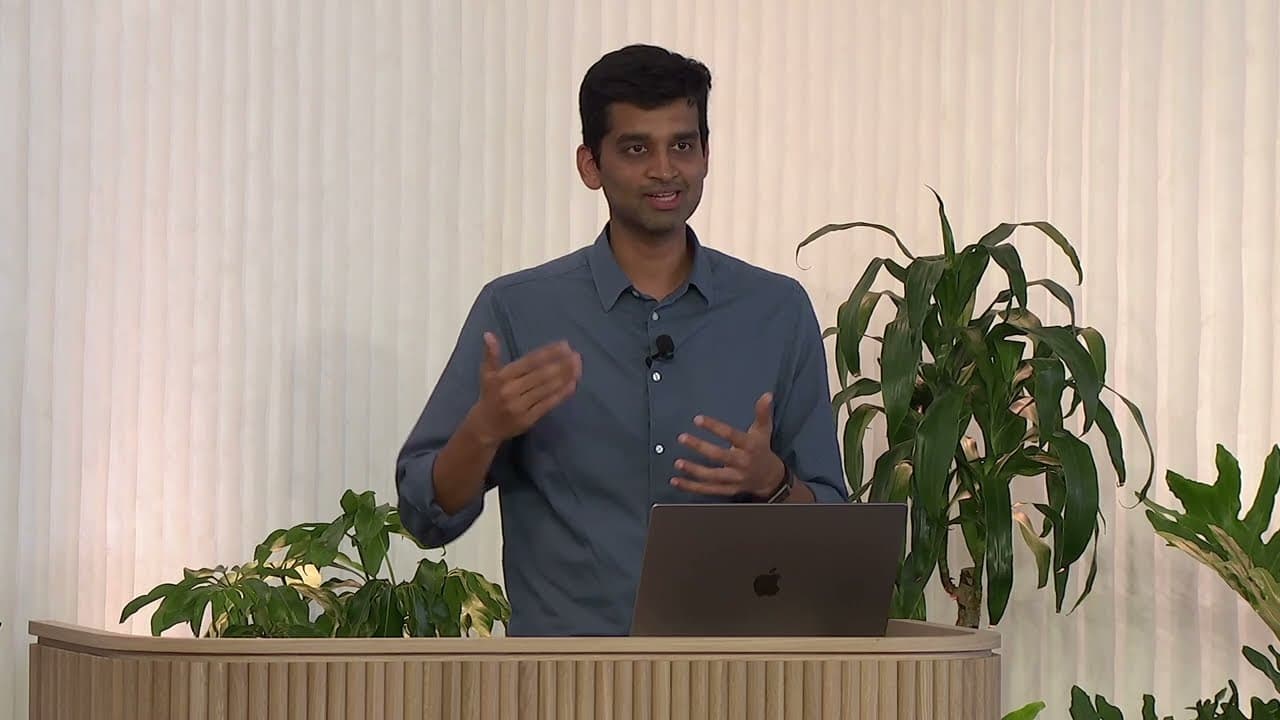
-Hi everyone. My name is Karthik Narasimhan. I lead the research team at Sierra. And I'm super excited today to be talking to you all on TAU-bench, which is one of our recent efforts at benchmarking AI agents for the real-world. And before I begin, I just want to state, you know, this is a combined effort. You know, lots of super excellent people h... Read More
Key Insights
- ❓ TAU-bench represents a significant advancement in evaluating AI agents by creating a framework that addresses both dialog and task-oriented benchmarks.
- 👤 The integration of LLMs for user simulation enhances the testing process, making it more efficient and cost-effective than reliance on human testers.
- 👤 The framework facilitates the assessment of an agent's understanding of diverse user inputs, crucial for effective communication in various contexts.
- 📈 By establishing the pass^k metric, TAU-bench emphasizes the importance of reliability in AI agent performance across multiple interactions.
- 👨🔬 The scientific collaboration behind TAU-bench highlights the collective effort in advancing AI research and performance evaluation methodologies.
- 🌍 The methodology permits controlled testing environments where developers can observe agents' behavior before real-world deployment.
- 🧡 Data generation using LLMs enables a broader range of scenarios to assess agent performance, improving the robustness of evaluations.
Install to Summarize YouTube Videos and Get Transcripts
Explore YouTube Video Summarizer or Get YouTube Transcript Extractor
Questions & Answers
Q: What is the primary goal of TAU-bench?
The primary goal of TAU-bench is to create a benchmarking framework for evaluating AI agents in real-world situations. This involves assessing their ability to communicate effectively with users, understand diverse language styles, and execute reliable actions in dynamic scenarios, thus bridging the gap between dialog systems and agent benchmarks.
Q: How does TAU-bench improve upon existing evaluation methods for AI agents?
TAU-bench improves existing evaluation methods by utilizing large language models (LLMs) for user simulation, enabling more realistic and scalable testing scenarios. This approach allows developers to test agents repeatedly under the same conditions, providing valuable insights into their reliability and performance, which traditional human testers cannot match in terms of consistency and efficiency.
Q: What challenges in AI agent evaluation does TAU-bench address?
TAU-bench addresses several challenges, including the need for agents to understand diverse user inputs, generate accurate responses, and perform reliable actions. Additionally, it focuses on providing developers with control over testing scenarios and the ability to measure agents' reliability through repeated evaluations, which are often overlooked in standard benchmarks.
Q: How does user simulation work within TAU-bench?
User simulation in TAU-bench involves using LLMs to create virtual users that interact with the AI agent based on predefined scenarios. This simulation enables the testing of the agent’s capabilities in handling various user requests, styles, and familiarities, mimicking real-world interactions without the need for live testers, thus streamlining the evaluation process.
Q: What is the significance of the new metric called pass^k in TAU-bench?
The pass^k metric is significant as it measures an AI agent's ability to consistently complete tasks across multiple trials of the same scenario. This reliability metric provides deeper insights into the agent's performance over time, helping developers identify potential weaknesses that may not be evident from a single interaction, highlighting the importance of dependable AI behavior in various contexts.
Q: Why is it important for AI agents to perform reliably across multiple interactions?
AI agents must perform reliably across multiple interactions to ensure user satisfaction and trust. In real-world applications, users may ask the same questions multiple times or have similar queries. If an agent's performance fluctuates, it can lead to frustration and a lack of confidence in the AI's capabilities, making consistent performance critical for successful deployment.
Q: Can TAU-bench be used for different types of AI applications?
Yes, TAU-bench can be adapted for various AI applications that require conversational abilities, such as customer service bots, virtual assistants, and other autonomous systems. By simulating user interactions across different domains, TAU-bench allows for comprehensive evaluation and improvement of these AI agents, making it applicable to a wide range of real-world scenarios.
Summary & Key Takeaways
-
TAU-bench addresses the challenges of evaluating conversational AI agents by simulating user interactions, allowing for more comprehensive testing before deployment.
-
The framework combines dialog systems and agent benchmarks to create realistic assessments of an agent's ability to handle dynamic user input and execute actions accurately.
-
By leveraging large language models (LLMs) like GPT-4o, TAU-bench enables rapid data generation and user simulation, enhancing both the reliability and scalability of AI agent testing.
Read in Other Languages (beta)
Share This Summary 📚
Summarize YouTube Videos and Get Video Transcripts with 1-Click
Try YouTube Summary with ChatGPT & Claude or YouTube Transcript Generator
Explore More Summaries from OpenAI 📚




Summarize YouTube Videos and Get Video Transcripts with 1-Click
Try YouTube Summary with ChatGPT & Claude or YouTube Transcript Generator