What Is Thermal Interface Material (TIM) and Its Importance?
TL;DR
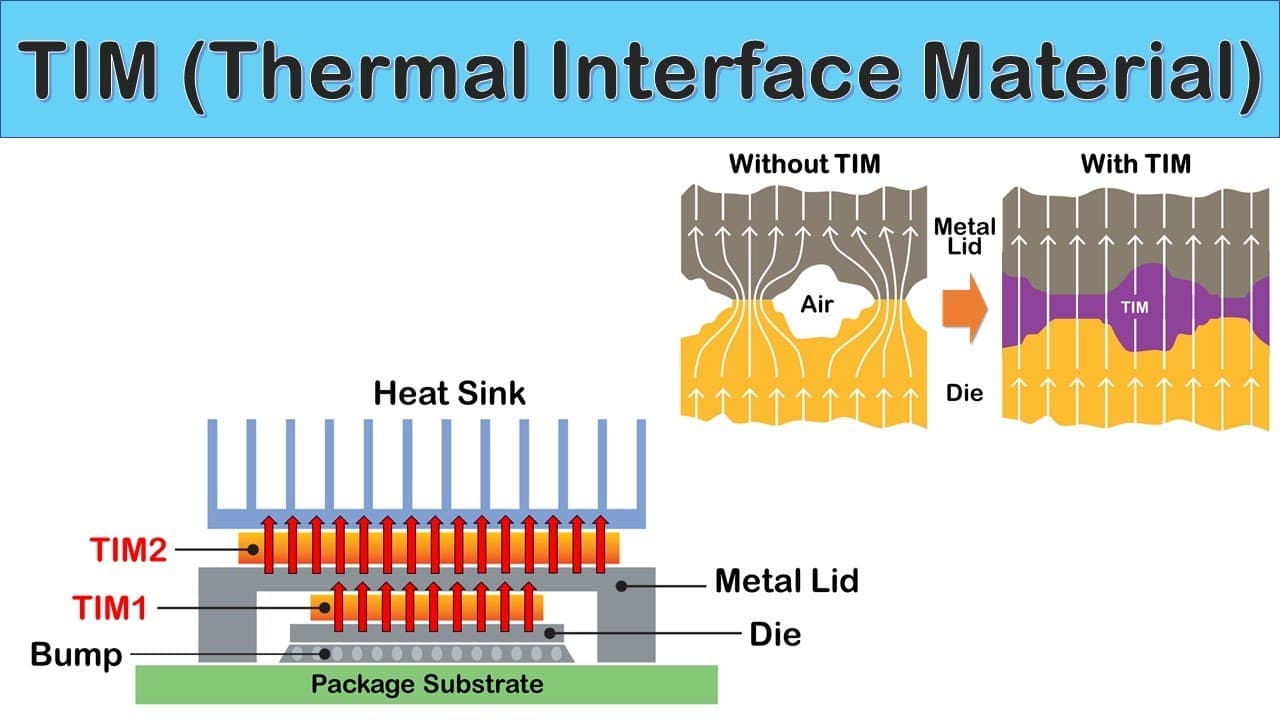
Thermal Interface Material (TIM) is vital for effective heat dissipation in semiconductor packages, preventing failures in electronics by facilitating the transfer of heat from the die to the metal lid. It must have high thermal conductivity, be conformable to fill gaps, and offer reliability and ease of handling during production. Proper application involves ensuring coverage, minimizing voids, and maintaining optimal bondline thickness.
Transcript
Hello everyone, welcome to Semicon Talk! Today’s topic is Thermal Interface Material in short TIM. Before we talk about TIM, why we need to know about TIM? Here is the major causes of electronic failure and heat is the number 1 cause with 55%. That is why we need to understand about heat in semiconductor. Let’s talk about it! TIM is material be... Read More
Key Insights
- Thermal Interface Material (TIM) is critical in preventing electronic failures by dissipating heat effectively from the die to the metal lid in semiconductor packages.
- TIM is primarily used in high-performance computing devices like laptops, desktops, servers, and data centers, where efficient heat management is crucial.
- Key requirements for TIM include high thermal conductivity, conformability to fill microscopic gaps, reliability against mechanical stress, and ease of handling during production.
- TIM1 refers to the material between the die and metal lid, while TIM2 is between the metal lid and heat sink in electronic products like desktop computers.
- Efficient heat dissipation involves multiple steps: heat generation by the die, conduction through TIM1 to the metal lid, further conduction through TIM2 to the heat sink, and finally dissipation into the air.
- Proper TIM application involves ensuring full coverage, minimizing voids, and maintaining optimal bondline thickness to enhance thermal conduction paths and reduce thermal resistance.
- TIM compositions include resins like silicone and epoxy, and fillers such as aluminum, alumina, aluminum nitride, silver, copper, and graphite.
- Major TIM manufacturers include Indium, ShinEtsu, Henkel, Namics, Dow, and Momentive, offering various types of TIM like thermal adhesive, sintering TIM, and metal TIM for different applications.
Install to Summarize YouTube Videos and Get Transcripts
Explore YouTube Video Summarizer or Get YouTube Transcript Extractor
Questions & Answers
Q: What is the primary function of Thermal Interface Material (TIM)?
The primary function of Thermal Interface Material (TIM) is to facilitate efficient heat dissipation from the semiconductor die to the metal lid, preventing electronic failures caused by excessive heat. TIM fills microscopic gaps and ensures that heat is conducted away from the die, maintaining optimal performance in high-performance computing devices.
Q: Why is TIM important in high-performance computing devices?
TIM is crucial in high-performance computing devices because these devices generate significant amounts of heat due to their high processing power. Without effective heat management provided by TIM, the excessive heat can lead to electronic failures, reduced performance, and potentially permanent damage to the components, making TIM essential for reliable operation.
Q: What are the key requirements for an effective TIM?
An effective TIM must have high thermal conductivity to efficiently dissipate heat, conformability to fill microscopic gaps between the die and metal lid, reliability to withstand mechanical stresses without failure, and workability to ensure ease of application and handling during the production process. These factors collectively ensure optimal heat management in semiconductor packages.
Q: How does TIM1 differ from TIM2?
TIM1 is the Thermal Interface Material placed between the semiconductor die and the metal lid within the package, primarily focusing on conducting heat from the die. In contrast, TIM2 is located between the metal lid and the heat sink in electronic products like desktop computers, facilitating further heat transfer to the heat sink for dissipation into the air.
Q: What are the consequences of improper TIM application?
Improper TIM application can lead to incomplete coverage, increased voids, and incorrect bondline thickness, all of which reduce the material's effectiveness. These issues can result in poor heat conduction, increased thermal resistance, and ultimately, inadequate heat dissipation, leading to potential overheating and failure of electronic components.
Q: What materials are commonly used in TIM compositions?
Common materials used in TIM compositions include resins like silicone and epoxy, which provide the base structure, and fillers such as aluminum, alumina, aluminum nitride, silver, copper, and graphite, which enhance thermal conductivity. These materials are chosen based on their ability to efficiently conduct heat and their compatibility with production processes.
Q: Who are the major manufacturers of TIM?
Major manufacturers of TIM include companies like Indium, ShinEtsu, Henkel, Namics, Dow, and Momentive. These companies offer a range of TIM products, including thermal adhesives, sintering TIMs, and metal TIMs, catering to different application needs in the semiconductor industry, especially for high-performance computing devices.
Q: What are some common TIM dispensing patterns?
Common TIM dispensing patterns include the snowflake pattern, among others, designed to achieve optimal coverage and minimize voids. These patterns ensure that the TIM covers as much of the die backside as possible, enhancing thermal conduction paths and improving overall heat dissipation efficiency in semiconductor packages.
Summary & Key Takeaways
-
Thermal Interface Material (TIM) is crucial for managing heat in semiconductor packages, preventing electronic failures by ensuring efficient heat dissipation from the die to the metal lid. It is especially important in high-performance computing devices, where heat management is critical for normal operation.
-
TIM must possess high thermal conductivity, conformability to fill gaps, reliability to withstand mechanical stress, and ease of handling for production. Proper application involves ensuring full coverage, minimizing voids, and maintaining optimal bondline thickness to enhance thermal conduction and reduce resistance.
-
TIM compositions include silicone and epoxy resins, with fillers like aluminum and graphite. Major manufacturers like Indium and ShinEtsu provide various TIM types, including thermal adhesive and metal TIM, to meet different application needs in the semiconductor industry.
Read in Other Languages (beta)
Share This Summary 📚
Summarize YouTube Videos and Get Video Transcripts with 1-Click
Try YouTube Summary with ChatGPT & Claude or YouTube Transcript Generator
Explore More Summaries from Semicon Talk 📚




Summarize YouTube Videos and Get Video Transcripts with 1-Click
Try YouTube Summary with ChatGPT & Claude or YouTube Transcript Generator