How Did Spain Build Its American Empire?
TL;DR
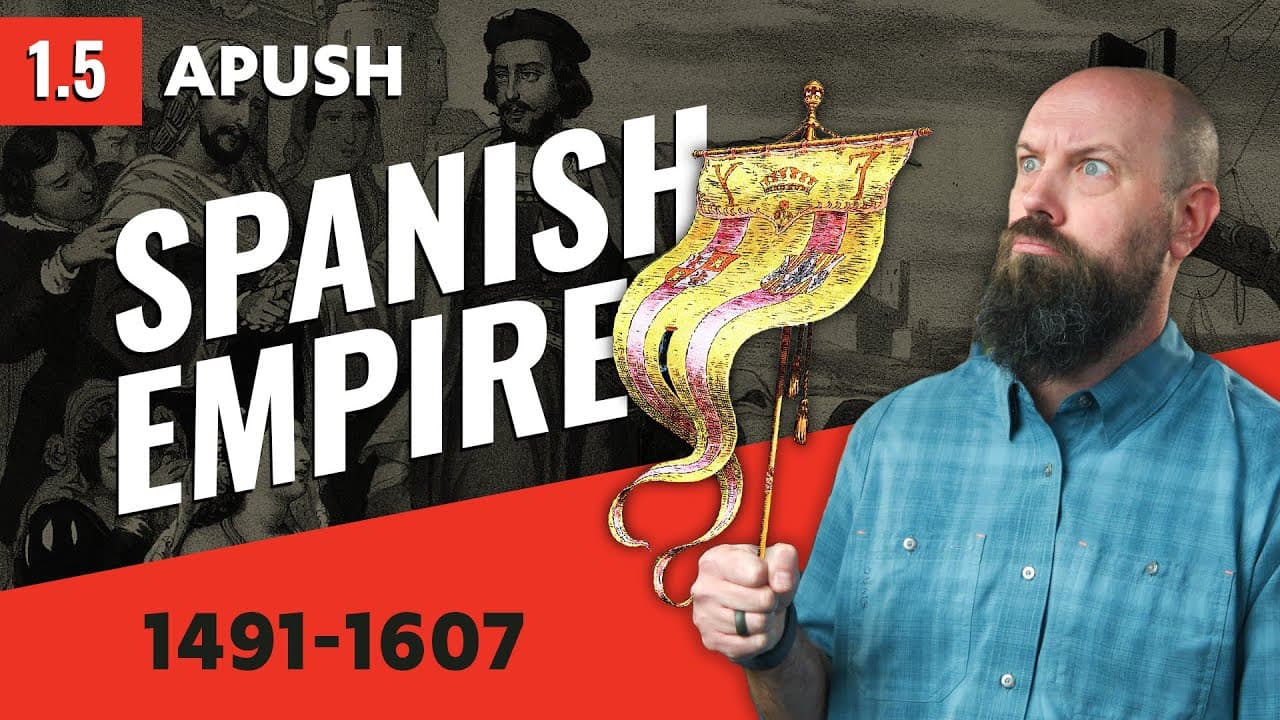
Spain built its American empire through conquest, coerced labor, mineral and crop extraction, Christianization, and a racial caste system. Disease and Indigenous alliances helped conquistadors defeat the Aztec and Inca empires, while the encomienda system and later African slavery supplied labor for mines and plantations. The caste system then reinforced Spanish control through inherited social rankings.
Transcript
Now, without a doubt, Spain was the grand pooha of imperial powers in the Americas from 1491 to6007. So, let's visit with these rascally colonizers for a spell and see how they became the great lidless colonial eye of Sauron. Should be fun. So, if you're ready to get them brain cows milked, let's get to it. Now, hopefully you recall from the last c... Read More
Key Insights
- Spain's early colonization was driven primarily by the pursuit of wealth and the expansion of Christianity. Columbus established Spanish claims through four Caribbean voyages, but settlers focused heavily on obtaining gold and began taking it by force when Indigenous communities ended trade.
- The Requerimiento was a Spanish legal document claiming that papal authority gave Spain a biblical right to rule the Americas. It threatened violence against Indigenous groups that resisted, although it was read aloud in Spanish to people who did not understand the language.
- Hernán Cortés conquered the Aztec Empire by 1521 with two major advantages. Spanish diseases, including smallpox, weakened the Aztecs and their leadership, while Indigenous groups subjected to Aztec authority allied with Cortés in pursuit of their own liberation.
- Francisco Pizarro defeated the Inca Empire using tactics similar to those employed by Cortés. The enormous quantities of gold and silver acquired from the Aztec and Inca empires encouraged Spain to expand and intensify its broader colonization program.
- The encomienda system was a form of coerced labor in which the Spanish crown granted land to encomenderos. Indigenous people living there were compelled to work in mining and plantation agriculture, while Spaniards characterized protection and Christianization as the benefits supposedly provided in return.
- Spanish colonial wealth came from gold and silver mining and from exported cash crops such as sugarcane, tobacco, and cotton. Indigenous labor became less reliable because workers could use their knowledge of the land to escape and because Spanish diseases caused continued deaths.
- African slavery became the dominant coerced labor system as Spain increasingly imported enslaved Africans for mines and plantations. Europeans expanded an existing African slave trade, increased demand, and transported captives through the Middle Passage, where disease and malnutrition produced a death rate of around 20 percent.
- The Spanish casta system organized colonial society through racial and hereditary rankings. Greater Spanish ancestry generally brought greater social power, while Indigenous people and Africans occupied the bottom. A person's classification shaped education, employment, taxation, tribute, and where they could live within settlements.
Install to Summarize YouTube Videos and Get Transcripts
Explore YouTube Video Summarizer or Get YouTube Transcript Extractor
Questions & Answers
Q: How did Spain establish its empire in the Americas?
Spain established its empire through exploration, military conquest, forced labor, religious justification, and social reorganization. Columbus made four Caribbean voyages and asserted Spanish claims, after which colonists seized wealth and conquered islands. Conquistadors then defeated major mainland empires, extracted gold and silver, developed plantations, compelled labor, promoted Christianization, and imposed the race-based casta hierarchy.
Q: Why was Hernán Cortés able to defeat the Aztec Empire?
Hernán Cortés defeated the Aztec Empire by 1521 because he benefited from disease and local alliances. Spanish diseases such as smallpox weakened the Aztec population and killed important leaders, leaving the empire vulnerable. Cortés also allied with Indigenous groups that had lived under Aztec authority and joined the Spanish campaign in hopes of securing their own liberation.
Q: What was the purpose of the Requerimiento?
The Requerimiento was intended to provide a legal and religious justification for Spanish conquest. Issued under King Ferdinand and Queen Isabella, it claimed that the Pope had given Spain biblical authority to govern the Americas and threatened violence against resisting Indigenous communities. Because Spaniards read it aloud in Spanish, it did not meaningfully communicate its claims to people who did not know Spanish.
Q: How did the encomienda system work in Spanish colonies?
The encomienda system granted tracts of land from the Spanish crown to Spanish encomenderos, who compelled Indigenous residents to work in mining and plantation agriculture. Spaniards presented the arrangement as mutually beneficial because encomenderos supposedly supplied protection and Christianization. In practice, the system functioned as slavery and became Spain's principal method for extracting colonial wealth from mines and cash crops.
Q: Why did Spain increasingly rely on enslaved African labor?
Spain increasingly imported enslaved Africans because its reliance on Indigenous labor was breaking down. Indigenous workers knew the American landscape well and could escape more easily, while many others died from diseases introduced by Spaniards. Africans were less familiar with the land and had greater immunity to diseases such as smallpox and measles, making them more reliable in Spanish calculations.
Q: What was the Middle Passage in the Spanish labor system?
The Middle Passage was the Atlantic voyage that transported enslaved Africans to the Americas after European merchants acquired them through trade with West African groups. Captives were crowded aboard ships like cargo, and approximately 20 percent died because of disease and malnutrition. Survivors were sold in the Americas and forced to labor in Spanish mines and plantations.
Q: How did European involvement change the African slave trade?
The African slave trade had existed for centuries, with enslaved people often taken as prisoners during wars and local conflicts. European merchants entered this existing system and sharply increased demand for enslaved laborers. Their trade, particularly the exchange of guns for captives, enriched and strengthened participating West African groups while also increasing warfare and the capture of additional enslaved people.
Q: How did the casta system strengthen Spanish colonial control?
The casta system ranked colonial residents according to race and heredity, generally granting more power to people with more Spanish ancestry. It divided society into roughly 40 classifications and placed Spaniards at the top, with Indigenous people and Africans at the bottom. Classification affected education, occupations, tribute, taxes, and residence, allowing a small Spanish elite to organize colonial life around its authority.
Summary & Key Takeaways
-
Spain established its American claims after Columbus made four Caribbean voyages over roughly a decade. Colonists seeking gold used force when Indigenous communities stopped trading. Spain then expanded onto the mainland, while the Requerimiento invoked biblical and papal authority to justify conquest and threatened violence against communities that resisted Spanish rule.
-
By 1521, Hernán Cortés had defeated the Aztec Empire with assistance from disease and Indigenous groups seeking freedom from Aztec authority. Francisco Pizarro later used similar tactics against the Inca Empire. The resulting gold and silver encouraged Spain to intensify colonization and develop systems for extracting wealth more consistently.
-
Spain used encomienda labor to mine precious metals and produce cash crops, then increasingly imported enslaved Africans as Indigenous workers escaped or died from disease. Colonial elites also imposed the race-based casta system, which determined social power, education, occupations, tribute obligations, and residential patterns while erasing much Indigenous cultural complexity.
Read in Other Languages (beta)
Share This Summary 📚
Summarize YouTube Videos and Get Video Transcripts with 1-Click
Try YouTube Summary with ChatGPT & Claude or YouTube Transcript Generator
Explore More Summaries from Heimler's History 📚



Summarize YouTube Videos and Get Video Transcripts with 1-Click
Try YouTube Summary with ChatGPT & Claude or YouTube Transcript Generator