How Does Waymo's Ride Experience Compare to Tesla's?
TL;DR
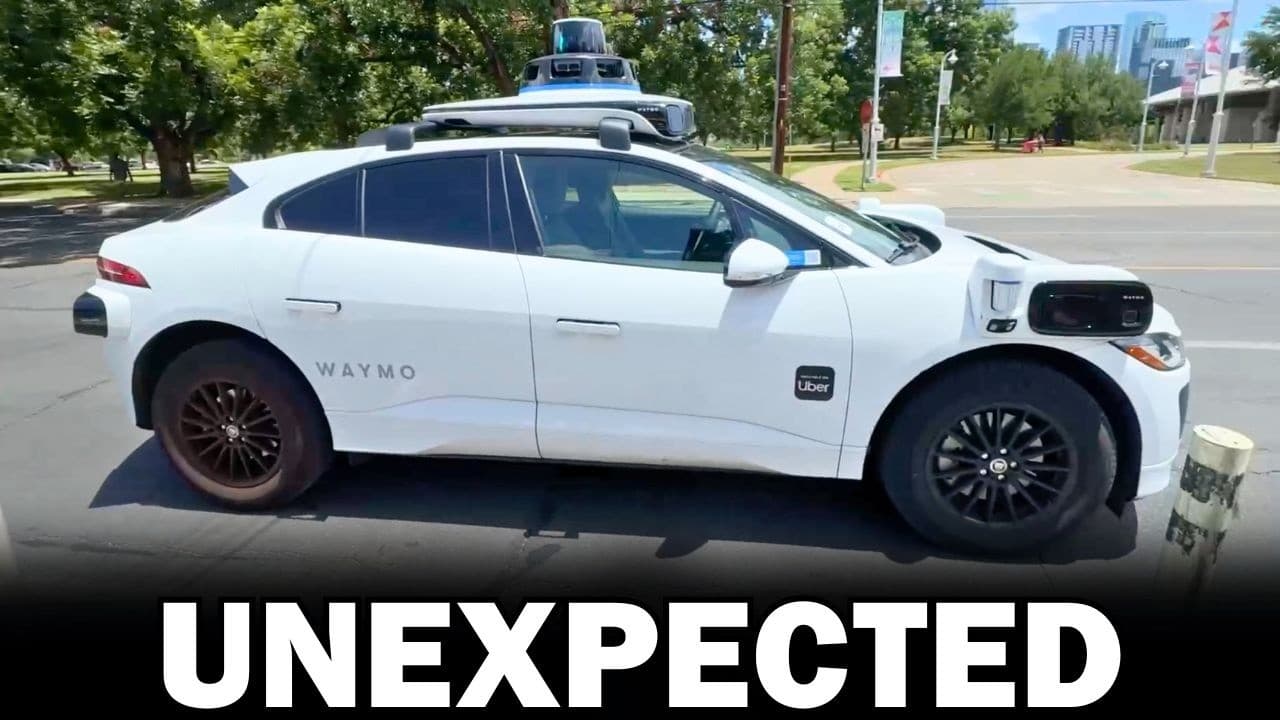
Waymo's autonomous ride service, integrated with Uber, offers a generally smooth experience but faces challenges with pickup logistics and occasional hesitation during drives. This video highlights key differences between Waymo and Tesla's Robo Taxi, noting Waymo's higher costs and its operational limitations in certain areas. While both services are evolving, Tesla's offerings currently provide a more seamless ride experience.
Transcript
that's interesting Is that truck going the wrong direction directly here oh yeah It totally is What the I don't like this behavior here at Terry Blocks It's just stopping in the middle of the road I really think it should be going in the parking lot We had this issue before and so now Joe has to come out of the right side here So especially since ... Read More
Key Insights
- Waymo's ride service, integrated with Uber, requires specific settings to increase the likelihood of hailing a Waymo vehicle, highlighting the challenge of limited fleet availability.
- The ride experience with Waymo is generally smooth, but there are occasional issues with pickup and drop-off locations, often resulting in the vehicle stopping in the middle of the road.
- Waymo's vehicles demonstrate good driving dynamics, but there are some moments of hesitation and awkwardness, especially in complex traffic situations.
- The integration between Waymo and Uber apps can lead to confusion, as the estimated arrival times and routes may not always align with reality.
- Tesla's Robo Taxi is noted for its smoother ride quality compared to Waymo, with fewer instances of hesitation and more seamless handling of various driving scenarios.
- Waymo's service is currently limited to specific geofenced areas, whereas Tesla aims to expand its service area significantly, leveraging its manufacturing capacity.
- The cost of Waymo rides is generally higher than introductory offers from Tesla's Robo Taxi, but the privacy and comfort of an autonomous ride may justify the premium for some users.
- Both Waymo and Tesla face challenges in perfecting pickup and drop-off logistics, which are crucial for a seamless and safe ride experience.
Install to Summarize YouTube Videos and Get Transcripts
Explore YouTube Video Summarizer or Get YouTube Transcript Extractor
Questions & Answers
Q: How does Waymo's ride service integrate with Uber?
Waymo's ride service is embedded within the Uber app, requiring users to adjust settings to increase the likelihood of hailing a Waymo vehicle. This integration is likely due to Waymo's limited fleet size, allowing them to leverage Uber's network for broader reach. However, this can lead to some confusion, as the Uber app may not always accurately reflect Waymo's routes and arrival times.
Q: What are the main challenges with Waymo's pickup and drop-off logistics?
One of the main challenges with Waymo's service is its tendency to stop in the middle of the road for pickups and drop-offs, which can block traffic and create safety concerns. This behavior is particularly problematic in busy areas with available parking spaces that the vehicle could use instead. Improving these logistics is crucial for enhancing the overall ride experience.
Q: How does the ride quality of Waymo compare to Tesla's Robo Taxi?
Waymo's ride quality is generally smooth, but there are moments of hesitation and awkwardness, especially in complex traffic situations. In comparison, Tesla's Robo Taxi is noted for its smoother ride quality, with fewer instances of hesitation and more seamless handling of various driving scenarios. Tesla's vehicles are described as behaving like a good human driver, whereas Waymo's vehicles can sometimes exhibit robotic movements.
Q: What are the cost considerations for Waymo's service?
Waymo's rides are generally more expensive than Tesla's introductory offers for Robo Taxi. However, the privacy and comfort of an autonomous ride may justify the premium for some users. The cost is expected to be a significant factor in the adoption of autonomous ride services, with many users expecting these services to be cheaper than traditional ridesharing options due to the lack of a human driver.
Q: How does the expansion potential of Tesla's Robo Taxi compare to Waymo's current service area?
Tesla aims to expand its Robo Taxi service significantly, leveraging its manufacturing capacity to potentially cover a wide geographical area, including major cities and surrounding regions. In contrast, Waymo's service is currently limited to specific geofenced areas, primarily within city limits. Tesla's ability to scale its service area is seen as a potential game-changer in the autonomous ride-hailing market.
Q: What are the key technological differences between Waymo and Tesla's autonomous vehicles?
Waymo's vehicles are described as having moments of hesitation and exhibiting robotic movements, while Tesla's vehicles are noted for their smoother ride quality and human-like driving behavior. Tesla's vehicles are built with all necessary hardware for autonomy from the start, allowing for rapid deployment, while Waymo's vehicles require modifications. Additionally, Tesla's focus on full self-driving technology is seen as a core enabler for its Robo Taxi service.
Q: How do users perceive the reliability of Waymo's service?
Users generally find Waymo's service reliable in terms of vehicle arrival and ride experience, though there are occasional issues with pickup and drop-off logistics. The service is seen as a viable alternative to traditional ridesharing options, offering the benefits of privacy and comfort in an autonomous vehicle. However, users expect the service to be cost-effective, given the lack of a human driver.
Q: What are the potential benefits of Tesla's approach to autonomous ride-hailing?
Tesla's approach to autonomous ride-hailing focuses on leveraging its existing manufacturing capacity and full self-driving technology to scale its service rapidly. This strategy allows Tesla to potentially offer a more extensive service area and lower costs per mile due to the lack of a human driver. Tesla's vehicles are also noted for their smoother ride quality and human-like driving behavior, which could enhance the overall user experience and drive adoption.
Summary & Key Takeaways
-
The video explores the experience of using Waymo's autonomous ride service, highlighting both the strengths and challenges of the technology. The integration with Uber requires specific settings to maximize the chances of hailing a Waymo vehicle, and the ride quality is generally smooth but not without its moments of hesitation.
-
Comparisons are drawn between Waymo and Tesla's Robo Taxi, with Tesla's service noted for its smoother ride quality and fewer issues with pickup and drop-off logistics. Waymo's service is limited to specific areas, while Tesla aims to expand its reach significantly.
-
The discussion also touches on the cost of autonomous rides, with Waymo's service generally being more expensive than Tesla's introductory offers. The video concludes with a positive outlook on the potential of both services to revolutionize urban transportation.
Read in Other Languages (beta)
Share This Summary 📚
Summarize YouTube Videos and Get Video Transcripts with 1-Click
Try YouTube Summary with ChatGPT & Claude or YouTube Transcript Generator
Explore More Summaries from Farzad 📚




Summarize YouTube Videos and Get Video Transcripts with 1-Click
Try YouTube Summary with ChatGPT & Claude or YouTube Transcript Generator