How Could Tesla Cybercab Transform Robotaxis?
TL;DR
Tesla’s Cybercab is designed as a two-seat autonomous vehicle without permanent steering controls or pedals, with a stated production cost target of about $20,000 or less per unit. Its parallel assembly process could support high-volume manufacturing, but deployment depends on safety validation, Tesla’s autonomous-driving capabilities, and whether regulators raise limits on vehicles built without conventional driver controls.
Transcript
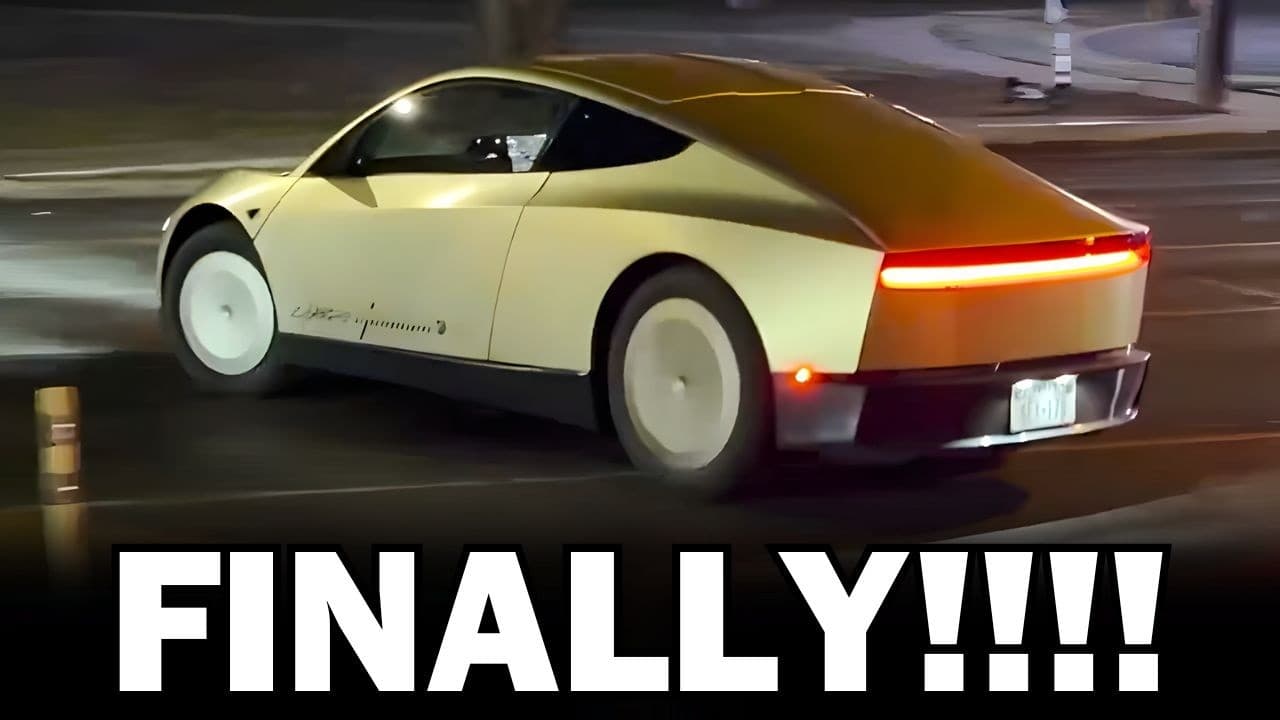
Okay, everybody, starting to get serious. The Tesla Cyber Cab is appearing freaking everywhere. Here's a picture of it in Chicago. We've also seen it in places like Buffalo, New York. We've seen it all over Austin. We've seen it all over California. There's at least 8 to 10 of them on the roads testing right now. And for people that follow Tesla ve... Read More
Key Insights
- Cybercab testing is expanding across the United States, with vehicles reported in Chicago, Buffalo, Austin, California, and other areas. The transcript estimates that at least 8 to 10 units are currently undergoing road testing as Tesla prepares for a planned April 2026 launch.
- The Cybercab is designed as a two-seat autonomous vehicle without permanent steering wheels or pedals. Its passenger compartment provides substantial open space in front of both seats, reflecting Tesla’s intention to operate it without a human driver rather than as a conventional privately driven car.
- The unboxed manufacturing process builds multiple vehicle sections simultaneously and then joins them near the end of production. This parallel approach differs from a traditional sequential assembly line and is intended to reduce required factory space while enabling more vehicles to be produced at the same time.
- The Cybercab has a stated production cost target of approximately $20,000 or less per unit. The transcript argues that autonomous operation could support transportation costs of roughly 20 to 40 cents per mile, compared with an estimated 80 cents per mile for conventional personal driving.
- Current Cybercab prototypes have steering wheels and pedals because Tesla needs human controls while testing relatively new autonomous technology in varied conditions. The temporary steering system is reportedly borrowed from the Cybertruck, enabling test operators to control the Cybercab without a conventional mechanical steering connection.
- Steer-by-wire technology connects the steering wheel electronically to the front wheels instead of using a direct mechanical connection. Accelerator-by-wire and brake-by-wire operate on a similar principle, making the Cybercab’s temporary testing controls easier to install or remove as operational and regulatory needs change.
- United States regulations reportedly cap annual production of vehicles without steering wheels and pedals at 2,500 units. Tesla and other automakers are seeking to raise that limit to 95,000, but even the proposed figure could constrain a factory intended to produce hundreds of thousands of Cybercabs annually.
- Tesla’s robotaxi operations remain limited in scale, with the transcript estimating about 130 vehicles in the Bay Area and roughly 30 in Austin. Fewer than 200 are said to be operating across both locations, with in-car monitors present while the vehicles drive themselves.
Install to Summarize YouTube Videos and Get Transcripts
Explore YouTube Video Summarizer or Get YouTube Transcript Extractor
Questions & Answers
Q: How is the Tesla Cybercab designed to operate?
The Tesla Cybercab is designed from the ground up to transport passengers without a human driver, permanent steering wheel, or pedals. It has two seats with considerable open space in front of them for passenger comfort. Current test vehicles still include driver controls because Tesla needs a practical way to intervene while evaluating autonomous operation in different road situations.
Q: How does Tesla’s unboxed manufacturing process work?
Tesla’s unboxed process builds multiple sections of a vehicle in parallel instead of moving one nearly complete car through every assembly step sequentially. Doors, trim, seats, and other sections can be prepared simultaneously before the major assemblies are joined. According to the transcript, this approach requires less factory space and allows more vehicles to be built at once.
Q: Why do Cybercab test vehicles have steering wheels and pedals?
Cybercab prototypes have steering wheels and pedals because testing a self-driving vehicle without manual controls would be difficult while the technology is still being evaluated. Human operators need a way to control the vehicle in varied situations. Tesla can add these components relatively easily because steering, acceleration, and braking are electronically controlled rather than conventionally connected mechanical systems.
Q: What is steer-by-wire in the Tesla Cybercab?
Steer-by-wire is an electronic steering system in which the steering wheel is not mechanically connected to the front wheels. The Cybercab’s testing system is described as being borrowed from the Cybertruck and functioning much like a remote control or joystick. Similar electronic connections are used for the accelerator and brake pedals, simplifying their temporary installation and removal.
Q: How much could the Tesla Cybercab cost to manufacture and operate?
Tesla is said to be targeting a production cost of about $20,000 or less for each Cybercab. The transcript estimates that a driverless Cybercab could provide transportation for roughly 20 to 40 cents per mile. By comparison, it places conventional personal-car costs, including time, fuel, maintenance, and related expenses, closer to 80 cents per mile.
Q: When is Tesla expected to launch the Cybercab?
Tesla is described as targeting April 2026 for the Cybercab launch. Road sightings reportedly began around November of the prior year, and the transcript says automakers commonly spend about six months testing vehicles publicly before production or public use. Additional road testing and safety testing at Tesla factories are presented as signs that the April schedule remains attainable.
Q: What regulations could limit Tesla Cybercab production?
The transcript states that United States rules limit manufacturers to 2,500 vehicles per year when those vehicles lack steering wheels and pedals. Tesla and other automakers are reportedly asking regulators to raise the cap to 95,000 units annually. Without a higher allowance or conventional controls, Tesla could be unable to deploy enough Cybercabs to use its planned factory capacity efficiently.
Q: Why does Tesla need to manufacture Cybercabs at high volume?
Tesla expects low transportation costs to create substantial demand for Cybercab service, so it needs a production system capable of supplying many vehicles. The transcript also argues that expensive factories become financially viable only when enough vehicles move through their production lines. A regulatory ceiling far below the line’s capacity could therefore prevent Tesla from reaching the assumed break-even production volume.
Summary & Key Takeaways
-
Tesla Cybercab test vehicles have appeared in Chicago, Buffalo, Austin, California, and other locations, with an estimated 8 to 10 operating on roads. Tesla is targeting an April 2026 launch, and the growing test fleet, alongside factory crash testing, is presented as evidence that vehicle validation and production preparation are advancing.
-
The Cybercab is designed from the ground up as a two-seat driverless vehicle without permanent steering controls or pedals. Current prototypes include temporary controls for testing. Steer-by-wire, accelerator-by-wire, and brake-by-wire technology makes those components electronically connected, allowing Tesla to add or remove them more easily than conventional mechanically connected controls.
-
Tesla’s unboxed manufacturing process builds major sections in parallel before joining them, potentially reducing factory space and increasing production volume. However, regulations reportedly limit vehicles without steering wheels and pedals to 2,500 units annually. Tesla and other automakers are seeking a higher limit of 95,000, which would still remain below the volumes discussed.
Read in Other Languages (beta)
Share This Summary 📚
Summarize YouTube Videos and Get Video Transcripts with 1-Click
Try YouTube Summary with ChatGPT & Claude or YouTube Transcript Generator
Explore More Summaries from Farzad 📚
Summarize YouTube Videos and Get Video Transcripts with 1-Click
Try YouTube Summary with ChatGPT & Claude or YouTube Transcript Generator