Why Could Tesla Lead the Robotaxi Market?
TL;DR
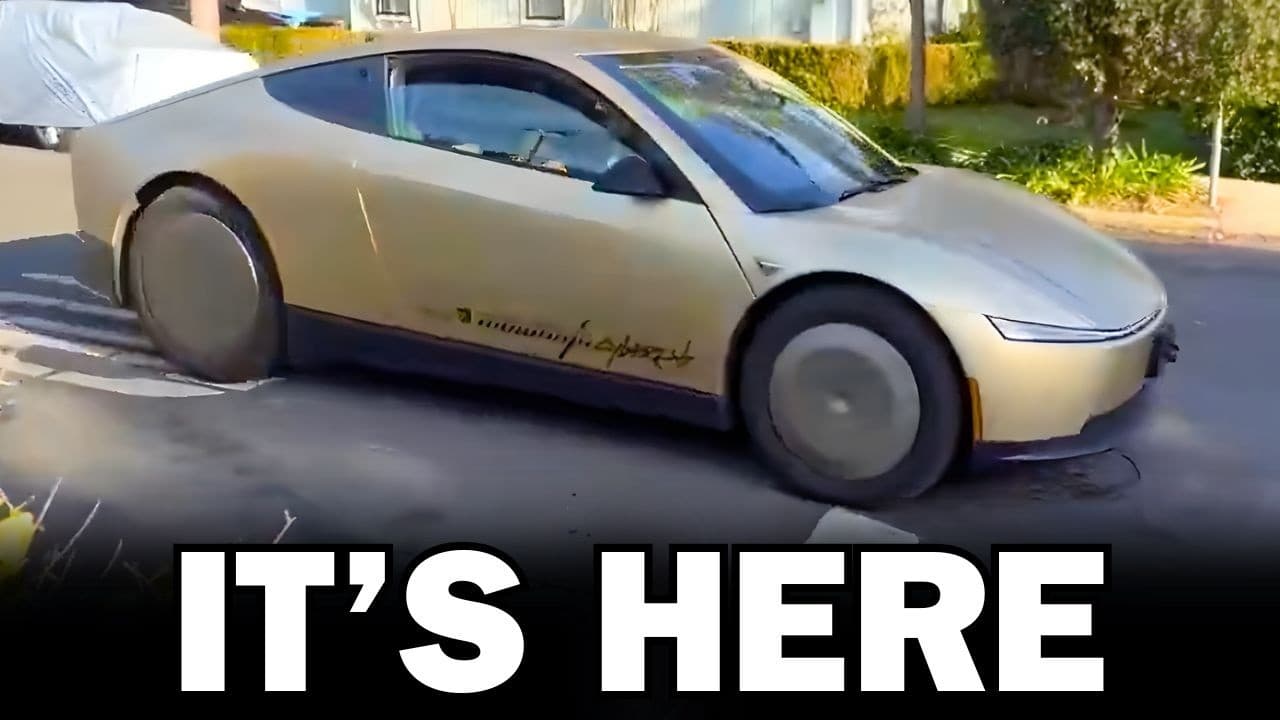
Tesla could undercut current ride-hailing prices because its robotaxi approach is described as seven times more capital efficient than competing models. Pierre Ferragu argues that Waymo's expensive vehicles, supervision requirements, and infrastructure keep its per-mile cost above Uber's, while Tesla's ownership of its vehicles, technology, manufacturing, and wider ecosystem could support faster scaling and lower prices during the initial ramp.
Transcript
there is no competition. It's like one is like you know several times cheaper than the other one. Tesla is seven times more capital efficient than competitors. They are already in a position to actually undercut um uh market prices. So it's I think it's very challenging to to to compete meaningfully against Tesla in in the next few years uh in that... Read More
Key Insights
- Waymo's cost per mile is estimated to be about 30% higher than Uber's because eliminating the driver does not eliminate expensive vehicle depreciation, remote supervision, and infrastructure costs. The analysis concludes that autonomy alone cannot make robotaxis economically compelling when each vehicle costs about $100,000.
- Waymo's vehicle depreciation is estimated at 90 cents per mile, while an Uber driver's cost is estimated at $1.40 per mile. That difference saves only about 60 cents on an operating basis, which the analysis says is insufficient to make Waymo clearly cost competitive.
- Waymo's San Francisco market share is described as between 15% and 20%, yet the company is expanding into Los Angeles, Austin, and other locations instead of pursuing greater local share. Ferragu interprets this pattern as evidence that its current economics constrain deeper penetration.
- Waymo's service can command prices described as 20% to 30% above an average Uber or Lyft ride because passengers value privacy, comfort, consistency, and traveling without a human driver. Strong demand for that experience does not necessarily mean the underlying operation has lower costs.
- Waymo's estimated break-even position in a mature market depends on maintaining current pricing. Ferragu estimates that operating at a 30% discount to Uber in San Francisco would generate losses of half a billion dollars annually, making price-led expansion highly cash consuming.
- Robotaxi economics depend on using an inexpensive autonomous vehicle rather than merely removing the driver. Ferragu argues that a $100,000 vehicle undermines the business model because depreciation, supervision, and infrastructure consume the savings otherwise created by eliminating driver compensation.
- Tesla is described as seven times more capital efficient than competitors and already positioned to undercut prevailing market prices. According to Ferragu, this cost advantage could make meaningful competition especially difficult during the first few years of Tesla's robotaxi ramp.
- Tesla's competitive position is linked to controlling vehicle manufacturing, technology, its fleet, and the wider ecosystem. The discussion suggests that this integration could support scale and allow Tesla customers eventually to participate, while Waymo depends on vehicles it does not manufacture itself.
Install to Summarize YouTube Videos and Get Transcripts
Explore YouTube Video Summarizer or Get YouTube Transcript Extractor
Questions & Answers
Q: Why could Tesla have a cost advantage in robotaxis?
Tesla could have a cost advantage because Pierre Ferragu describes it as seven times more capital efficient than competitors and already capable of undercutting market prices. The discussion connects this advantage to Tesla's control of vehicle manufacturing, autonomous technology, its own fleet, and a broader ecosystem that could eventually include customer participation. These factors could support lower prices and faster scaling during the initial ramp.
Q: Why is Waymo not clearly cheaper than Uber?
Waymo is not clearly cheaper because removing a human driver does not remove the costs of an expensive vehicle, vehicle supervision, depreciation, and supporting infrastructure. Ferragu's analysis estimates that Waymo's total cost per mile is about 30% higher than Uber's. Although autonomy saves driver compensation, those savings are not large enough to offset the remaining costs of the operating model.
Q: How do Waymo's vehicle costs compare with Uber's driver costs?
Ferragu estimates Waymo vehicle depreciation at 90 cents per mile and the cost of an Uber driver at $1.40 per mile. He characterizes the resulting operating saving as about 60 cents per mile. The analysis argues that this difference is too small to make Waymo cost competitive once supervision, infrastructure, and other operating expenses are included in the comparison.
Q: Why does an expensive vehicle weaken robotaxi economics?
An expensive vehicle weakens robotaxi economics because its depreciation consumes much of the money saved by eliminating the human driver. Ferragu says the robotaxi promise works when autonomy is deployed through an inexpensive car, but it does not work with a vehicle costing about $100,000. Supervision and infrastructure add further expenses, preventing the autonomous service from establishing a decisive cost advantage over conventional ride-hailing.
Q: Why are passengers willing to pay more for Waymo?
Passengers are described as paying 20% to 30% more than the average Uber or Lyft ride because Waymo offers a differentiated experience. Riders get the vehicle to themselves, avoid interacting with a driver, receive a consistent experience, and may feel more comfortable bringing a child. The premium therefore demonstrates customer interest in driverless service, but it does not prove that Waymo operates at a lower cost.
Q: What would happen if Waymo priced 30% below Uber?
Ferragu's team estimates that pricing Waymo rides at a 30% discount to Uber would cause the San Francisco operation to lose half a billion dollars per year. The estimate illustrates why Waymo cannot simply cut prices to gain much more market share. Lower prices would increase the cash consumed by expansion unless the company first achieved a substantial reduction in vehicle and operating costs.
Q: Why might Waymo be expanding before dominating San Francisco?
Waymo is described as holding between 15% and 20% market share in San Francisco while starting operations in Los Angeles, Austin, and other places. Ferragu questions why it is not pursuing more local share and the benefits of local scale. His analysis concludes that current costs limit price competition, so expanding geographically may be more practical than aggressively discounting rides to deepen San Francisco penetration.
Q: How does Tesla's integration affect its robotaxi strategy?
Tesla's integration gives it control over vehicle manufacturing, autonomous technology, fleet ownership, and the surrounding ecosystem. The discussion argues that this structure can reduce dependence on outside manufacturers and support a more capital-efficient rollout. It may also allow Tesla customers to participate in the network. Ferragu contrasts this position with Waymo, which does not manufacture the vehicles used in its service.
Summary & Key Takeaways
-
Pierre Ferragu says autonomous ride-hailing only delivers its promised economic advantage when the vehicle itself is inexpensive. His team's analysis estimates that Waymo's current cost per mile is about 30% higher than Uber's, despite removing the driver, because vehicle depreciation, supervision, and supporting infrastructure remain costly.
-
Waymo has achieved between 15% and 20% market share in San Francisco while charging more than Uber or Lyft, suggesting customers value its private, consistent experience. However, Ferragu argues that reducing prices enough to accelerate adoption would create major losses rather than improve the economics of its mature local operation.
-
Tesla is presented as having a structural advantage because it controls vehicle manufacturing, technology, its fleet, and the broader ecosystem. Ferragu describes Tesla as seven times more capital efficient than competitors and already capable of undercutting market prices, making meaningful competition during the next few years of the initial ramp difficult.
Read in Other Languages (beta)
Share This Summary 📚
Summarize YouTube Videos and Get Video Transcripts with 1-Click
Try YouTube Summary with ChatGPT & Claude or YouTube Transcript Generator
Explore More Summaries from Farzad 📚
Summarize YouTube Videos and Get Video Transcripts with 1-Click
Try YouTube Summary with ChatGPT & Claude or YouTube Transcript Generator