How Does Starship's Heat Shield Cut Launch Costs?
TL;DR
Starship's ceramic heat shield could sharply reduce launch costs by allowing the upper stage to survive orbital re-entry, land, refuel, and fly again with minimal refurbishment. Flight 13 reportedly returned at more than 16,000 mph and splashed down softly, suggesting that SpaceX has made substantial progress toward turning a largely disposable rocket architecture into a reusable transportation system.
Transcript
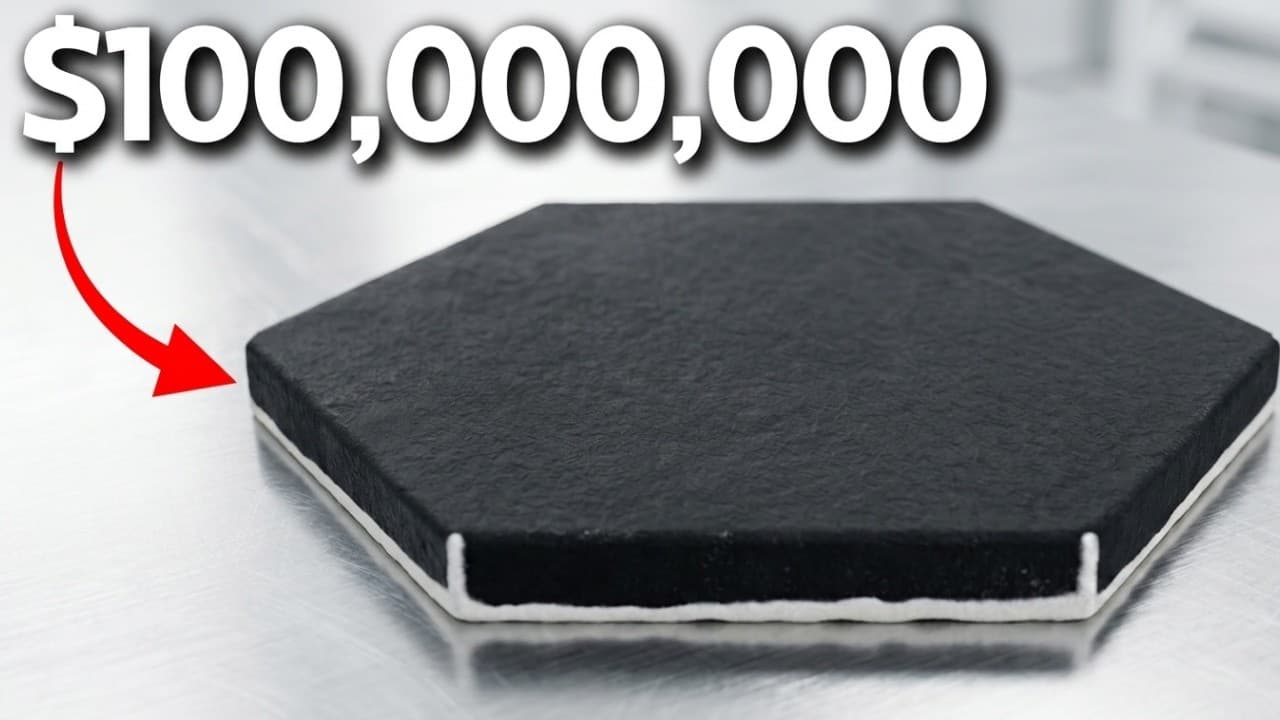
No one realizes just how significant SpaceX's recent breakthrough is. And it has everything to do with this wall of black tiles on the side of Starship, which is the company's latest rocket. That may have just changed the future of not just space travel and access to space, but the future of the human economy and what is now possible for humans. Th... Read More
Key Insights
- Orbital flight requires sideways speed, not merely altitude. A vehicle in low Earth orbit travels at roughly 17,000 mph and continually falls toward Earth while the planet's curved surface drops away beneath it, producing the circular path recognized as orbit.
- Starship's returning mass carries trillions of joules of kinetic energy. The transcript compares the energy that must be shed within minutes to two fully loaded gasoline tanker trucks or about 700 tons of TNT, illustrating the severity of orbital re-entry.
- The ceramic tiles protect Starship by slowing heat transfer into its steel body. Their black exterior also radiates energy as light, while the vehicle's broad belly produces drag, spreads heating across a larger area, and keeps much of the hottest gas away from the structure.
- A reusable heat shield must survive extreme and conflicting conditions. Its tiles must remain light, resist vibration, sound, ice, debris, flexing, deep cold, and re-entry heat, while accommodating expansion and preventing superheated gas from penetrating the necessary gaps between tiles.
- Ablative shields are poorly suited to rapid reuse because they deliberately burn away during re-entry. Although this approach works for capsules that return once or permit lengthy repairs, replacing or refurbishing material after every landing would keep Starship operations slow and expensive.
- The Space Shuttle demonstrated that technical reusability does not guarantee economical operations. Its roughly 30,000 tiles were damaged on virtually every flight, and observed thermal-protection maintenance reportedly required 2,000 to 3,000 hours instead of the approximately 40 hours originally planned.
- Stainless steel gives Starship's heat shield greater operating margin than the Shuttle's aluminum airframe. Although heavier, steel is described as cheaper, easier to weld at scale, stronger at very low temperatures, more heat tolerant, and compatible with production from rolled sections.
- Flight testing developed the shield through deliberate exposure to failure modes. SpaceX varied tiles, attachments, gaps, seals, underlying materials, missing-tile areas, re-entry angles, and flap movements before Flight 13 survived entry, performed its landing flip, and splashed down softly in the Indian Ocean.
Install to Summarize YouTube Videos and Get Transcripts
Explore YouTube Video Summarizer or Get YouTube Transcript Extractor
Questions & Answers
Q: How does Starship's heat shield reduce launch costs?
Starship's heat shield is intended to let the upper stage survive atmospheric re-entry instead of being destroyed after delivering its payload. If the vehicle can land, refuel, and fly again within hours with almost no refurbishment, its construction cost can be distributed across repeated missions. The description claims that even falling short of a greater-than-99-percent cost reduction by tenfold would still reduce launch cost by 90 percent.
Q: Why does a spacecraft need so much speed to remain in orbit?
Reaching orbital altitude is not sufficient because a spacecraft also needs substantial sideways velocity. At roughly 100 miles above Earth, a vehicle in low Earth orbit travels at about 17,000 mph. It continuously falls toward the planet, but Earth's surface curves away beneath it at the same time. Satellites therefore are not motionless objects floating in space, but vehicles continually falling around Earth.
Q: What happens to Starship's energy during atmospheric re-entry?
Starship must shed the enormous kinetic energy associated with orbital motion before it can land. The transcript says every kilogram in orbit carries about 30 million joules, giving the complete vehicle trillions of joules. It compares the required energy loss to two fully loaded gasoline tanker trucks or roughly 700 tons of TNT, all dissipated within minutes without destroying critical hardware.
Q: How do Starship's black ceramic tiles work?
The tiles form an insulating barrier between the superheated atmospheric flow and Starship's stainless-steel body. During re-entry, compressed air forms a shock wave, becomes extremely hot, and partly turns into plasma. The ceramic exterior can reach high temperatures while slowing heat transfer into the ship, and its black surface helps radiate heat outward as light. The broad belly also creates drag and distributes heating.
Q: Why can Starship not rely on an ablative capsule heat shield?
Ablative heat shields protect capsules by burning away in a controlled manner and carrying heat with the lost material. That is practical when a spacecraft returns only once or can undergo lengthy repairs. Starship instead aims to fly repeatedly with almost no work between missions. A shield that sacrifices a layer on every flight would require recurring replacement or refurbishment, limiting operational speed and preserving significant costs.
Q: Why was the Space Shuttle's reusable heat shield expensive to maintain?
The Shuttle used roughly 30,000 tiles, many with individual shapes and assigned positions on an aluminum airframe that tolerated less heat than Starship's steel body. NASA records cited in the transcript indicated tile damage on virtually every mission. Thermal-protection maintenance had been planned at about 40 hours, but a later review found that actual work was closer to 2,000 to 3,000 hours.
Q: Why did SpaceX choose stainless steel for Starship?
SpaceX switched from a planned carbon-fiber structure to stainless steel in late 2018. Steel is heavier, but the transcript describes it as much cheaper, easier to weld at large scale, stronger when extremely cold, and more tolerant of heat than the Shuttle's aluminum structure. This heat tolerance gives the tiles more margin and supports production from rolled steel sections instead of handmade, one-off construction.
Q: How did SpaceX test and improve Starship's heat shield?
SpaceX began with ground-burner tests in 2019 and placed test tiles on a Dragon capsule for actual orbital re-entry exposure. Full-scale flights then examined different tile designs, attachment systems, gaps, seals, underlying materials, intentionally uncovered areas, harder re-entry angles, and flap movements. Flight 4 survived despite lost tiles and severe forward-flap damage, while later flights gathered data that informed the Flight 13 configuration.
Q: What did Starship Flight 13 demonstrate about reusability?
Flight 13 reportedly combined lessons from earlier heat-shield and structural tests. The vehicle carried cameras capable of observing the shield from deployed Starlink satellites and included experiments that changed how portions of the surface handled heat. It survived atmospheric entry, performed its landing flip, and touched down softly in the Indian Ocean. That result led Elon Musk to describe the heat-shield problem as solved.
Summary & Key Takeaways
-
Starship must lose trillions of joules during re-entry because an orbiting vehicle travels at roughly 17,000 mph. Its broad belly creates drag and distributes heating, while black ceramic tiles insulate the stainless-steel structure and radiate heat outward, allowing the vehicle to slow down without destroying its tanks, engines, computers, or airframe.
-
A practical reusable shield must remain light, tolerate launch vibration, debris, deep cold, extreme heat, structural flexing, and expansion, while sealing gaps around curved surfaces, sensors, doors, hinges, and moving flaps. Unlike ablative capsule shields, it must perform repeatedly with almost no inspection, repair, replacement, or other refurbishment between successive flights.
-
SpaceX progressively tested tile materials, attachments, gaps, seals, underlying layers, missing-tile scenarios, flap movements, and demanding re-entry conditions. After Flight 4 survived severe flap damage, later missions supplied more data. Flight 13 combined those lessons, survived entry, completed its landing flip, and made a soft Indian Ocean splashdown.
-
The economic argument is that rapid upper-stage reuse spreads vehicle cost across many missions instead of destroying expensive hardware after each launch. Starship V3 is designed to carry 100 metric tons, while V4 is associated with roughly 200 metric tons. Even missing the targeted cost reduction by tenfold would still mean a 90 percent decrease.
-
Lower launch costs and greater payload capacity could support much larger infrastructure in orbit. The description connects a single V3 launch with 60 Starlink V3 satellites, each described as providing roughly one terabit per second, and outlines an orbital AI path beginning in 2028 that could eventually require thousands of launches for 100 gigawatts.
Read in Other Languages (beta)
Share This Summary 📚
Summarize YouTube Videos and Get Video Transcripts with 1-Click
Try YouTube Summary with ChatGPT & Claude or YouTube Transcript Generator
Explore More Summaries from Farzad 📚






Summarize YouTube Videos and Get Video Transcripts with 1-Click
Try YouTube Summary with ChatGPT & Claude or YouTube Transcript Generator