How to Deserve What You Want Like Charlie Munger
TL;DR
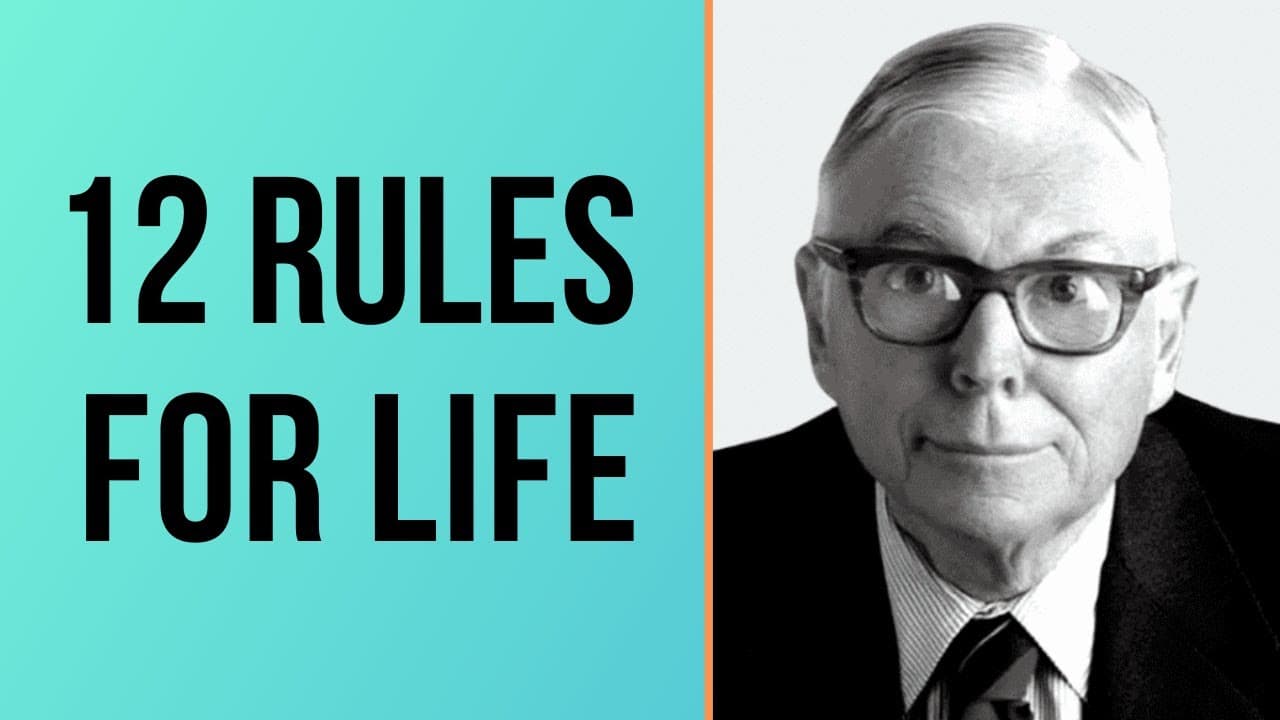
Deserve what you want by delivering value and earning the trust of others. Build a lifelong learning habit, seek knowledge across disciplines, and invert problems to reveal the right path. Avoid bias, sloth, and victim mindsets, and follow your genuine interests to improve outcomes over time.
Transcript
What are the core ideas that have helped me? Well, luckily I got at a very early age the idea that the safest way to try and get what you want is to try and deserve what you want. It's such a simple idea. It's the golden rule, so to speak. You you want to deliver to the world what you would buy if you were on the other end. There is no ethos in my ... Read More
Key Insights
- Deserving what you want is earned by delivering what you would buy if roles were reversed.
- Admiration based love includes constructive feedback and mutual respect, not sentimentality.
- Being a learning machine is a moral duty that compounds over a lifetime.
- Wisdom comes from learning big ideas across disciplines and building a mental lattice.
- Inversion helps solve problems by asking what failure looks like and how to avoid it.
- Avoid sloth and unreliability as the core guards against failure in any pursuit.
- Extreme ideology narrows the mind and blinds you to opposing arguments.
- Self serving bias distorts judgments and must be actively corrected with evidence and perspective.
Install to Summarize YouTube Videos and Get Transcripts
Explore YouTube Video Summarizer or Get YouTube Transcript Extractor
Questions & Answers
Q: What does Deserve What You Want mean and how do you apply it in daily life?
Deserve what you want means you should deliver value in every interaction so that others would choose to exchange with you as if they were the buyer and you the seller. In practice this translates to reliability, honesty, and consistency, ensuring you meet commitments and lift others’ interests as part of your everyday conduct. It is a standard for behavior, not a mood or a shortcut.
Q: Why is admiration based love important and how should it shape relationships?
Admiration based love recognizes the value of respect and constructive feedback within relationships. It requires you to honor and teach, rather than merely feel affection, and it includes an element of duty to help the other grow. This approach strengthens trust and ensures relationships are functional and mutually beneficial rather than merely emotional.
Q: What does it mean to be a learning machine and why is it a duty?
Being a learning machine means continuously updating your knowledge and skills, seeking big ideas across disciplines, and applying them automatically in life. It is a moral duty because long term success depends on what you learn after you leave any position or environment. This habit differentiates high achievers from those who stagnate.
Q: How can inversion be used to solve complex problems according to the speaker?
Inversion involves turning problems around to ask not what to do, but what to avoid or fail at. By focusing on what would cause the worst outcomes, you identify the most effective preventive actions and solutions that might be overlooked when simply chasing goals. It often reveals tighter and more practical routes to success.
Q: What role do reliability and punctuality play in achieving goals?
Reliability and punctuality are foundational safeguards against failure. If you are unreliable, no matter how strong your other virtues are, you will falter. Consistently doing what you promise, on time and as agreed, creates a track record of trust that enables larger opportunities and reduces friction in every collaboration.
Q: Why should ideology be avoided, and how can one keep an open mind?
Extremely intense ideology can cabbages up the mind by narrowing interpretation and making you dismiss opposing arguments. To keep an open mind, acknowledge that you may be wrong and actively seek the strongest counterarguments. This disciplined skepticism protects you from dogma and helps you refine beliefs with better evidence.
Q: How does the self-serving bias affect decision making and what can counteract it?
Self-serving bias makes you justify actions that benefit you while ignoring wider consequences. Counteracting it requires stating the strongest arguments against your position, seeking external evidence, and aligning choices with long term outcomes rather than immediate personal gain. This practice reduces errors and enhances credibility.
Q: What is the danger of feeling like a victim, and how can one respond constructively?
Feeling like a victim drains energy and worsens outcomes. The constructive response is to acknowledge the setback, adopt a proactive mindset, and continue pushing forward. This resilience mirrors Epictetus style thinking, turning misfortune into an opportunity to behave well and improve your situation without succumbing to self-pity.
Summary & Key Takeaways
-
A practical guide to applying Munger's rules starts with earning trust by consistent, value-driven behavior and treating others as you would want to be treated. It emphasizes lifelong learning as a duty, cross-disciplinary thinking, and the use of inversion to solve complex problems. The result is steady personal and professional progress.
-
The guidance warns against sloth, unreliability, extreme ideology, and self-serving bias. It advocates staying objective, recognizing biases, avoiding self-pity, and not feeling like a victim. The overarching theme is disciplined thinking and action aligned with long term success.
-
Finally, the rules advocate following natural interest and learning from others who exemplify these principles. The talk connects practical habits with real world outcomes, showing how small, consistent improvements compound into meaningful competence and trust over a lifetime.
Read in Other Languages (beta)
Share This Summary 📚
Summarize YouTube Videos and Get Video Transcripts with 1-Click
Try YouTube Summary with ChatGPT & Claude or YouTube Transcript Generator
Explore More Summaries from Picking Nuggets 📚




Summarize YouTube Videos and Get Video Transcripts with 1-Click
Try YouTube Summary with ChatGPT & Claude or YouTube Transcript Generator