What Is the Ergodicity Principle in Risk Management?
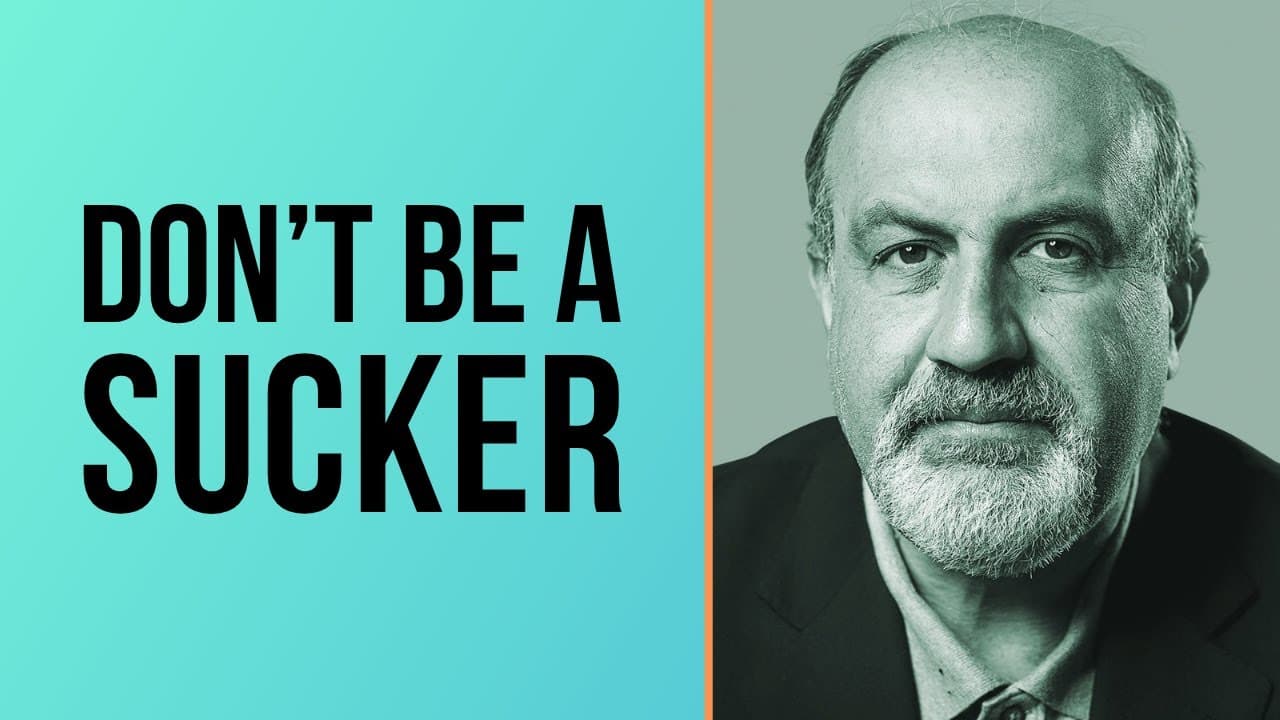
TL;DR
The ergodicity principle highlights the difference between time averages and ensemble averages, emphasizing the importance of considering individual risk over time. This principle is crucial in risk management and decision-making, as it helps avoid ruin by understanding how repeated risks affect an individual differently than a group. Applying strategies like the Kelly criterion can help manage risk effectively.
Transcript
this video is sponsored by Hey Boss the new website builder for business backed by OpenAI the idea of erodicity is never cross a river if it's 4 feet deep on average okay well if you remember last time I was talking about a grandmother and and so so the idea of using averages and stuff like that so to do science you got to be able to work with aver... Read More
Key Insights
- Ergodicity distinguishes between time averages and ensemble averages, crucial for understanding risk.
- Using averages can mislead if not considering the individual over time versus a group snapshot.
- In risk management, the Kelly criterion helps avoid ruin by managing bet sizes.
- Inequality should be measured over lifetimes, not snapshots, to reflect true social dynamics.
- Skin in the game encourages cautious risk-taking, as personal stakes deter reckless behavior.
- Pseudo-optimization in business can lead to vulnerabilities, as seen in supply chain dependencies.
- The precautionary principle advises caution when uncertainty exists, avoiding irreversible harm.
- Ethical conduct in business is essential to maintaining reputation and avoiding catastrophic loss.
Install to Summarize YouTube Videos and Get Transcripts
Explore YouTube Video Summarizer or Get YouTube Transcript Extractor
Questions & Answers
Q: What is ergodicity in risk management?
Ergodicity in risk management refers to the distinction between time averages and ensemble averages. It emphasizes that risks should be assessed based on how they affect an individual over time, rather than relying on group averages. This understanding helps in making informed decisions that prevent financial ruin by considering the long-term impact of repeated risks.
Q: How does the Kelly criterion relate to ergodicity?
The Kelly criterion relates to ergodicity by providing a mathematical framework for managing risk in a way that maximizes long-term growth while avoiding ruin. It advises on the optimal size of bets to ensure survival, aligning with the ergodicity principle by focusing on individual risk over time rather than average outcomes across a group.
Q: Why is measuring inequality over lifetimes important?
Measuring inequality over lifetimes is important because it reflects the true dynamics of social mobility and economic status changes. Unlike static snapshots, which only show a momentary picture, lifetime measurements account for the fluidity of individuals moving in and out of economic brackets, providing a more accurate representation of inequality.
Q: What is the precautionary principle?
The precautionary principle is a risk management strategy that advocates for caution in the face of uncertainty, especially when actions could lead to irreversible harm. It advises against proceeding with potentially harmful actions unless there is a consensus on their safety, aligning with ergodicity by prioritizing long-term safety over short-term gains.
Q: How does skin in the game affect decision-making?
Skin in the game affects decision-making by aligning personal stakes with outcomes, encouraging individuals to be more cautious and considerate of risks. When decision-makers have personal investment in the results, they are less likely to take reckless risks, thus ensuring more prudent and sustainable choices that align with the ergodicity principle.
Q: What is pseudo-optimization in business?
Pseudo-optimization in business refers to strategies that appear efficient in the short term but create vulnerabilities over time. For example, relying on a single supplier for cost savings can lead to disruptions if that supplier fails. This concept warns against short-sighted decisions that ignore long-term risks, in line with the ergodicity principle.
Q: How can ethical behavior prevent business ruin?
Ethical behavior can prevent business ruin by maintaining a company's reputation and avoiding legal and financial repercussions. Engaging in unethical practices might offer short-term gains but can lead to catastrophic outcomes, such as legal penalties and loss of trust, which are irreversible and align with the ergodicity principle's focus on avoiding ruin.
Q: What does ergodicity say about repeated risks?
Ergodicity highlights that repeated risks should be evaluated based on their cumulative impact on an individual over time, rather than their average effect across a group. This perspective helps in understanding that even seemingly fair bets can lead to ruin if not managed properly, as the long-term effects of repeated exposure can differ significantly from group averages.
Summary & Key Takeaways
-
The ergodicity principle explains the critical difference between time averages and ensemble averages, highlighting how risk affects individuals differently over time compared to groups. This understanding is vital in risk management, where strategies like the Kelly criterion can help avoid financial ruin by managing risk effectively.
-
Applying the ergodicity principle, individuals and businesses must consider long-term risks rather than relying on average outcomes. This principle is crucial in areas like inequality measurement, where lifetime dynamics provide a more accurate picture than static snapshots, and in business, where avoiding pseudo-optimization can prevent vulnerabilities.
-
Ethical behavior in business is paramount, as cutting corners can lead to irreversible damage to reputation, akin to financial ruin. The precautionary principle supports this by advocating for caution in uncertain scenarios, ensuring decisions do not lead to catastrophic outcomes, thereby aligning with the ergodicity principle.
Read in Other Languages (beta)
Share This Summary 📚
Summarize YouTube Videos and Get Video Transcripts with 1-Click
Try YouTube Summary with ChatGPT & Claude or YouTube Transcript Generator
Explore More Summaries from Picking Nuggets 📚
![Naval Ravikant | The Most Important Skill To Get Rich - And Debunking The Lies [with Charlie Munger] thumbnail](/_next/image?url=https%3A%2F%2Fi.ytimg.com%2Fvi%2F4AXTmL4TC6c%2Fhqdefault.jpg&w=750&q=75)


![Top 5 RULES To Become A Successful Digital Entrepreneur in 2023 [Peter Thiel, Naval Ravikant] thumbnail](/_next/image?url=https%3A%2F%2Fi.ytimg.com%2Fvi%2FId0dG1hsyQM%2Fhqdefault.jpg&w=750&q=75)
![Naval Ravikant - The 4 BIGGEST TRAPS in Life that You NEED to GET OUT [w/ Charlie Munger] thumbnail](/_next/image?url=https%3A%2F%2Fi.ytimg.com%2Fvi%2F2bL5JHKf16k%2Fhqdefault.jpg&w=750&q=75)
Summarize YouTube Videos and Get Video Transcripts with 1-Click
Try YouTube Summary with ChatGPT & Claude or YouTube Transcript Generator