What Drives Power Dynamics in International Relations?
TL;DR
Power dynamics are at the core of international relations, where states prioritize maximizing their power to ensure survival. Anarchy within the global system compels nations to focus on factors like population size and wealth. The ongoing conflict in Ukraine is primarily influenced by NATO's expansion and Russia's security concerns.
Transcript
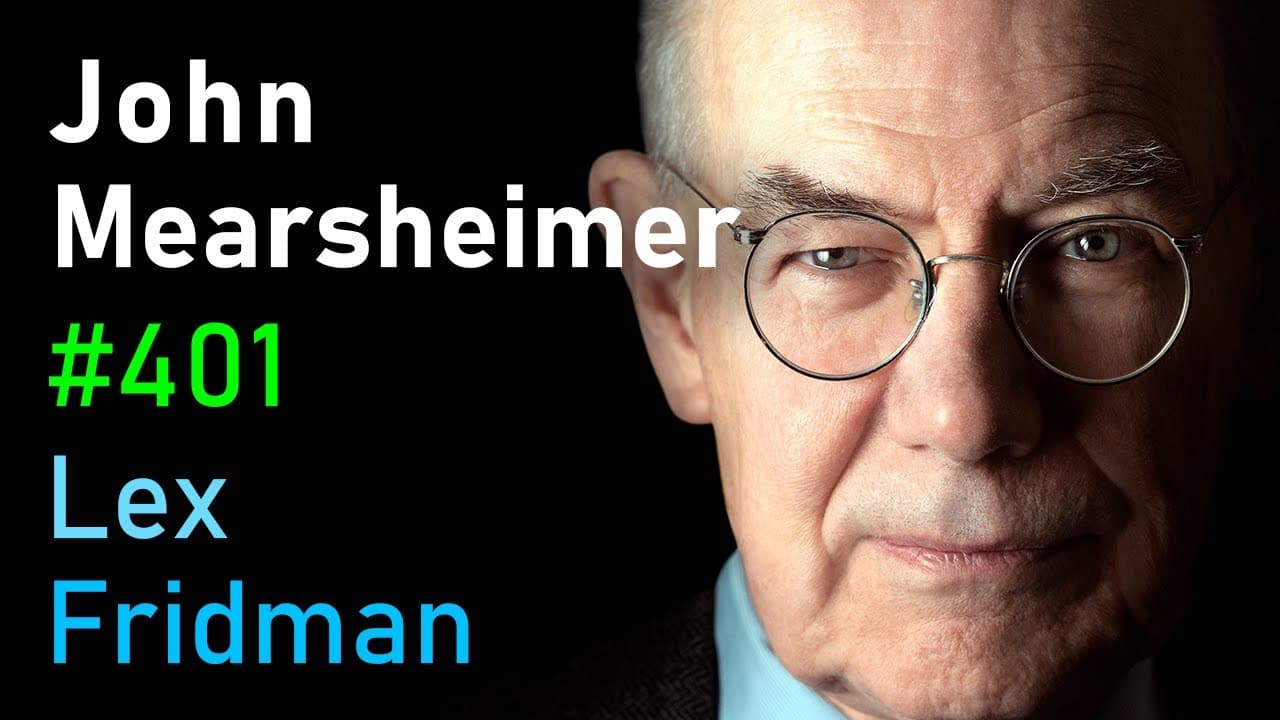
- The following is a conversation with John Mearsheimer, a professor at University of Chicago and one of the most influential and controversial thinkers in the world. He teaches, speaks and writes about the nature of power and war on the global stage in history and today. Please allow me to say once again, my hope for this little journey I'm on, I ... Read More
Key Insights
- ✊ Power is central to international relations, with states striving to maximize their power for survival.
- 🤳 Anarchy in the international system necessitates self-help and self-protection.
- ✊ Population size and wealth are critical factors in determining a state's power.
- ✊ Realism and liberalism present different perspectives on power and the role of institutions.
- 🔒 The conflict in Ukraine stems from NATO expansion and Russia's security concerns.
- ✌️ Trust between nations is crucial for peace and conflict resolution.
- 🌍 Individual leaders and their decisions can impact the course of international relations.
- 🎙️ More videos with John Mearsheimer:
Install to Summarize YouTube Videos and Get Transcripts
Explore YouTube Video Summarizer or Get YouTube Transcript Extractor
Questions & Answers
Q: Can you explain the concept of anarchy and how it affects international relations?
Anarchy in international relations refers to the absence of a higher authority above states. This lack of hierarchy leads states to compete for power and protect their own interests. Anarchy also necessitates self-help and the need to maximize one's power for survival.
Q: What are the key factors that contribute to a state's power in the international system?
Population size and wealth are critical factors in determining a state's power. States with large populations and significant economic resources are considered more powerful. For example, the United States has substantial power due to its population size and wealth.
Q: What are the main differences between realism and liberalism in international relations?
Realism emphasizes power as the primary driver of state behavior and views states as rational actors seeking to maximize their power. Liberalism, on the other hand, focuses on the role of institutions, interdependence, and democratic peace theory in fostering a more peaceful world.
Q: How does NATO expansion impact Russia's security concerns?
NATO expansion is seen by Russia as a threat to its security. Russia views NATO as a military alliance encroaching on its borders and as a potential adversary. The expansion of NATO into Ukraine and other Eastern European countries raises Russia's concerns about their security and influences its actions.
Key Insights:
- Power is central to international relations, with states striving to maximize their power for survival.
- Anarchy in the international system necessitates self-help and self-protection.
- Population size and wealth are critical factors in determining a state's power.
- Realism and liberalism present different perspectives on power and the role of institutions.
- The conflict in Ukraine stems from NATO expansion and Russia's security concerns.
- Trust between nations is crucial for peace and conflict resolution.
- Individual leaders and their decisions can impact the course of international relations.
- Understanding the perspectives and interests of different nations is crucial in addressing conflicts and building better relationships.
Summary & Key Takeaways
-
Power is crucial in international relations, with states striving to increase their power to ensure their survival.
-
Anarchy in the international system drives states to protect themselves, leading to a focus on population size and wealth as indicators of power.
-
Realism and liberalism present different perspectives on power and the role of institutions in international relations.
-
The conflict in Ukraine is rooted in NATO expansion and Russia's concerns about its security.
Read in Other Languages (beta)
Share This Summary 📚
Summarize YouTube Videos and Get Video Transcripts with 1-Click
Try YouTube Summary with ChatGPT & Claude or YouTube Transcript Generator
Explore More Summaries from Lex Fridman 📚

Summarize YouTube Videos and Get Video Transcripts with 1-Click
Try YouTube Summary with ChatGPT & Claude or YouTube Transcript Generator