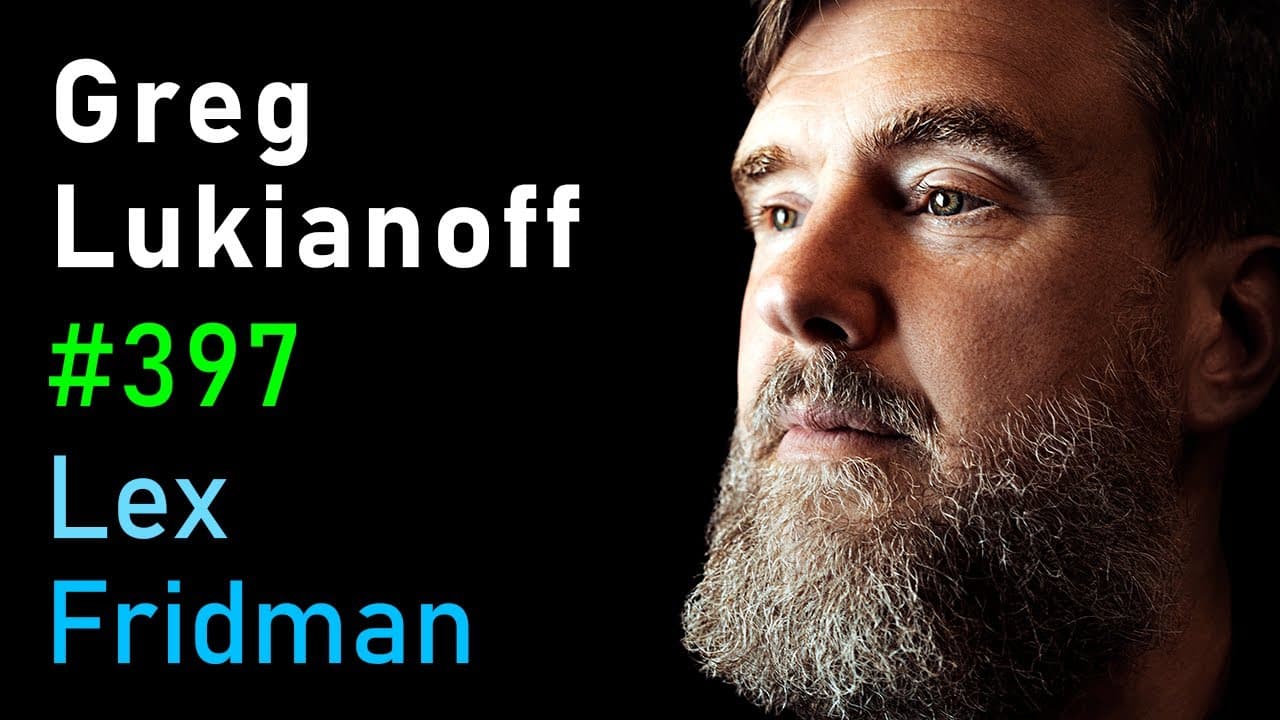
Greg Lukianoff: Cancel Culture, Deplatforming, Censorship & Free Speech | Lex Fridman Podcast #397
TL;DR
Cancel culture describes a trend since 2014 where campaigns aim to deplatform, fire, or silence individuals for expressing views that would typically be protected by the First Amendment. This phenomenon generates a climate of fear and contributes to censorship, undermining the diversity of ideas and open discourse essential for a democratic society. Both political sides partake in this practice, affecting speakers and academics alike.
Transcript
- If the goal is the project of human knowledge, which is to know the world as it is, you cannot know the world as it is without knowing what people really think and what people really think is an incredibly important fact to know. So every time you're actually saying "you can't say that" you're actually depriving yourself of the knowledge of what ... Read More
Key Insights
- 😯 Cancel culture involves deplatforming, firing, and restricting individuals' speech, creating a climate of fear and censorship.
- 🎑 Both left and right-wing groups engage in cancel culture, targeting individuals with opposing views or challenging the prevailing narrative.
- 😯 Cancel culture limits freedom of speech and discourages the exchange of diverse perspectives.
- 🎙️ More videos with Greg Lukianoff:
Install to Summarize YouTube Videos and Get Transcripts
Explore YouTube Video Summarizer or Get YouTube Transcript Extractor
Questions & Answers
Q: What is cancel culture?
Cancel culture refers to the uptick in campaigns since 2014 to deplatform, fire, and restrict people's speech, even if it would normally be protected by the First Amendment. It creates a climate of fear and encourages censorship, leading to limited diversity of ideas.
Q: How does cancel culture impact freedom of speech?
Cancel culture restricts freedom of speech by silencing dissenting voices and creating an environment where certain opinions are not tolerated. It discourages individuals from expressing their true thoughts and promotes self-censorship.
Q: Are certain political ideologies more prone to engaging in cancel culture?
Cancel culture is not limited to any specific political ideology. Both the left and the right engage in cancel culture by targeting individuals or groups with opposing views. It is important to recognize that cancel culture can stifle free speech and limit productive conversations.
Q: What can be done to combat cancel culture?
Combating cancel culture requires defending freedom of speech and fostering an environment where diverse perspectives are welcomed. Individuals, institutions, and leaders should uphold principles of free speech, encourage respectful dialogue, and reject attempts to deplatform or silence opposing opinions.
Key Insights:
- Cancel culture involves deplatforming, firing, and restricting individuals' speech, creating a climate of fear and censorship.
- Both left and right-wing groups engage in cancel culture, targeting individuals with opposing views or challenging the prevailing narrative.
- Cancel culture limits freedom of speech and discourages the exchange of diverse perspectives.
- Efforts to combat cancel culture require defending free speech, fostering respectful dialogue, and upholding principles of open discourse.
Summary
In this video, Greg Lukianoff, a Free Speech Advocate and First Amendment attorney, discusses the concept of cancel culture and the importance of freedom of speech on college campuses. He explains that cancel culture involves campaigns to get people fired, expelled, or de-platformed for speech that would normally be protected by the First Amendment. Lukianoff argues that understanding what people truly think is crucial for gaining knowledge and censoring speech only perpetuates group polarization. He also discusses the founding of the Foundation for Individual Rights in Education (FIRE) and its mission to protect freedom of speech on college campuses. Additionally, Lukianoff explores the relationship between freedom of speech, the First Amendment, and religion. He emphasizes the importance of teaching religion in a respectful manner and avoiding advocacy for a particular view on religion in public schools.
Questions & Answers
Q: What is cancel culture and why is it problematic?
Cancel culture refers to the increase in campaigns to get individuals fired, expelled, or de-platformed for speech that would usually be protected by the First Amendment. It also includes the climate of fear that has resulted from such campaigns. Cancel culture restricts freedom of speech and stifles open dialogue, ultimately leading to an inaccurate understanding of people's true thoughts and beliefs.
Q: What is the role of FIRE in protecting freedom of speech on college campuses?
The Foundation for Individual Rights in Education (FIRE) was founded in 1999 with the mission to protect freedom of speech on college campuses. The organization identifies and challenges policies that violate the First Amendment and supports students and faculty members facing censorship or punishment for their speech.
Q: How is freedom of speech connected to the First Amendment and cancel culture?
Freedom of speech is a fundamental right protected by the First Amendment, which prohibits the government from interfering with individuals' right to express their opinions. Cancel culture goes against the principles of the First Amendment by attempting to silence and punish individuals for expressing unpopular or controversial views.
Q: What is the difference between cancel culture on the left and the right?
While cancel culture is more prevalent on the left, there are instances of cancel culture from both political sides. On college campuses, left-leaning cancel culture is more common due to the dominance of left-wing ideologies in academia. However, attempts to restrict speech also arise from the right in certain contexts, such as attempts to ban specific topics in education or silence opposing viewpoints.
Q: How does culture impact freedom of speech on college campuses?
Culture plays a significant role in freedom of speech on college campuses. When there is a lack of viewpoint diversity and a strong tribal mentality, individuals may feel that they cannot express their true thoughts without facing consequences. Group polarization occurs when people only interact with like-minded individuals due to fear of punishment for expressing differing opinions.
Q: What factors contribute to a university's ranking in the free speech rankings by FIRE?
The free speech rankings by FIRE take into account several factors, including the presence of speech codes, disinvitation attempts, and student surveys. Speech codes are policies that violate the First Amendment, while disinvitation attempts refer to instances where speakers are prevented from speaking or are shout down. Student surveys assess the campus environment for freedom of speech.
Q: Can religion and freedom of speech coexist?
Yes, religion and freedom of speech can coexist. The First Amendment includes both the establishment clause, which prevents the government from establishing an official religion, and the free exercise clause, which protects individuals' right to practice their religion. Public schools must navigate the balance carefully when teaching religious texts, as they should avoid advocating for a particular religious perspective and respect all religions equally.
Q: How can de-platforming and shout downs be effectively addressed?
De-platforming and shout downs should be thoroughly investigated to determine if administrators played a role in facilitating or stopping these actions. The hyper bureaucratization of universities, with ideological administrators, is often a factor in these incidents. When administrators are found to have contributed to cancel culture, appropriate actions should be taken, such as not inviting them back to the university or holding them accountable for their actions.
Q: What is the significance of having both freedom of speech and freedom of religion?
The presence of both freedom of speech and freedom of religion in the First Amendment showcases the importance of both rights. Freedom of speech allows individuals to express their opinions, while freedom of religion protects individuals' rights to practice their chosen faith. These rights should be respected and maintained in order to foster a diverse and inclusive society.
Q: How can public schools teach religion without disrespecting believers of various faiths?
Teaching religion in public schools requires a delicate balance. Public schools should present religious texts as historical documents and avoid advocating for a particular religious perspective. The goal should be to provide students with an understanding of different religions without imposing specific religious beliefs. Respectful teaching methods should be adopted to prevent disrespecting the beliefs of religious individuals.
Takeaways
Freedom of speech is essential for understanding people's true thoughts and fostering a diverse and inclusive society. Cancel culture restricts freedom of speech by targeting individuals for their unpopular or controversial views. Organizations like FIRE play a vital role in protecting freedom of speech on college campuses. The relationship between freedom of speech and the First Amendment is crucial for maintaining democratic values. Cancel culture exists on both the left and right, but understanding and addressing its impact requires considering the specific contexts and motivations behind it. Education, particularly in public schools, should strike a balance between teaching religion and respecting the beliefs of individuals from different faiths. Investigating the contribution of administrators to de-platforming and shout downs is essential for combatting cancel culture. Encouraging a culture of open dialogue and mutual respect is necessary to protect freedom of speech and religion.
Summary & Key Takeaways
-
Cancel culture is a phenomenon that started around 2014, involving campaigns to remove people from platforms, fire them from jobs, and restrict their speech, even if it would normally be protected by the First Amendment.
-
It is characterized by a climate of fear and the belief that certain opinions should not be expressed, leading to the censorship of ideas and limiting the exchange of diverse perspectives.
-
Both left and right-wing individuals and groups engage in cancel culture, targeting speakers, professors, and others who hold opposing views or challenge the prevailing narrative.
Read in Other Languages (beta)
Share This Summary 📚
Summarize YouTube Videos and Get Video Transcripts with 1-Click
Try YouTube Summary with ChatGPT & Claude or YouTube Transcript Generator
Explore More Summaries from Lex Fridman Podcast 📚

Summarize YouTube Videos and Get Video Transcripts with 1-Click
Try YouTube Summary with ChatGPT & Claude or YouTube Transcript Generator