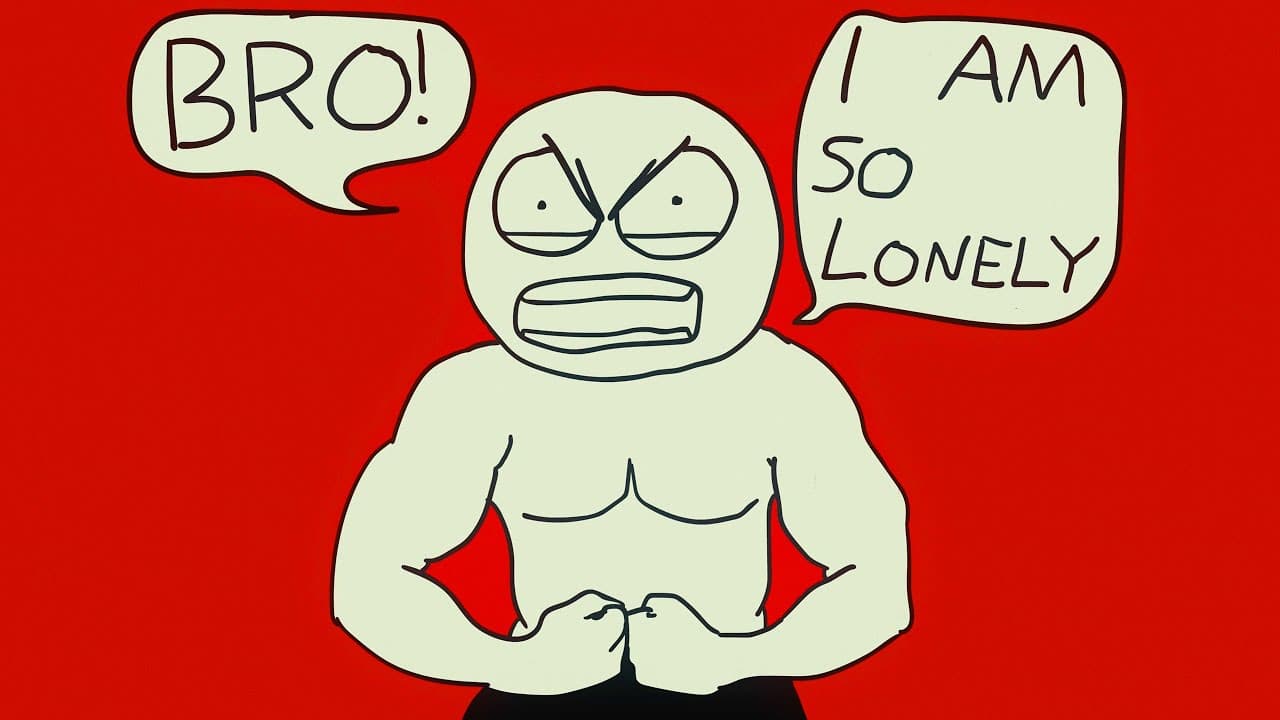
What causes a crisis of masculinity today?
TL;DR
There is no single gender that suffers most from mental health issues; men face higher rates of substance use disorders and suicidality, and they often struggle to seek help. The concept of precarious manhood explains how rigid masculine norms predict aggression and loneliness, suggesting empathy based parenting and accessible services as remedies.
Transcript
Is there a crisis of masculinity? You see this a lot with conservative commentators, the manosphere, red pill um influencers. It's this idea that men are falling behind and you do see this represented in like data on education for example where like young boys are doing worse than girls in schooling. But beyond kind of this I think often cited tren... Read More
Key Insights
- Masculinity is portrayed as a social performance that adapts over time and across cultures.
- The idea of a crisis is linked to changing economic and social conditions that redefine what it means to be a man.
- Mental health outcomes differ by issue: men show higher risks in substance use and suicidality, and lower help seeking.
- Precarious manhood theory connects the need to prove masculinity with aggression and mental health struggles.
- Loneliness does not differ by gender overall, but age moderates loneliness in men and women.
- Historical patterns show recurring crises of masculinity during major societal shifts like industrialization and postwar eras.
- Education and socialization influence how boys perceive friendship, vulnerability, and gender norms.
- Tailoring mental health outreach to masculine contexts improves willingness to seek help.
- More videos from this channel:
- More from this channel: Sisyphus 55
Install to Summarize YouTube Videos and Get Transcripts
Explore YouTube Video Summarizer or Get YouTube Transcript Extractor
Questions & Answers
Q: A real search query question about the video (e.g. 'How to...', 'What is...', 'Why does...', 'When should...'). Question 1
What is meant by precarious manhood and how does it relate to mental health and behavior in men? Precarious manhood suggests men feel the need to prove their masculinity, which is linked to more aggressive behavior and higher suicide risk when traditional masculine norms are challenged. It highlights the role of social expectations in shaping mental health outcomes.
Q: Question 2
Why do some studies find no overall gender difference in loneliness, yet younger men show more loneliness than their female peers? The data indicate that loneliness varies with age and social expectations. Younger men may experience stronger pressure to avoid vulnerability, while older groups show different patterns. This moderator effect explains seemingly conflicting findings.
Q: Question 3
How can parenting and education reduce the crisis of masculinity according to the video? Recommendations include empathy based parenting that encourages emotional openness and social support, plus an education system aware of socialization processes. The goal is mutual growth and reducing reliance on stoicism as a coping mechanism.
Q: Question 4
What role does access to mental health services play in this discussion? The talk notes men often struggle with help seeking and may find services less useful unless framed in a man friendly way. Tailoring approaches to masculinity improves disclosure and engagement with mental health care.
Q: Question 5
How do historical shifts influence perceptions of masculinity? Historical examples show cycles where new technologies or social changes threaten traditional masculine roles, leading to anxiety about masculinity and calls for a more aggressive defending of male identity.
Q: Question 6
What does the video say about education performance differences by gender? It mentions education data as a cited trend where young boys perform worse than girls, but the focus is on broader mental health and social factors rather than simple academic metrics.
Q: Question 7
What is the suggested approach to addressing masculine mental health in practice? The suggested approach emphasizes cultural competence, providing services that acknowledge masculine experiences, and offering support that resonates with men’s lived experiences, including discussions of burnout and stress rather than only clinical depression.
Q: Question 8
How could societal changes affect the concept of masculinity in the future? As society evolves, the concept of what it means to be a man may shift, reducing the need for crisis rhetoric and promoting flexible, supportive norms that allow men to seek help and build meaningful relationships without stigma.
Summary & Key Takeaways
-
The crisis of masculinity is framed as a response to social change, not a fixed defect, with historic examples showing recurring fears about masculine relevance. The talk argues that gender norms shift with economy, technology, and culture, creating periods where masculinity feels threatened.
-
Evidence shows men report similar loneliness levels to women overall, but younger men may feel more isolated due to social expectations around emotional expression and vulnerability.
-
Practical recommendations emphasize empathy based parenting, social support, and tailoring mental health services to be more man friendly, reducing stigma and encouraging open discussions about feelings and burnout.
Read in Other Languages (beta)
Share This Summary 📚
Summarize YouTube Videos and Get Video Transcripts with 1-Click
Try YouTube Summary with ChatGPT & Claude or YouTube Transcript Generator
Explore More Summaries from Sisyphus 55 📚




Summarize YouTube Videos and Get Video Transcripts with 1-Click
Try YouTube Summary with ChatGPT & Claude or YouTube Transcript Generator