Is free will real or are we determined by laws?
TL;DR
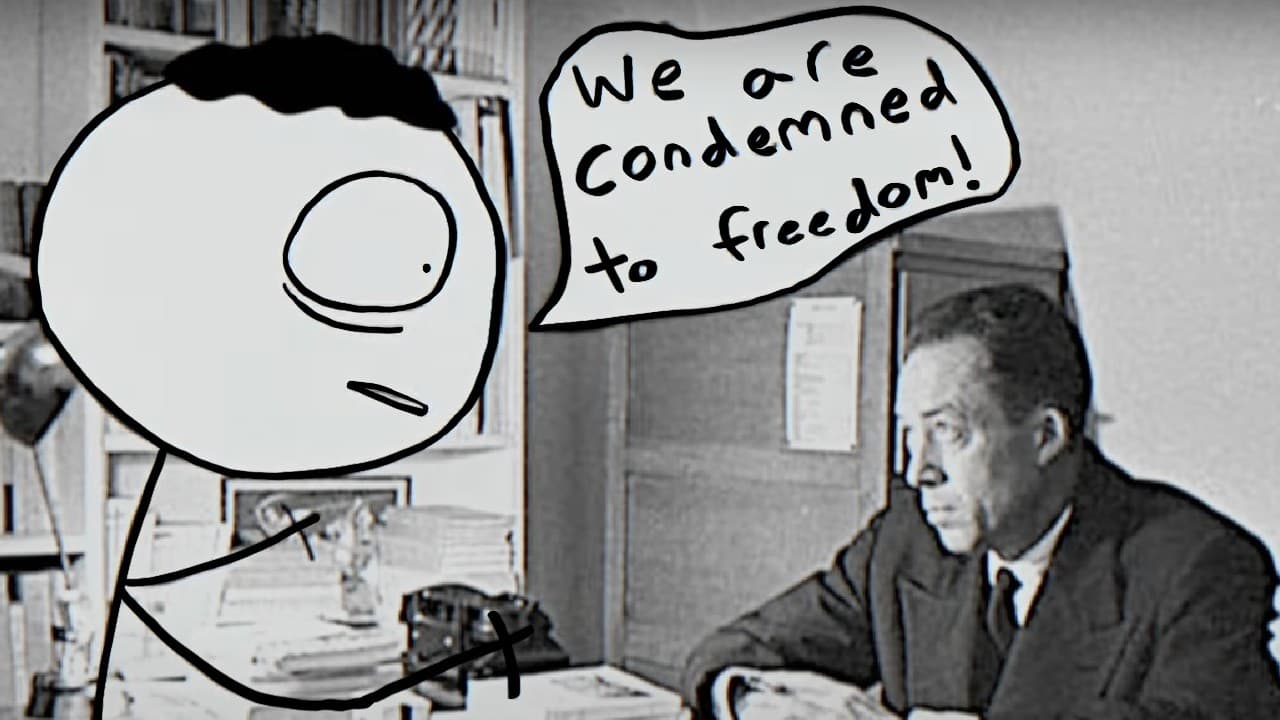
Determinism claims every event is predetermined, challenging moral responsibility. In response, compatibilism argues freedom can exist when actions align with desires without external coercion, while soft determinism nuances the mix of constraints and autonomy. Libertarianism insists genuine, uncaused choices exist, contrasting with hard determinism which denies true freedom. The video surveys these views and their implications for accountability and subjectivity.
Transcript
are we really free this is one of the most classic philosophical questions one that will continually trouble both academic philosophers and stoned college students it has implications over moral responsibility the nature of causality and the notion of what subjectivity really is what does it mean to will something Friedrich nche illustrates the str... Read More
Key Insights
- Determinism asserts that all events are predetermined by prior causes and the laws of nature.
- Hard determinism flatly denies genuine free will and thus questions moral responsibility in a deterministic universe.
- Soft determinism, or compatibilism, argues that freedom exists when actions align with internal desires and rational capacities without coercion.
- Libertarianism maintains that individuals can initiate new causal chains and make truly free, uncaused choices.
- Compatibilism reframes freedom as absence of external constraints rather than absolute independence from causation.
- The video notes that there are psychological health benefits seen in feeling autonomous and acting in accordance with one’s own desires.
- Existentialist thought is referenced as valuing freedom even if it cannot be fully explained by physics or neurology.
- The discussion questions whether we can truly predict actions if free will is real, contrasting scenarios like precognition or universal prediction.
- More videos from this channel:
- More from this channel: Sisyphus 55
Install to Summarize YouTube Videos and Get Transcripts
Explore YouTube Video Summarizer or Get YouTube Transcript Extractor
Questions & Answers
Q: What is determinism and how does it affect responsibility?
Determinism is the view that all events are determined by prior causes and the laws of nature, leaving room to argue that individuals have no genuine control over their actions. If every decision is predetermined, traditional notions of moral responsibility become problematic because accountability presupposes some degree of voluntary choice. The video frames this as a central tension in evaluating punishment, ethics, and personal agency within a fully determined universe.
Q: What does hard determinism claim about free will?
Hard determinism claims that determinism is entirely compatible with the assertion that free will does not exist. If all events are caused by prior states with no room for arbitrary choice, then genuine freedom is an illusion. This view leads to the conclusion that moral responsibility, as ordinarily understood, is not applicable in a universe where humans cannot act freely outside of their causal history.
Q: What is soft determinism and how does it relate to freedom?
Soft determinism, also known as compatibilism, argues that free will can exist even if determinism is true. Freedom is defined as acting in accordance with one’s desires and rational capacities without external coercion or constraint. Under this view, individuals can have meaningful choice and accountability while their actions are still shaped by internal factors and prior causes.
Q: What does libertarianism propose about free will?
Libertarianism posits the existence of genuine free will and moral responsibility independent of deterministic laws. It holds that individuals can initiate new causal chains that are not wholly determined by previous factors, allowing for authentic, unpredictable choices. This stance is often associated with existentialist emphasis on freedom, though it faces challenges in explaining how such freedom operates within a physically governed universe.
Q: How is compatibilism different from soft determinism?
Compatibilism is another term for soft determinism, but it highlights the effort to reconcile determinism with genuine freedom. It maintains that freedom means acting without external constraints and in harmony with one’s internal desires and rational capacities. This framework seeks to preserve moral accountability while acknowledging deterministic influences on behavior.
Q: What role do internal desires and beliefs play in the free will debate?
Internal desires and beliefs are central to compatibilist accounts of freedom. They determine whether actions align with an individual’s authentic preferences, which in turn defines whether those actions are free. The video notes that external coercion and internal factors like autonomous motivation shape decisions, raising questions about whether one can desire the wrong things or lose touch with an authentic self.
Q: Why might free will be considered useful for psychological health?
If people view themselves as autonomous agents capable of making deliberate choices, they may experience better psychological health, as suggested by the video. This sense of agency can correlate with healthier coping strategies and a stronger sense of control. However, the complexity of internal motives and external constraints complicates whether this perceived autonomy truly reflects free will.
Q: What is the overall takeaway about free will from the video?
The video presents a spectrum of positions from determinism to libertarian free will, with compatibilist views attempting a synthesis. It emphasizes that the question of free will has deep implications for moral responsibility, causality, and personal subjectivity. The takeaway is that different philosophical frameworks offer distinct criteria for what counts as freedom and accountability, without a single universally accepted answer.
Summary & Key Takeaways
-
The video outlines major theories of free will and how they relate to determinism, moral responsibility, and personal agency.
-
It contrasts hard determinism, soft determinism, compatibilism, and libertarian free will, highlighting the ongoing debate about predictability and autonomy.
-
It also considers psychological health and authenticity in choosing actions, and mentions a practical sponsorship moment tied to an educational platform.
Read in Other Languages (beta)
Share This Summary 📚
Summarize YouTube Videos and Get Video Transcripts with 1-Click
Try YouTube Summary with ChatGPT & Claude or YouTube Transcript Generator
Explore More Summaries from Sisyphus 55 📚

Summarize YouTube Videos and Get Video Transcripts with 1-Click
Try YouTube Summary with ChatGPT & Claude or YouTube Transcript Generator