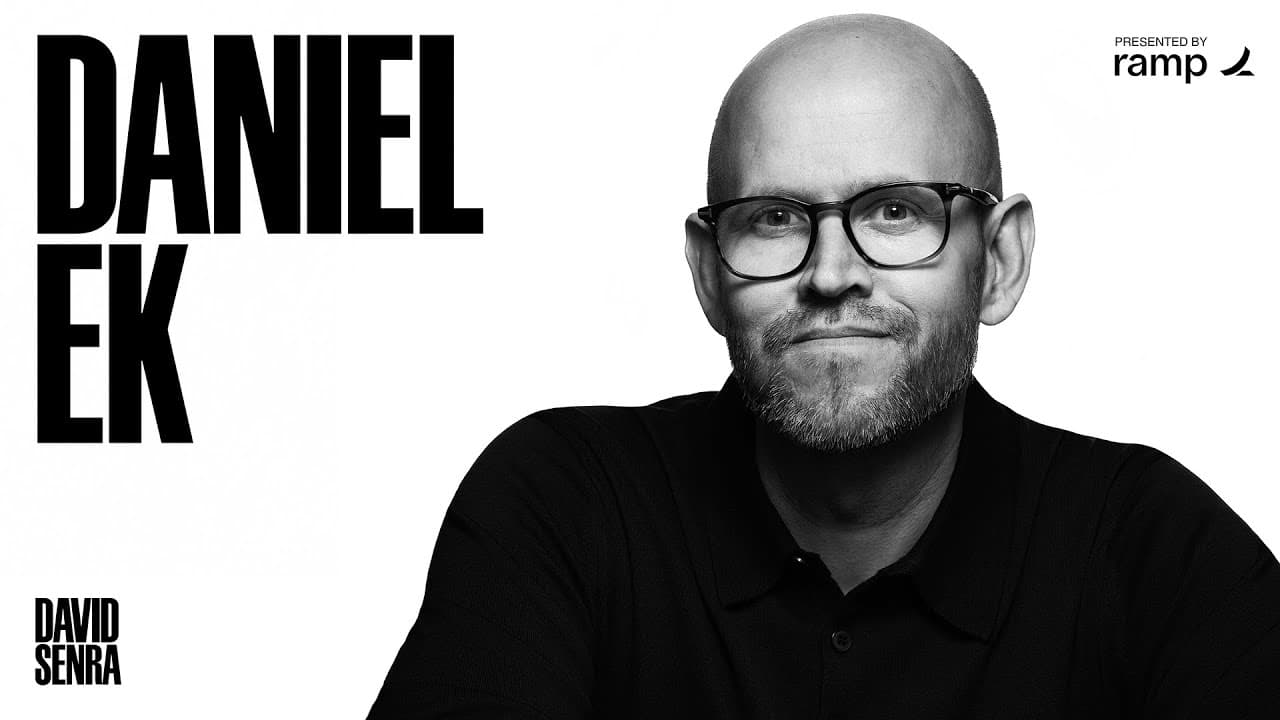
Daniel Ek on Choosing Impact Over Happiness
TL;DR
Sustained happiness follows personally meaningful impact, while comfort can sometimes indicate contentment rather than fulfillment. Daniel Ek argues that difficult, consequential work often produces the deepest satisfaction in retrospect, but impact must be defined individually and may include leading a company, solving an unsolved problem, helping others, or being a devoted parent.
Transcript
So I want to consider this conversation like a continuation of the conversation we had last year in New York.
- Right. - It was by far the most impactful conversation I had the entire year. - Wow.
- It is in large part the reason we're sitting down and actually recording this conversation. And what I loved was, I thought about how the advice y... Read More
Key Insights
- Sustained happiness is a trailing indicator of impact, according to Daniel Ek. Momentary happiness can arrive in short bursts and fluctuate with life’s ups and downs, while deeper happiness often emerges later, when someone reflects on meaningful accomplishments and problems solved for others.
- Impact is deeply personal and cannot be defined by a single universal standard. It may involve leading an important company, solving a difficult problem, helping other people, or being a great father, depending on the person’s values, circumstances, and particular way of contributing.
- Contentment is not necessarily the same as happiness. Ek believed Dara Khosrowshahi had reached an easy and comfortable position at Expedia, but still possessed the capacity and desire to operate at a higher level by accepting the challenge of leading Uber.
- Difficult work can produce the greatest joy after the adversity has been overcome. Ek motivates himself to tackle hard problems because his strongest satisfaction comes from solving something for a person or organization that nobody else had been able to figure out.
- Rare opportunities can justify accepting discomfort and substantial difficulty. Ek encouraged Dara to test himself at Uber because success could create significant impact, and because people do not receive many chances of that magnitude during their lives.
- Feeling like an outsider can encourage independent reasoning. Ek says he has felt outside social groups since childhood and still feels different among entrepreneurs, which led him to question borrowed assumptions and search for principled answers that fit his circumstances.
- First-principles thinking becomes necessary when another person’s lessons do not fully match your conditions. Ek notes that European and American companies may need different structures, so founders must identify what works for their own environment instead of copying a model completely.
- Drive and intensity can be taught rather than treated as entirely innate. Ek increasingly sees himself as potentially a better coach than player, and his method involves listening closely, reflecting a person’s situation back to them, and offering advice suited to that individual.
Install to Summarize YouTube Videos and Get Transcripts
Explore YouTube Video Summarizer or Get YouTube Transcript Extractor
Questions & Answers
Q: Why does Daniel Ek prioritize impact over happiness?
Daniel Ek prioritizes impact because he sees sustained happiness as a result that follows meaningful contribution. Immediate happiness can appear in brief, variable moments, but his deepest joy comes later, when he reflects on overcoming adversity or solving a difficult problem for someone. He therefore uses the pursuit of impact to motivate himself through work that may feel uncomfortable while it is happening.
Q: What does happiness being a trailing indicator of impact mean?
Happiness being a trailing indicator means that deep satisfaction often arrives after meaningful action rather than before or during it. Ek says hard challenges do not necessarily feel happy in the moment. The stronger feeling comes later, through reflection on an accomplishment, an adversity overcome, or a problem solved for another person. Impact occurs first, and sustained happiness follows as its personal consequence.
Q: How should a person define meaningful impact?
A person should define meaningful impact according to their own values, abilities, circumstances, and relationships. Ek rejects the idea that everyone must play one universal game. Impact could mean improving an important company, solving a previously unresolved problem, helping other people, or being a great father. The essential requirement is that the contribution carries genuine personal meaning rather than following another person’s definition.
Q: Why did Daniel Ek encourage Dara Khosrowshahi to lead Uber?
Ek believed Dara had become content at Expedia after navigating earlier ups and downs. When Dara described his situation, Ek heard someone who had shifted into an easier gear despite having the ability to pursue a rare, consequential challenge. He viewed the Uber role as an opportunity for Dara to test himself, shape an important company, and potentially create greater happiness for himself and others through impact.
Q: What is the difference between contentment and happiness in Daniel Ek’s view?
Contentment can describe a comfortable condition in which life feels manageable and the hardest struggles have subsided. Ek suggests that Dara had reached this state at Expedia, but had not necessarily found the sustained happiness associated with fresh impact. In this framing, comfort may reduce immediate difficulty, while deeper happiness can require accepting adversity, testing one’s capabilities, and later reflecting on meaningful results.
Q: How did feeling like an outsider shape Daniel Ek’s thinking?
Feeling like an outsider forced Ek to rely heavily on self-motivation and independent reasoning. He says he did not belong to a social group as a child and still feels outside the club among entrepreneurs in Silicon Valley because he is not American. Since other people’s lessons do not perfectly fit his background or conditions, he returns to first principles and searches for answers appropriate to his situation.
Q: Can entrepreneurial drive and intensity be taught?
Ek believes drive and intensity are not entirely innate and can be taught. Over roughly the last five years described in the conversation, he has increasingly recognized that he may be a better coach than player. His approach is not to project his preferences onto someone else. Instead, he listens, identifies what the person’s own words reveal, reflects the situation back, and makes clear that greater intensity is possible.
Q: When should someone choose a difficult opportunity over a comfortable life?
A difficult opportunity may be worth choosing when it aligns with the person’s own definition of impact, offers a rare chance to test their abilities, and could meaningfully help others. Ek does not present this as universal advice. He says he might advise another person differently. The decision should come from the individual’s circumstances, not from a general belief that every comfortable situation must be abandoned.
Summary & Key Takeaways
-
Daniel Ek describes happiness as a trailing indicator of impact. Brief happiness can occur in changing moments, but sustained happiness often appears after a person confronts adversity, solves a meaningful problem, or reflects on an accomplishment. Because impact is personal, each individual must determine which contribution makes life meaningful.
-
Ek encouraged Dara Khosrowshahi to consider leading Uber because he believed Dara had become content at Expedia and had a rare opportunity to test himself. The advice was specific to Dara, not a universal demand to pursue harder jobs. Ek believed meaningful impact could eventually create happiness for Dara and other people.
-
Feeling like an outsider pushed Ek toward first-principles thinking and self-motivation. He could not simply copy other entrepreneurs because his European background and circumstances differed from those of American founders. More recently, he has recognized that drive and intensity can be taught through careful listening, reflection, and advice tailored to the individual.
Read in Other Languages (beta)
Share This Summary 📚
Summarize YouTube Videos and Get Video Transcripts with 1-Click
Try YouTube Summary with ChatGPT & Claude or YouTube Transcript Generator
Explore More Summaries from David Senra 📚





Summarize YouTube Videos and Get Video Transcripts with 1-Click
Try YouTube Summary with ChatGPT & Claude or YouTube Transcript Generator