Why Was a Fortune Sewn Into a Baby Blanket?
TL;DR
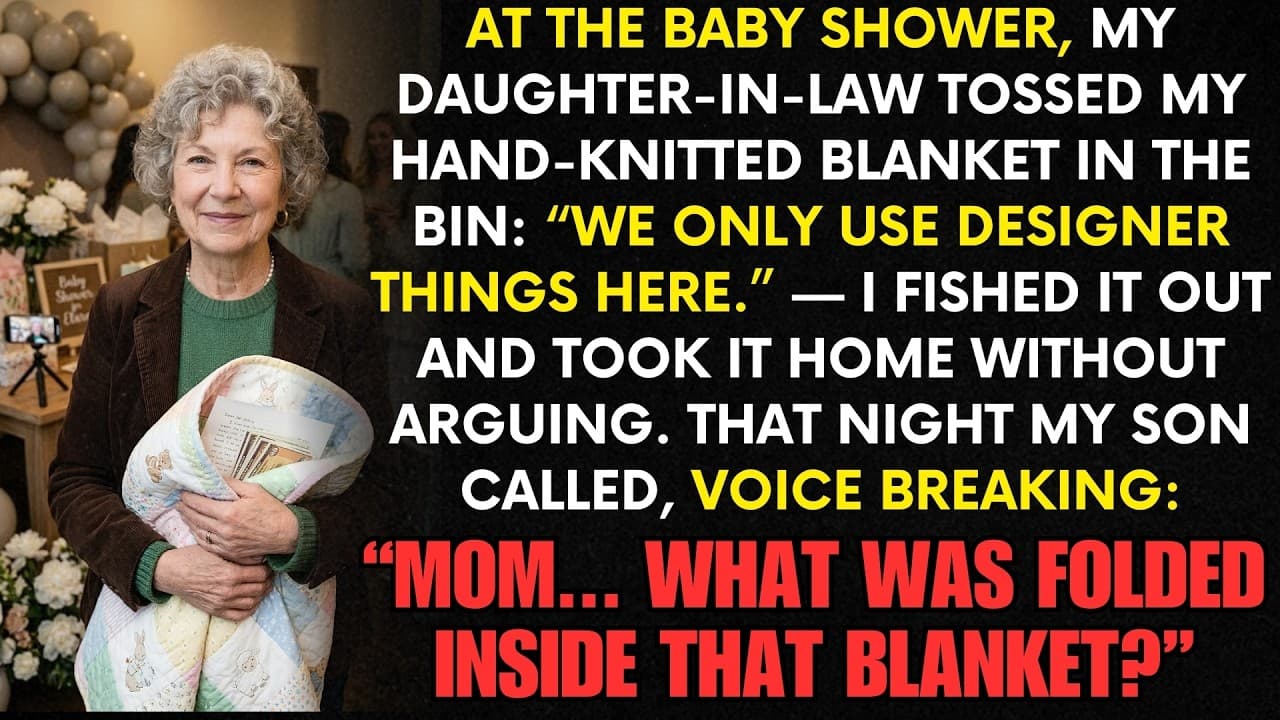
A handmade baby blanket contained nearly $50,000 in savings bonds and a final letter from the child’s late grandfather. After the daughter-in-law publicly discarded it for lacking a designer label, the grandmother quietly recovered it, exposing how status anxiety and a son’s conflict avoidance caused the family to reject a deeply valuable legacy.
Transcript
At my grandson's baby shower, my daughter-in-law held up the blanket I'd spent four months knitting, wrinkled her nose, and dropped it in the trash can. "We only use designer things here," she said, smiling for the camera her friend was holding. The room did that awful half laugh. I didn't argue. I didn't cry. I walked over, lifted my blanket out o... Read More
Key Insights
- The blanket is both a handmade gift and a family inheritance, containing nearly $50,000 in matured savings bonds plus a letter dictated by Frank before his death. Its plain appearance conceals financial value, decades of preparation, and a personal message intended for his future grandchild.
- Frank’s savings plan began when Kyle was 10 and continued for almost 30 years through small purchases made on birthdays, after bonuses, and during good months. His patient accumulation demonstrates that the gift was not a sudden gesture but a long-term commitment to a grandchild who did not yet exist.
- Darlene’s four months of knitting required physical sacrifice because arthritis often prevented her fingers from closing around a needle without hot water. She nevertheless completed the cream wool blanket while grieving, using the work to steady her hands and preserve Frank’s hopes for their family.
- The blanket’s design preserves Frank’s identity through tiny blue sailboats and his knitted initials, FM. The boats recall his love of water and the fishing trips he had hoped to share, while the initials allow his presence to remain connected to the child’s everyday life.
- Madison’s rejection is rooted in a worldview that treats labels and prices as evidence of worth. Raised by a mother who measured status through possessions, she curated a designer nursery and dismissed the blanket because its handmade origin conflicted with the image she wanted to present.
- Kyle’s silence is a central moral failure because he knew his grieving mother had made the blanket with painful hands, even though he did not know what it contained. His nervous participation protected temporary social peace while allowing his wife to humiliate Darlene publicly.
- Darlene’s response is controlled rather than confrontational: she retrieves the blanket, folds it into her bag, and leaves without arguing. Her restraint protects Frank’s bonds and letter while allowing the family’s conduct to reveal the gap between outward status and genuine value.
- The story’s central lesson is that monetary price, emotional worth, and visible branding are different measures. The handmade blanket appears inexpensive to Madison, yet it carries decades of savings, months of difficult labor, Frank’s final instructions, and a letter for the grandchild he never met.
Install to Summarize YouTube Videos and Get Transcripts
Explore YouTube Video Summarizer or Get YouTube Transcript Extractor
Questions & Answers
Q: What was hidden inside the hand-knit baby blanket?
The blanket’s concealed lining held nearly $50,000 in matured United States savings bonds and a sealed letter from Frank to the grandchild he would never meet. Frank dictated the letter while hospitalized, and its envelope instructed the child to open it at 18. Darlene stitched both items into a flat inner pocket designed to remain neat and invisible.
Q: Why did Frank save money for a future grandchild?
Frank deeply wanted to become a grandfather and thought in decades rather than focusing on immediate purchases. He began buying savings bonds when Kyle was 10, long before a grandchild existed. By setting aside small amounts after birthdays, bonuses, and good months for almost 30 years, he hoped to give his first grandchild a financial head start that could not easily be taken away.
Q: Why were the savings bonds sewn into the blanket?
Frank specifically asked Darlene not to present the inheritance in an ordinary envelope because he feared the money would be spent on something like a stroller and its origin would be forgotten. He wanted the family to discover it inside an object they would keep. Sewing it into the blanket joined the financial gift with a lasting record of his love and planning.
Q: Why did Madison throw the handmade blanket away?
Madison said that her household used only designer things, then dropped the blanket into a trash can while her friend recorded the moment. Her behavior reflected the values she learned from her mother, Gail, who measured worth through labels and prices. Because the blanket looked homemade and arrived in plain cream paper, Madison dismissed it without examining its craftsmanship or meaning.
Q: How did Darlene make the blanket meaningful?
Darlene knitted the blanket from cream-colored wool and bordered it with tiny blue sailboats because Frank loved the water and had imagined taking his grandchild fishing. She also knitted his initials, FM, into one corner. Beyond those visible details, she added a hidden pocket containing his bonds and final letter, turning the blanket into a record of his hopes.
Q: Why was knitting the blanket difficult for Darlene?
Darlene had developed arthritis about five years earlier, and some mornings she could not close her fingers around a needle until she warmed them under hot water. The project took four months and made her hands hurt through every row. It was also emotionally difficult because she began it after Frank’s funeral and repeatedly confronted her grief while completing his final request.
Q: Why did Kyle call his mother in tears after the shower?
Kyle learned that the discarded blanket contained his late father’s carefully prepared gift, including almost 30 years of savings and a final letter. He had watched Madison insult the blanket and had remained silent, even giving a nervous laugh to avoid conflict. His distress came from recognizing that his habitual peacekeeping had allowed both his grieving mother and his father’s legacy to be dishonored.
Q: What lesson does the discarded blanket story teach?
The story teaches that branding and visible price cannot reliably measure an object’s worth. Madison saw a homemade blanket and treated it as disposable, while the same blanket held nearly $50,000, four months of painful labor, decades of Frank’s patient saving, and his last words to his grandchild. Genuine value may depend on love, history, sacrifice, and intention rather than a label.
Summary & Key Takeaways
-
Darlene Mercer spent four painful months knitting a cream wool blanket for her grandson while grieving her husband, Frank. She decorated it with blue sailboats, added Frank’s initials, and created a concealed lining pocket. Inside, she placed nearly $50,000 in matured savings bonds and Frank’s final letter to the grandchild.
-
Frank had quietly purchased savings bonds for almost 30 years, beginning when his son Kyle was 10. Before dying, he instructed Darlene to sew the bonds into something the family would preserve. He wanted his future grandchild to receive both a financial head start and a lasting connection to the grandfather he would never meet.
-
At the baby shower, Madison rejected the handmade blanket because it was not a designer item and dropped it into a trash can while a friend recorded her. Darlene recovered it and left silently. Kyle later called in tears after learning that his silence had helped dishonor his father’s carefully planned gift and his mother’s labor.
Read in Other Languages (beta)
Share This Summary 📚
Summarize YouTube Videos and Get Video Transcripts with 1-Click
Try YouTube Summary with ChatGPT & Claude or YouTube Transcript Generator
Explore More Summaries from Alpha Mom Stories 📚



Summarize YouTube Videos and Get Video Transcripts with 1-Click
Try YouTube Summary with ChatGPT & Claude or YouTube Transcript Generator