How did a neighbor uncover a basement family plot?
TL;DR
A neighbor reveals months of strangers using the elder’s basement while the family pretended nothing was wrong. The story centers on receipts, threats, and careful boundaries that protect an aging parent. The narrator uses evidence and documentation to confront the wrongdoing and reclaim her home.
Transcript
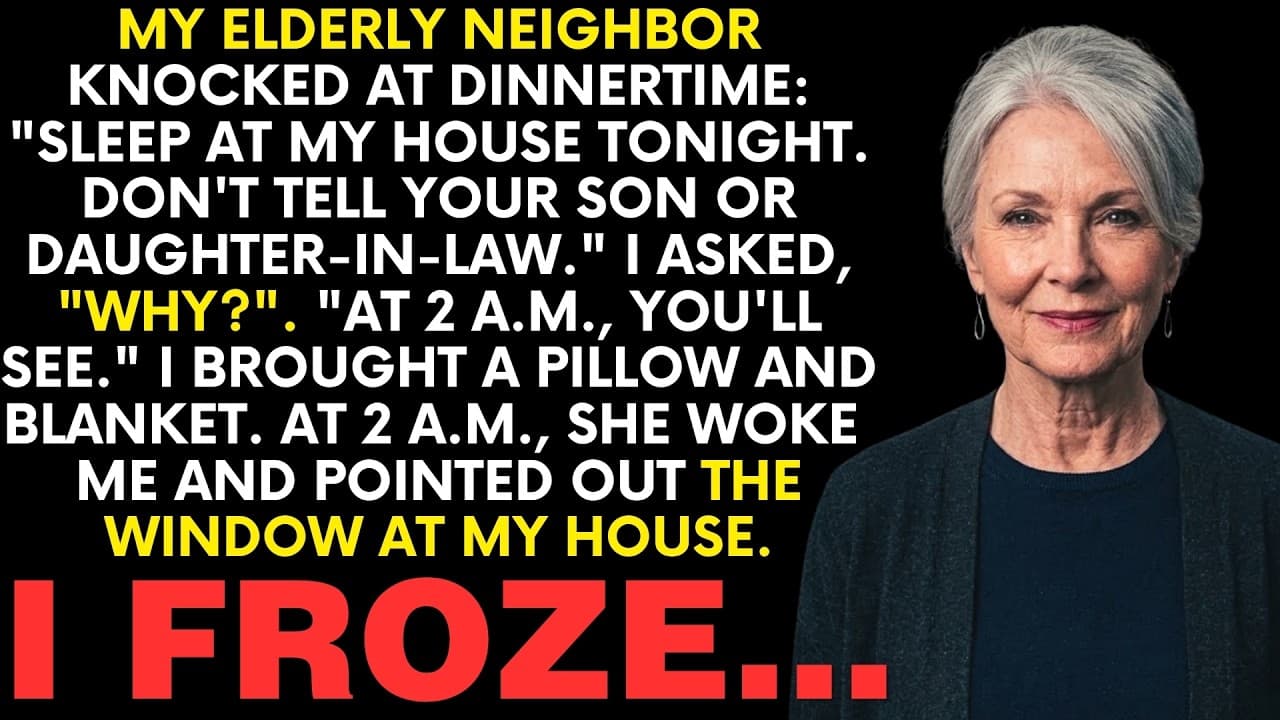
My name is Dixie Atkins. I was 73 and at 6:40 on a Wednesday evening, my 86-year-old neighbor knocked on my kitchen door. Opel Hensley didn't come in. She leaned close and whispered, "Sleep at my house tonight." "Don't tell your son or daughter-in-law." I asked her why. At 2:00 a.m., you'll see. So, I packed a pillow and a blanket like a girl going... Read More
Key Insights
- The plot hinges on a long hidden intrusion by family members into the elder’s house, visible only through small acts and inconsistencies that accumulate over time.
- The neighbor acts as a trusted confidant who voices the warning and helps document the wrongdoing, turning suspicion into an actionable plan.
- Receipts and signatures serve as concrete protections for the elder when emotional appeals fail, demonstrating the power of documentation in family conflicts.
- Walls, doors, and basements act as symbols of control and violation, with the red door and sealed basement representing the breach of trust.
- The story emphasizes boundaries and the need to protect an aging parent from covert manipulation by relatives.
- A single act of kindness can still be paired with firm boundaries to safeguard independence while maintaining care.
- The narrator’s honesty about past separations and reliance on physical signs helps reveal the truth without sensationalism.
- The ending reinforces that justice can be served through measured actions rather than loud confrontation.
Install to Summarize YouTube Videos and Get Transcripts
Explore YouTube Video Summarizer or Get YouTube Transcript Extractor
Questions & Answers
Q: What is the central conflict in this story?
The central conflict is a recurring pattern of covert interference by the son and daughter in law in the elder narrator’s home. They seal the basement for black mold, change the electricity and manage the elder’s finances, which erodes trust and threatens the elder’s autonomy. The elder must decide whether to confront, document, and push back against the family to regain control of her space and safety.
Q: How does Opel contribute to the resolution?
Opal, the elder neighbor, serves as a trusted observer and guide who explains what is happening and why it matters. She helps the elder understand the nightly activities, the basement visits, and the signatures involved. Opel also provides emotional support and practical information, like how to confirm the legitimacy of the basement work and when to call for help, enabling a safer response.
Q: What role do receipts and signatures play in the story?
Receipts and signatures act as concrete proof of the financial transactions and arrangements made by the family without the elder’s informed consent. They become the backbone of accountability, allowing the elder to demonstrate that money was spent on unnecessary or covert basement work and to claim back control over her assets and living space.
Q: Why is the basement a focal point?
The basement represents a hidden space where the elder’s privacy is violated and where the family conducts activities that quietly strip her independence. It becomes the symbol of intrusion and control as strangers move in and out, and the sealed door marks an attempt to cut the elder off from her own home.
Q: How does the elder justify leaving her home to sleep at Opel’s house?
The elder believes she must leave her home at night for safety and to avoid further manipulation. She follows a ritual of bringing a pillow and an afghan, seeking the comfort of a familiar friend, and placing trust in a neighbor who understands her situation. This act signals a needed break from a controllable environment.
Q: What lessons does the story claim are learned?
The story emphasizes that silence is not consent, that documentation can protect rights when trust fails, and that kindness with firm boundaries remains a form of care. These lessons guide the elder as she asserts her independence while maintaining a protective stance toward her family relationships.
Q: How does trust evolve between the elder and her neighbor?
Trust deepens as the neighbor provides insight into the ongoing patterns, validates concerns, and helps translate observations into actions. This collaboration moves from casual acquaintance to a strategic alliance that strengthens the elder’s resolve and equips her with information to confront the family and secure her home.
Q: What is the overall message about family and boundaries?
The story conveys that love for family does not require surrendering personal boundaries or autonomy. It shows that protecting oneself, documenting the truth, and setting clear limits can restore safety and peace while preserving dignity and care for loved ones.
Summary & Key Takeaways
-
Aging mother discovers family members secretly occupying her basement and manipulating finances, triggering a turning point in trust and control.
-
The neighbor Opel becomes a key ally, guiding the mother to confront the situation with tangible proof and a plan for safety and boundaries.
-
Ultimately the mother asserts autonomy by using receipts, signatures, and orderly actions to restore control over her home and life.
Read in Other Languages (beta)
Share This Summary 📚
Summarize YouTube Videos and Get Video Transcripts with 1-Click
Try YouTube Summary with ChatGPT & Claude or YouTube Transcript Generator
Explore More Summaries from Alpha Mom Stories 📚






Summarize YouTube Videos and Get Video Transcripts with 1-Click
Try YouTube Summary with ChatGPT & Claude or YouTube Transcript Generator