How to Reclaim Productive Evenings After Work
TL;DR
Protecting sleep and choosing genuinely energizing activities can make evenings more productive and fulfilling. First, experiment to determine how much rest you actually need and respond early when your energy falls. Then replace passive inactivity with physical, creative, social, or cognitively engaging activities that restore energy while supporting interests, skills, and meaningful progress.
Transcript
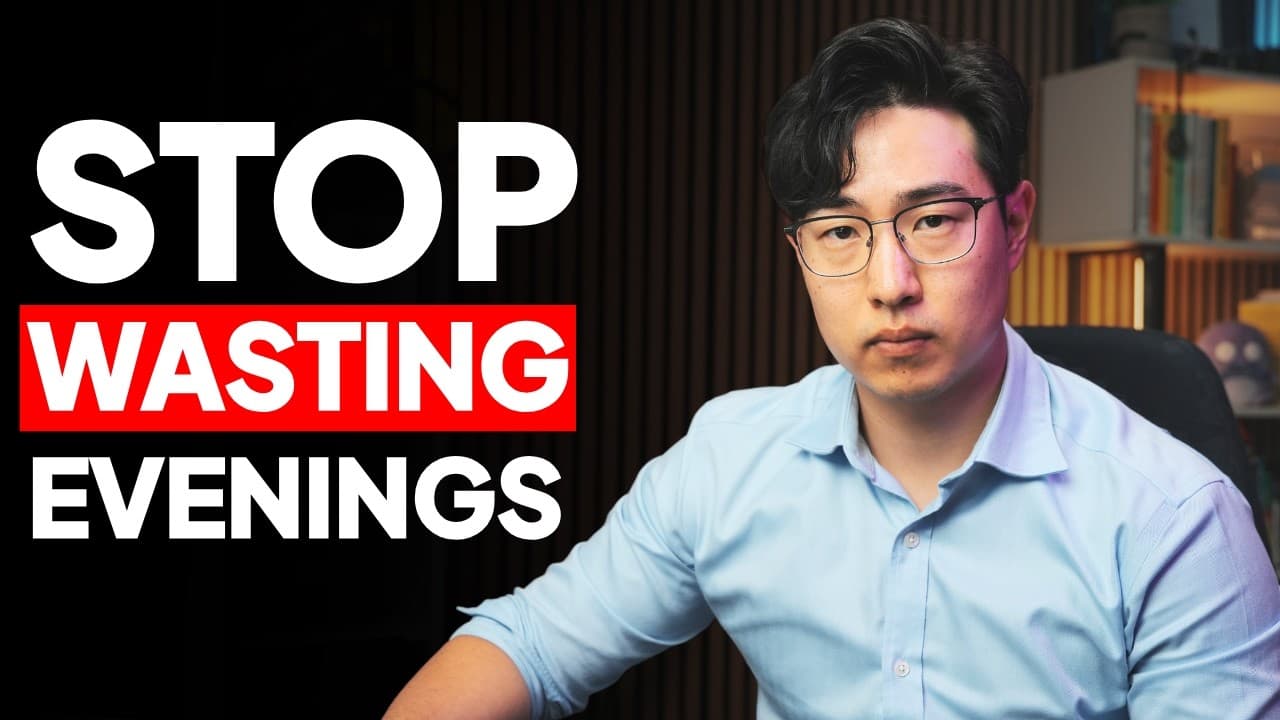
Most people feel that feeling tired and drained after work is normal and that evenings are always unproductive, but that is not true. I've been a learning and productivity coach for the past 13 years, and I've helped over 30,000 people triple their productivity using research-based methods. So, in this video, I'm going to share seven specific strat... Read More
Key Insights
- Chronic tiredness is not necessarily a normal baseline. Years of insufficient sleep and sacrificed recovery can make a compromised energy level feel ordinary, preventing a person from recognizing how much sharper, faster, happier, and more stable they could feel with adequate rest.
- Full recovery from prolonged sleep deprivation can require sustained attention to rest. The speaker needed approximately three to four months of sleeping without alarms and waking only when rested, while two weeks of leave had previously failed to produce a meaningful improvement in tiredness.
- The safest approach to energy management is to recover before reaching severe depletion. Staying within an optimal energy band can make a single night's sleep restorative, while remaining exhausted for a prolonged period can make evenings, weekends, and short leave insufficient for recovery.
- Natural sleep needs can be identified through experimentation. Reviewing the current schedule, increasing sleep, and observing energy levels can establish a personal benchmark. The speaker identified nine hours in bed as his own target, which helped him interpret tired days without assuming something was inherently wrong.
- Energy can function like a generator rather than a battery. Although passive rest may appear logical after work, enjoyable and meaningful activities can sometimes produce energy faster than inactivity, allowing an evening to feel both restorative and fulfilling.
- The too-tired trap is a cycle of inactivity, temporary rest, routine obligations, and renewed exhaustion. It can also create feelings of laziness, guilt, and unproductiveness because available evening time never reaches activities that provide genuine enjoyment or fulfillment.
- Physical activity can increase evening energy even when it initially feels demanding. The speaker often entered the gym exhausted after a clinical day and left feeling more energized, while suggesting that a simple walk could provide a more accessible form of movement.
- Cognitively effortful interests can turn evenings into meaningful progress. Puzzles, painting, learning, and personally exciting projects are alternatives to completely passive activity, and even 30 minutes of regular learning can accumulate into useful skills and career development.
- More videos from this channel:
- More from this channel: Justin Sung
Install to Summarize YouTube Videos and Get Transcripts
Explore YouTube Video Summarizer or Get YouTube Transcript Extractor
Questions & Answers
Q: How can I stop wasting my evenings after work?
Start by determining whether you have enough energy available for the evening. Review your sleep schedule, increase rest where possible, and observe whether your normal baseline improves. Then choose at least one activity that genuinely energizes you, such as walking, exercising, playing music, spending time with family, painting, solving a puzzle, learning, or advancing an exciting project.
Q: Why am I always too tired to do anything after work?
Constant evening exhaustion may result from operating below your natural energy level for a prolonged period. Repeatedly sacrificing sleep and recovery can create a compromised baseline that eventually feels normal. The speaker experienced daily tiredness for roughly 15 years and only recognized the difference after gaining control of his schedule and prioritizing sufficient sleep for several months.
Q: How do I find my natural energy baseline?
Examine your existing schedule, note how much sleep you receive, and experiment with increasing it. Observe how your alertness, comprehension, ideas, mood, and stability change when rest becomes a sustained priority. The speaker found that nine hours in bed suited him, although the central recommendation is to identify your own requirement through experimentation rather than copying his number.
Q: Why might a weekend or short vacation not restore my energy?
A weekend or short leave may be insufficient when sleep deprivation and inadequate recovery have accumulated over years. The speaker reported that two weeks away did not substantially change his tiredness, while a focused period of approximately three to four months produced a significant difference. His experience suggests that deeply compromised energy may require sustained recovery rather than occasional breaks.
Q: What is the too-tired trap?
The too-tired trap begins when exhaustion leads someone to spend the evening doing nothing because rest seems like the only logical response. After resting, available energy is consumed by ordinary daily activities, leaving the person too tired again for meaningful interests. The cycle can add guilt and feelings of laziness because free time never reaches fulfilling or enjoyable activities.
Q: How can an activity give me more energy after work?
Energy does not always behave like a battery that only drains during activity and recharges through inactivity. Certain meaningful tasks can act more like a generator by producing enthusiasm and energy. The speaker found fulfillment in coaching, learning science, building his business, and exercising. Other possibilities include family time, music, sports, hobbies, painting, puzzles, or exciting personal projects.
Q: What evening activities are most likely to feel energizing?
The suggested activities generally involve physical movement or at least some cognitive effort. Exercise can be as structured as going to the gym or as simple as taking a walk. Cognitively engaging choices include solving puzzles, painting, studying an interesting subject, or working on a personally exciting project. The right activity is one you genuinely anticipate and find fulfilling.
Q: How can evening learning improve my life and career?
Regular evening learning can provide fulfillment while building knowledge and skills that support progress in life and work. The speaker suggests that even 30 minutes spent learning something new and interesting can accumulate meaningfully over time. The activity should be engaging enough to generate energy, and its lessons or practices may be applied during work or study the following day or week.
Summary & Key Takeaways
-
Persistent tiredness may reflect a compromised baseline rather than a normal response to work. The first strategy is to calibrate natural energy by examining sleep, increasing rest, and observing the results. After years of sleep deprivation, recovery may take much longer than an evening, weekend, or short period of leave.
-
Energy can behave more like a generator than a battery because certain activities restore energy more effectively than doing nothing. Physical movement, meaningful work, family time, music, sports, hobbies, puzzles, painting, and interesting projects may create energy. The important step is identifying which activities genuinely produce that response.
-
Evening learning can combine fulfillment with long-term progress. Spending 30 minutes exploring an interesting subject can accumulate into useful skills for life and work. The activity should require some cognitive effort without becoming an obligation. Testing different options several evenings each week can reveal which routines reliably improve energy and motivation.
Read in Other Languages (beta)
Share This Summary 📚
Summarize YouTube Videos and Get Video Transcripts with 1-Click
Try YouTube Summary with ChatGPT & Claude or YouTube Transcript Generator
Explore More Summaries from Justin Sung 📚

Summarize YouTube Videos and Get Video Transcripts with 1-Click
Try YouTube Summary with ChatGPT & Claude or YouTube Transcript Generator