How to build a personal learning system that boosts efficiency?
TL;DR
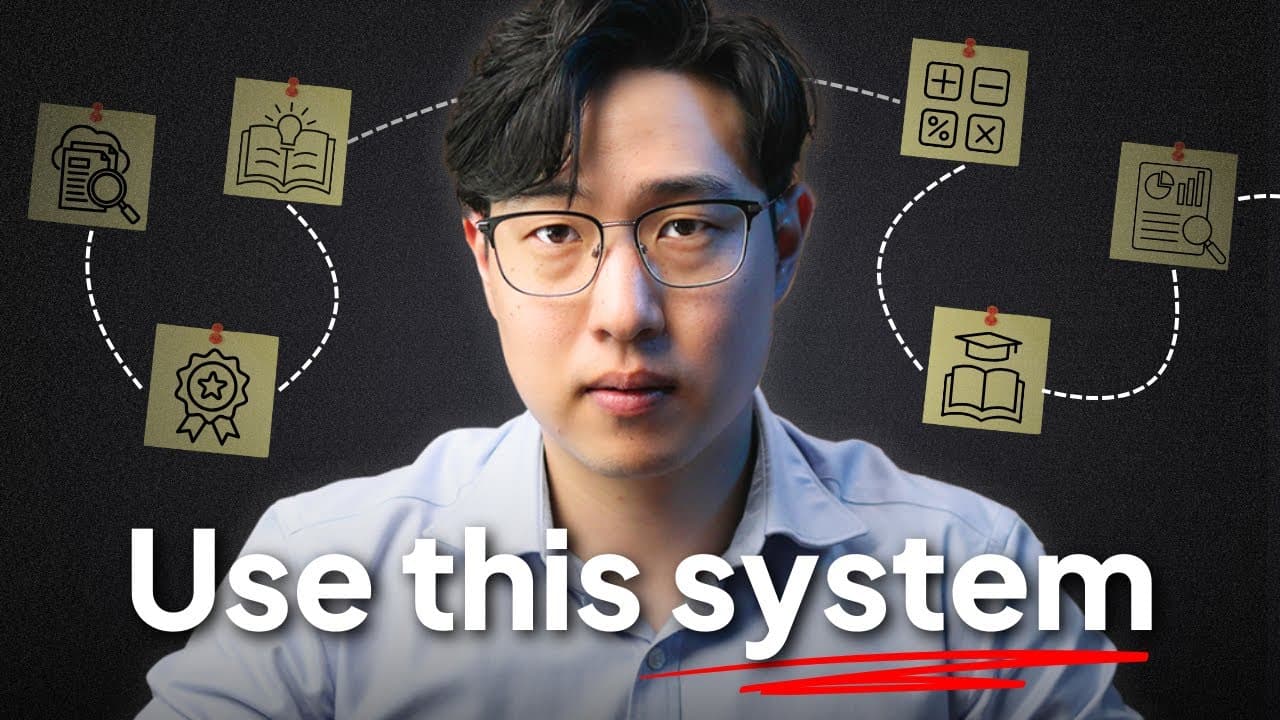
The Pero learning system optimizes how you learn by priming, encoding, retrieval, reference and interleaving to improve memory and understanding. It shifts the focus from chasing techniques to building a cohesive learning system, which reduces wasted effort and can save time while increasing depth of knowledge.
Transcript
I spent 7 years building a learning system that boosted my efficiency by over 60% and saved me at least 10 hours of studying per week and although every learner's brain is different the best thing about this system is that anyone can use it and personalize it and I call it the pero system it stands for priming encoding reference retrieval and overl... Read More
Key Insights
- Pero stands for priming, encoding, reference, retrieval, interleaving, and overlearning.
- Learning is a process, not just input and repetition, and efficiency comes from better processing.
- Priming prepares the brain before encountering new material to improve learning.
- Encoding involves organizing and connecting information to form meaningful memory structures.
- Reference acts as a parking lot for fine details to avoid overload during encoding.
- Retrieval strengthens memory by testing and reprocessing knowledge.
- Interleaving exposes you to multiple perspectives to avoid narrow understanding.
- Overlearning deepens mastery for high pressure assessments or advanced topics.
- More videos from this channel:
- More from this channel: Justin Sung
Install to Summarize YouTube Videos and Get Transcripts
Explore YouTube Video Summarizer or Get YouTube Transcript Extractor
Questions & Answers
Q: What is the Pero system and what are its components?
The Pero system is a learning framework that includes priming, encoding, reference, retrieval, interleaving, and overlearning. Priming prepares the brain before a main learning event, encoding organizes information into memorable structures, reference is a parking lot for fine details, retrieval tests and reinforces knowledge, interleaving offers multiple perspectives, and overlearning deepens mastery when needed.
Q: Why does the video argue learning is more than just repeating information?
The video argues that learning is a series of processes where information is filtered by relevance, processed and organized into memory, and retrieved to reinforce understanding. If the processing steps are weak, more repetition is needed, but strong processing reduces the amount of repetition required and improves depth of understanding.
Q: How does priming affect later learning according to the talk?
Priming helps the brain filter new information for relevance before it enters the main processing stage. If priming is effective, subsequent encoding and retrieval work more efficiently, reducing overload and memory leaks. Without good priming, learners can feel overwhelmed and fail to integrate new material meaningfully.
Q: What role does encoding play in the Pero system?
Encoding is the active processing step where information is organized, simplified, and connected with existing knowledge. It is not binary but a spectrum of effort that determines how quickly information moves into memory. Strong encoding creates a durable memory trace and easier recall.
Q: Why is retrieval considered essential in the Pero framework?
Retrieval is essential because it tests the ability to use knowledge and also reprocesses information, strengthening memory. Regular retrieval helps reorganize knowledge in a more robust and flexible way, making it easier to apply under different contexts or questions.
Q: What is interleaving and why is it important in this system?
Interleaving means studying topics from multiple perspectives and angles rather than in a single, linear way. It prevents narrow understanding and prepares you for curveball questions by exposing you to different relationships between concepts, leading to deeper, more transferable knowledge.
Q: What is overlearning and when is it most beneficial?
Overlearning means studying beyond the minimum needed to perform well, often through extra practice or repetition. It is most beneficial in high pressure assessments or when the standard for excellence is very high, but it should be used after improving priming, encoding and retrieval rather than as a first response.
Q: What personal experience does the speaker share about improving their own studying?
The speaker shares that they previously studied very intensely, reading and writing notes, but lacked effective filtering of information. By adopting the Pero system and focusing on relevance, processing, and retrieval, they transformed their learning efficiency, reduced time spent studying, and increased depth of understanding.
Summary & Key Takeaways
-
The video describes a seven year process to create a learning system called Pero, which stands for priming, encoding, reference, retrieval and overlearning, aimed at boosting efficiency. It emphasizes understanding learning as a system of processes rather than isolated techniques and discusses common study inefficiencies.
-
The Pero model places priming at the start to prepare the brain, encoding to organize information, reference to manage detail, retrieval to test knowledge, interleaving to diversify perspectives, and overlearning to deepen mastery when needed. It highlights that relevance filtering is key to memory.
-
The creator shares personal experience of past study habits and shows how optimizing the information filtering and processing stages led to a major efficiency gain, reducing the number of hours spent studying while improving depth and recall.
Read in Other Languages (beta)
Share This Summary 📚
Summarize YouTube Videos and Get Video Transcripts with 1-Click
Try YouTube Summary with ChatGPT & Claude or YouTube Transcript Generator
Explore More Summaries from Justin Sung 📚

Summarize YouTube Videos and Get Video Transcripts with 1-Click
Try YouTube Summary with ChatGPT & Claude or YouTube Transcript Generator