How to Make Learning Engaging and Effective Now
TL;DR
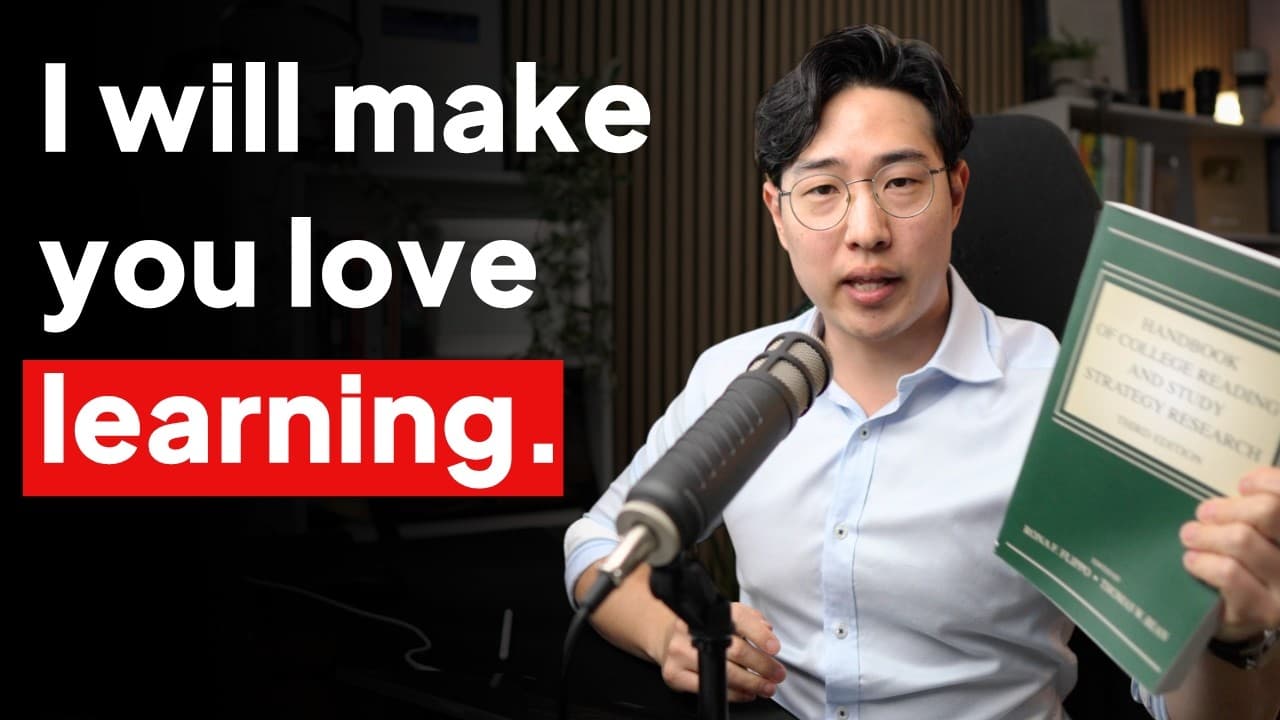
Boredom signals poor learning, not a boring topic. Effective learning relies on active problem solving and building networks between new and prior knowledge, not passive memorization. Reframing content to fit your existing knowledge and purpose makes learning engaging and durable.
Transcript
Back in high school, I found learning incredibly boring. I probably spent half my studying time either trying not to fall asleep or actually unconscious. And I thought that that was because learning was just a boring thing. But now, after being immersed in learning science for over a decade and coaching so many people, I've realized that the reason... Read More
Key Insights
- Boredom is a symptom indicating you are not learning effectively, as EEG patterns show slow, sleep-like activity in passive learners compared to highly active brain signals during efficient learning.
- Effective learning requires engagement and problem solving, where the brain forms networks by comparing clues and patterns rather than simply memorizing pieces of information.
- The brain loves learning but hates traditional studying, because conventional methods often fail to align with how the brain naturally processes and organizes knowledge.
- Relevance is a skill, not a fixed trait, because you can actively reframe new information to connect with existing concepts and purposes.
- Connecting new material to its broader purpose or big-picture relevance increases perceived usefulness and neural engagement during learning.
- Using analogies and reframing can help make seemingly irrelevant information become meaningful by altering how it fits with prior knowledge.
- People often believe they are inherently bad at certain subjects due to outdated study habits, but adjusting learning strategies can overcome this bias and improve effectiveness.
- Effective learning techniques hinge on constructing a network of interconnected ideas, enabling deeper understanding and easier recall over time
- More videos from this channel:
- More from this channel: Justin Sung
Install to Summarize YouTube Videos and Get Transcripts
Explore YouTube Video Summarizer or Get YouTube Transcript Extractor
Questions & Answers
Q: How can I tell if I am learning effectively or just studying passively?
If you are learning effectively, your brain shows high activity with rapid information processing and integration of new clues into existing knowledge networks. Passive studying typically yields slower, more muted brain activity and limited ability to connect new concepts to what you already know. Look for patterns, see connections, and test yourself to confirm understanding.
Q: What makes learning engaging according to the video?
Engagement comes from solving problems, forming networks of ideas, and actively comparing clues to see how they fit together. The brain is wired to enjoy problem solving, so approaching learning as a detective work rather than passive reading keeps attention and strengthens memory by creating meaningful connections.
Q: Why is boredom considered a sign you’re not learning?
Boredom signals the brain is not actively processing or forming connections, which mirrors slow EEG activity seen in passive learners. When learning is engaging, brain activity is chaotic and fast as it forms new associations, making the experience feel stimulating rather than dull.
Q: What is the difference between learning and studying described in the video?
Learning is the process of building networks, connecting new information to prior knowledge, and forming understanding. Studying often involves memorization and repetition without integrating ideas, which can feel tedious and less effective for long-term retention.
Q: How can I increase the relevance of new information?
Increase relevance by linking new material to its purpose, big-picture context, and potential real-world applications. You can also restructure the information to fit existing concepts, creating multiple connection points that make the content feel useful and meaningful.
Q: What role does purpose play in learning, according to the speaker?
Purpose acts as a cognitive anchor that helps you see how new information fits into the bigger picture. By clarifying why you need to know something and how it will be used, you raise motivation and improve your brain’s ability to connect and retain the material.
Q: How can I reframe material to make it more relevant?
Try attaching the new information to alternative existing concepts, or model it as A and B leading to C to reveal hidden connections. This active restructuring creates new pathways in memory and makes the material more engaging and easier to recall.
Q: Why does the speaker say relevance is a skill, not a fixed trait?
Because relevance can be cultivated by deliberately seeking connections, reframing concepts, and using purposeful prompts to relate new knowledge to what you already know. Practice in this area increases neural engagement and makes learning feel more meaningful over time.
Summary & Key Takeaways
-
Learning should be active and problem solving, not passive memorization, to build meaningful networks in the brain.
-
Boredom is a symptom of ineffective learning, indicating slow brain activity, while effective learning shows high, chaotic brain activity from active processing.
-
Relevance is a skill you can cultivate by linking new information to existing knowledge and clarifying the big picture and purpose of what you study.
Read in Other Languages (beta)
Share This Summary 📚
Summarize YouTube Videos and Get Video Transcripts with 1-Click
Try YouTube Summary with ChatGPT & Claude or YouTube Transcript Generator
Explore More Summaries from Justin Sung 📚




Summarize YouTube Videos and Get Video Transcripts with 1-Click
Try YouTube Summary with ChatGPT & Claude or YouTube Transcript Generator