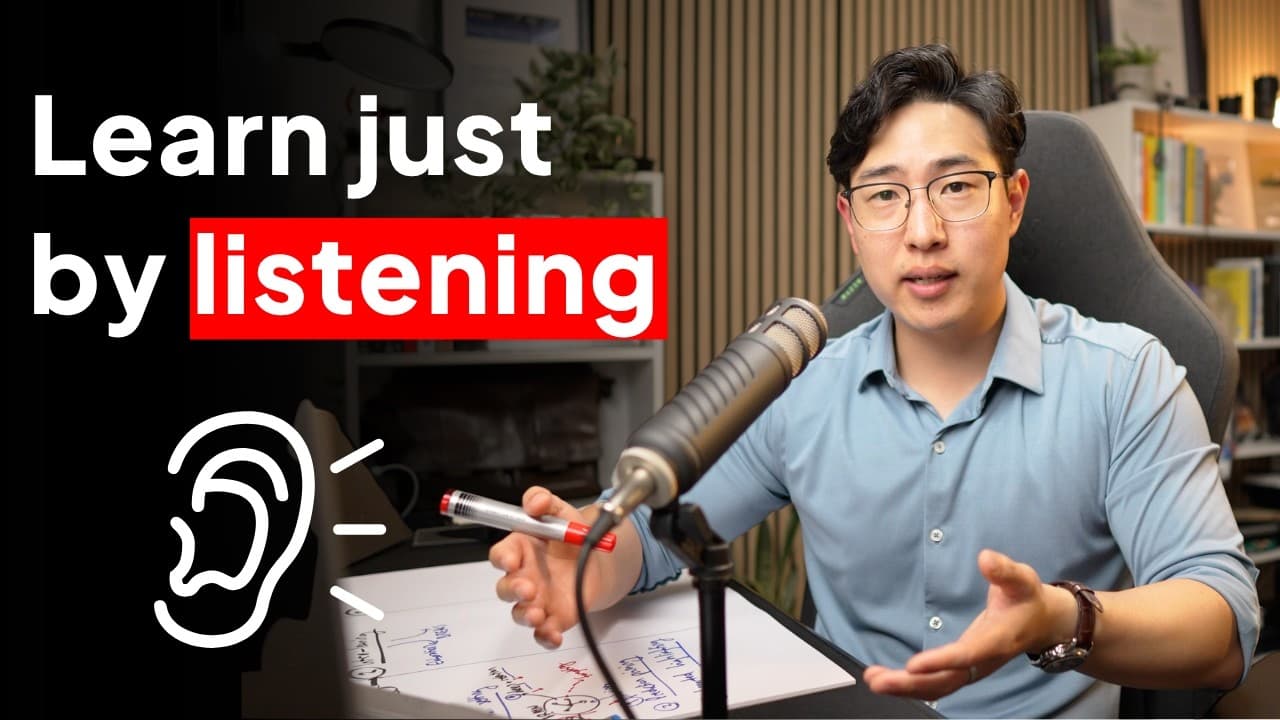
How to Learn Deeply by Listening Without Notes
TL;DR
Intentionally set your learning goal before you listen, use prediction and inverted highlighting, and apply elaboration and DLO breaks during listening to boost depth and retention. Pre learning primes your brain, intra learning manages cognitive load, and post listening consolidation strengthens what you remember for longer.
Transcript
i'm going to teach you how you can learn deeply and effectively just by listening and for most people learning to do this unlocks hours of extra time per day because imagine being able to understand and actually retain what you listen to when you are going for a walk or at the gym or listening to a podcast or driving somewhere or if you're in meeti... Read More
Key Insights
- Pre learning primes your brain by setting intention about what you will learn and why.
- Prediction priming helps your brain connect new information to existing knowledge and improves retention.
- Inverted highlighting focuses on identifying the key takeaways you need to teach later, guiding attention.
- Elaboration breaks pause learning to simplify and rephrase concepts, boosting understanding.
- DLO breaks help prevent cognitive overload by stopping when overload is detected and clarifying gaps.
- A station question helps you capture your biggest uncertainties to regain train of thought.
- Deep learning from listening benefits from combining mental strategies with practical processing breaks.
- You can extend effectiveness by compiling takeaways from many sources to coach your future learning.
- More videos from this channel:
- More from this channel: Justin Sung
Install to Summarize YouTube Videos and Get Transcripts
Explore YouTube Video Summarizer or Get YouTube Transcript Extractor
Questions & Answers
Q: How can I start learning deeply by listening if I do not take notes
Begin with pre learning by setting an intention for what you are about to learn and why it matters. Use prediction priming to anticipate topics and connections before you listen. Then apply inverted highlighting by identifying one big takeaway to teach later. This combination keeps your brain organized and focused on meaningful patterns.
Q: What is the role of intention setting in learning while listening
Intention setting tells your brain what to listen for and why it matters. This reduces cognitive load by aligning your expectations with the information being delivered. When you know the goal, your brain actively searches for relevant connections, which improves depth and later recall during retrieval or application.
Q: How does prediction priming affect information processing during listening
Prediction priming trains your brain to anticipate topics and relationships, which prepares existing networks for new information. Even incorrect predictions still strengthen correct connections through hypercorrection, making it easier to retain accurate details and integrate them with what you already know.
Q: Why are elaboration breaks important while listening
Elaboration breaks pause the incoming stream to allow your brain to consolidate, rephrase, and simplify what you have heard. This prevents overload, helps you build a coherent mental model, and makes it easier to recall and apply the material later in real situations.
Q: What is a DLO break and when should you use it
A DLO break is used when you feel overwhelmed by too many ideas. You pause, assess the main concepts, and either elaborate to regain a grasp or create a station question to isolate the biggest uncertainty. This prevents cognitive overload and keeps learning effective and sustainable.
Q: What is a station question and how does it help learning
A station question captures the biggest question you have at a given moment. It acts like a stop point to reset your train of thought, allowing you to reframe the material and focus on actionable gaps. This keeps you moving forward without losing track of essential uncertainties.
Q: How can inverted highlighting improve long term retention
Inverted highlighting forces you to identify the most important takeaways before or during listening. By prioritizing key ideas, your brain attaches greater meaning to them and strengthens the ability to retrieve these points later, which improves retention and practical transfer of knowledge.
Q: What practical steps can beginners take to start learning deeply by listening
Begin with a clear learning intention and a short prediction about what you will hear. Listen actively, then pause for an elaboration break to summarize in your own words. If overwhelmed, take a DLO break and frame a station question. Repeat this cycle to build a durable mental model.
Summary & Key Takeaways
-
Pre learning prepares the mind, using intention setting and prediction to shape how you receive information, which improves understanding and retention.
-
Intra learning relies on breaks like elaboration and DLO to process new material, prevent overload, and identify big questions that guide recall and application.
-
The approach combines mental techniques with practical breaks to turn listening into a deeper, more actionable form of learning.
Read in Other Languages (beta)
Share This Summary 📚
Summarize YouTube Videos and Get Video Transcripts with 1-Click
Try YouTube Summary with ChatGPT & Claude or YouTube Transcript Generator
Explore More Summaries from Justin Sung 📚



Summarize YouTube Videos and Get Video Transcripts with 1-Click
Try YouTube Summary with ChatGPT & Claude or YouTube Transcript Generator