What Did the Kilonova GW 170817 Reveal? Update 10/16/2017
TL;DR
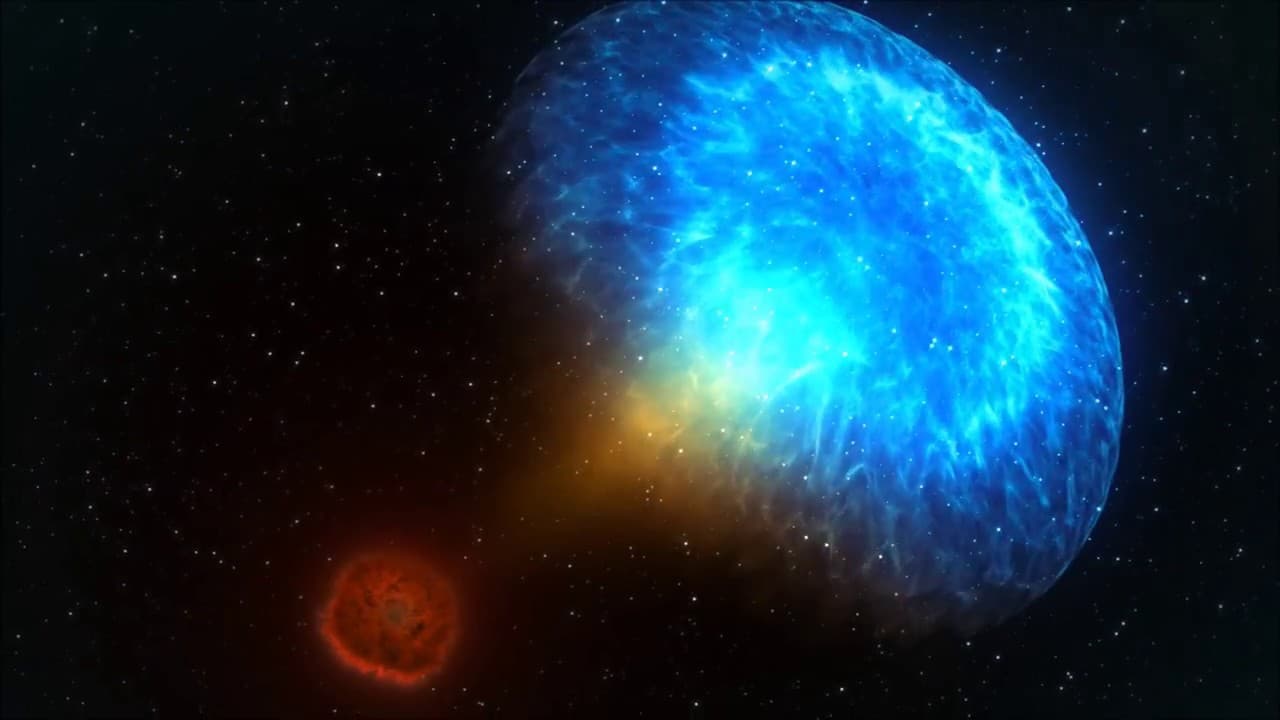
GW 170817 revealed that merging neutron stars can produce gravitational waves, a short gamma-ray burst, a kilonova, and heavy elements. Its gravitational-wave signal lasted about 100 seconds, GRB 170817A followed roughly 1.7 seconds later, and visible light identified the host as NGC 4993. The observations also left scientists unsure whether the remnant was a massive neutron star or a light black hole. Read on for the evidence behind each finding.
Transcript
In what was likely one of the most thoroughly observed astronomical events in history -- there were over 70 observatories involved and one of the papers on it has literally thousands of co-authors, scientists in the US and Europe jointly announced today that they caught a neutron star merger in the act. Known as GW 170817 it should simultaneously s... Read More
Key Insights
- 🙂 GW 170817 involved the merger of two neutron stars, leading to the detection of gravitational waves and shedding light on the behavior of gravity itself.
- 🤩 Neutron star mergers are associated with kilonovas and offer insights into the creation of heavy elements in the universe.
- 🤩 The short gamma ray burst observed during GW 170817 solidifies the connection between such bursts and merging neutron stars.
- 🤩 The detection of elements heavier than iron in the aftermath of the neutron star merger provides confirmation of their link to kilonovas.
- 🙂 The event occurred in the galaxy NGC 4993, approximately 130 million light-years away.
- ✴️ GW 170817 raises the mystery of what remains after a neutron star merger, whether it is the heaviest known neutron star or a light black hole.
- 📽️ The collaboration between over 70 observatories and the LIGO/VIRGO project contributed to the comprehensive observations of this significant astronomical event.
Install to Summarize YouTube Videos and Get Transcripts
Explore YouTube Video Summarizer or Get YouTube Transcript Extractor
Questions & Answers
Q: What is GW 170817?
GW 170817 was an observed merger of two neutron stars that apparently produced a kilonova. The LIGO/VIRGO collaboration detected its gravitational waves, while more than 70 observatories studied the aftermath across the electromagnetic spectrum.
Q: How did GW 170817 differ from earlier gravitational-wave detections?
Earlier detections had involved merging black holes, whereas GW 170817 came from merging neutron stars. Its signal lasted about 100 seconds rather than a few seconds, and its frequency increased throughout the detection.
Q: What did GW 170817 reveal about short gamma-ray bursts?
The short gamma-ray burst GRB 170817A appeared about 1.7 seconds after the gravitational-wave event. This placed the proposed connection between merging neutron stars and short gamma-ray bursts on much more solid footing.
Q: Where did the GW 170817 neutron-star merger occur?
Visible light detected about 11 hours after the gravitational waves allowed scientists to locate the merger in the galaxy NGC 4993. The galaxy is about 130 million light-years away.
Q: What heavy elements were found after the kilonova?
The kilonova’s aftermath contained an expanding cloud of elements heavier than iron. It included an estimated 10,000 Earth masses of gold and platinum, supporting the proposed link between kilonovas and heavy-element creation.
Q: What did GW 170817 show about gravity?
The event provided a new way to study the behavior of gravity because its gravitational-wave signal came from neutron stars rather than black holes. The observations could help confirm the prediction that gravity propagates at the speed of light.
Q: Why was GW 170817 observed so thoroughly?
More than 70 observatories stopped to examine the object, producing observations across the electromagnetic spectrum. These measurements complemented the gravitational-wave detection by the LIGO/VIRGO collaboration, and one paper about the event had thousands of co-authors.
Q: What remained after the neutron stars merged?
Scientists knew the masses of the two neutron stars, but the identity of the post-merger object was unclear. It could have been either the heaviest known neutron star or a very light black hole.
Summary & Key Takeaways
-
Scientists have captured the merger of two neutron stars known as GW 170817, resulting in a kilonova and the detection of gravitational waves.
-
The detection of gravitational waves from a neutron star merger differs from black hole mergers, providing valuable insights about gravity itself.
-
The associated short gamma ray burst (GRB 170817A) and the observation of heavy elements, including gold and platinum, further confirm the connection between kilonovas and these phenomena.
Read in Other Languages (beta)
Share This Summary 📚
Summarize YouTube Videos and Get Video Transcripts with 1-Click
Try YouTube Summary with ChatGPT & Claude or YouTube Transcript Generator
Explore More Summaries from John Michael Godier 📚
Summarize YouTube Videos and Get Video Transcripts with 1-Click
Try YouTube Summary with ChatGPT & Claude or YouTube Transcript Generator