How to Plan a Personal Website Beyond a Portfolio
TL;DR
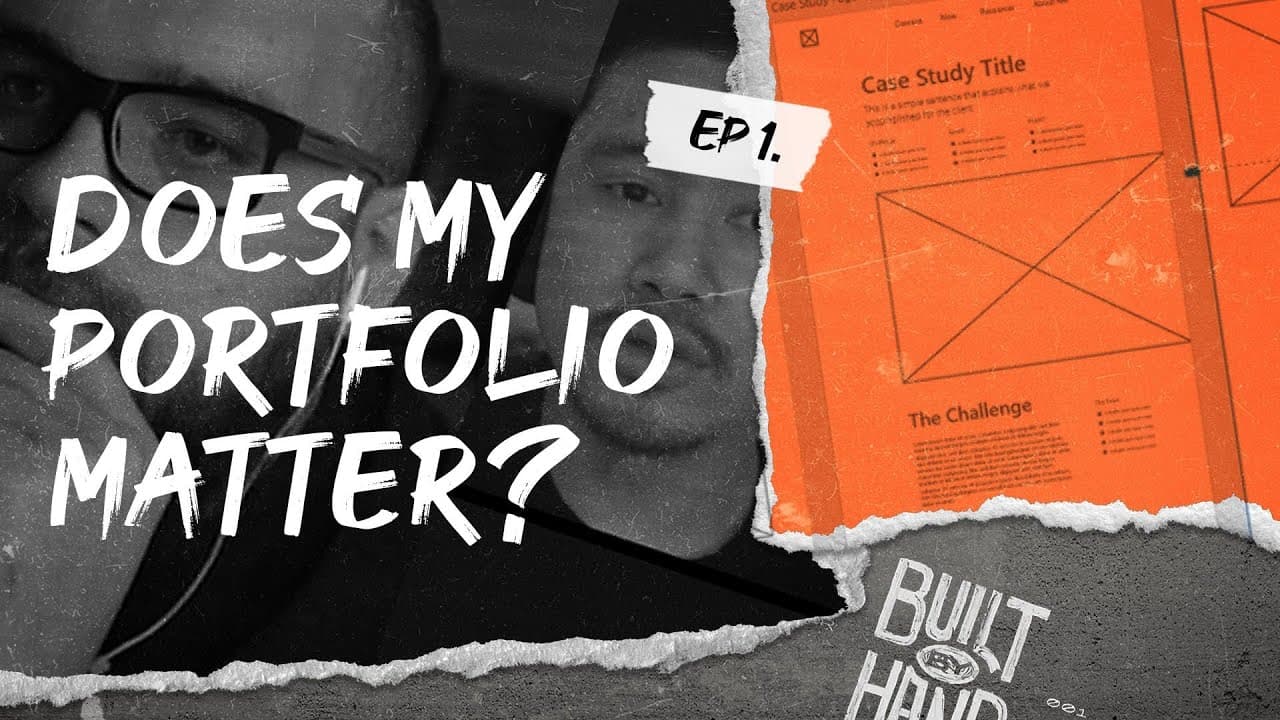
Define a personal website by what you need it to accomplish now, not by the standard portfolio formula. If reputation, ideas, and personal connection matter more than attracting clients or employers, prioritize your voice and story while keeping selected past work available as supporting proof, perhaps through a concise career timeline.
Transcript
but one thing i noticed like when you transitioned from having your book on the riser site into michael janda as the author and coach and speaker and expert you dropped the work altogether yeah and i'll probably say that it doesn't matter anymore my name is ben burns i'm a designer creative director and father of the year five years running i'm on ... Read More
Key Insights
- A personal website is easier to plan when it has a clearly defined job. Ben's agency websites were straightforward because they needed to attract clients and help prospective clients assess fit, while his personal website became difficult to shape because its purpose was uncertain.
- A standard designer portfolio is commonly organized around home, about, work, and contact sections. That structure is effective when the goal is winning clients or securing a job, but it may not suit an established professional who wants to share opinions, ideas, and stories.
- Audience research is a practical way to discover what belongs on a personal website. Ben invited people to provide feedback and learned that they valued his individual voice, personal story, tone, systematic approach, humanity, and perspective beyond his work with The Futur.
- Personal connection can be more important than a catalog of completed projects. Michael Janda advised presenting Ben as a family man, thought leader, and partner at The Futur so visitors could understand who he is and potentially form a deeper emotional connection with him.
- A portfolio matters less when reputation already influences why people pay attention. Janda explained that people may respond to his books, content, and recognizable name rather than evaluating his portfolio first, although detailed work remains available for visitors who deliberately seek it.
- Past work can remain on a personal website without receiving top priority. Ben decided not to remove his projects entirely, but to place them in a supporting role so the website could focus more strongly on his current identity, ideas, experiences, and relationship with his audience.
- A career timeline can validate expertise without requiring a collection of long case studies. Matthew Encina suggested combining milestones, selected accomplishments, awards, and one or two highlighted projects within a chronological presentation that visitors can understand while scrolling.
- A personal website can provide an independent home outside the organizations that helped build a creator's career. For Ben, this home would preserve important past work while giving him space to publish opinions, ideas, and stories that do not naturally belong on another business's website.
Install to Summarize YouTube Videos and Get Transcripts
Explore YouTube Video Summarizer or Get YouTube Transcript Extractor
Questions & Answers
Q: How do you define the purpose of a personal website?
Define the purpose by identifying the specific job the website must perform at your current career stage. Ben's agency sites needed to attract clients and help them judge whether the agency was a good fit. His personal site required a different purpose because he was not seeking clients or employment. He concluded that it should provide an independent home for his work, opinions, ideas, stories, and personal identity.
Q: Does a portfolio still matter after building a reputation?
A portfolio may matter less once people recognize and trust a professional's reputation. Michael Janda said audiences may choose him because they know his name, follow his content, or have read his books, rather than because they reviewed his project work. He still keeps work available for visitors who want evidence, but places it several clicks deep instead of making it the main focus of his website.
Q: When should past work be prioritized on a personal website?
Past work should be prioritized when the website's primary purpose is attracting new clients or helping someone secure a job. In those situations, projects allow visitors to assess capability and fit. Ben was not pursuing either goal, so he decided that his work should remain accessible as validation but should not occupy the most prominent position. His ideas, stories, voice, and current identity would receive greater emphasis.
Q: How can audience research improve personal website planning?
Audience research can reveal what visitors actually value and reduce uncertainty about content. Ben invited members of his audience to share feedback and discovered that they wanted his opinions, personal story, tone, delivery style, and individual perspective. Their responses showed that his value was not limited to project outcomes. This gave him confidence to plan content centered on connection and personal expression rather than only displaying design work.
Q: What content belongs on a website that is not a traditional portfolio?
A nontraditional personal website can feature the creator's story, opinions, ideas, career milestones, roles, personality, and selected accomplishments. Michael Janda encouraged Ben to show his identity as a family man, thought leader, and partner at The Futur. Past projects can still appear as supporting evidence, but the main content should communicate who the person is, what they think, and why visitors might continue following their work.
Q: How can a career timeline replace a project gallery?
A career timeline can weave work into a chronological story rather than presenting separate case studies. Matthew Encina suggested showing milestones such as when skills developed, when businesses began, and what major accomplishments occurred at different stages. Awards, short bullet points, and one or two selected projects can be included where relevant. This approach validates experience while keeping the website focused on the broader professional journey.
Q: Why might the standard portfolio structure be unsuitable?
The standard home, about, work, and contact structure is designed mainly to help designers attract clients or find jobs. Ben found that this structure did not fit because he was a designer, business leader, educator, and content creator who was not currently seeking either outcome. He believed he could offer more than a repository of old projects, especially through opinions, ideas, stories, and a stronger personal connection with his audience.
Q: How should personal and company content be separated?
Personal content should have its own home when it reflects an individual's voice, experiences, and identity rather than the needs of a company. Ben's educational work and business activities often lived on other websites, but audience feedback showed interest in him specifically. His personal website could therefore hold his story, perspective, selected history, and original content while company platforms continued serving their distinct organizational purposes.
Summary & Key Takeaways
-
Ben Burns begins planning a personal website by questioning its purpose. His earlier agency sites had clear goals, such as attracting clients and establishing fit, but his current roles span design, leadership, education, and content. Because he is not seeking clients or employment, a conventional portfolio structure no longer matches his needs.
-
Audience research shows that people want Ben's opinions, stories, delivery style, and individual personality. This feedback suggests that his website should become an independent home for personal content beyond the businesses he has helped grow. The site can build a deeper connection by revealing his humanity, values, experiences, and creative perspective.
-
Michael Janda argues that portfolios become less important after a professional develops a recognizable reputation. Ben therefore decides to include past work without making it the main attraction. Matthew Encina proposes weaving selected projects, achievements, awards, and milestones into a career timeline, allowing the work to validate experience without dominating the website.
Read in Other Languages (beta)
Share This Summary 📚
Summarize YouTube Videos and Get Video Transcripts with 1-Click
Try YouTube Summary with ChatGPT & Claude or YouTube Transcript Generator
Explore More Summaries from The Futur 📚

Summarize YouTube Videos and Get Video Transcripts with 1-Click
Try YouTube Summary with ChatGPT & Claude or YouTube Transcript Generator