How to Script Videos That Keep People Watching
TL;DR
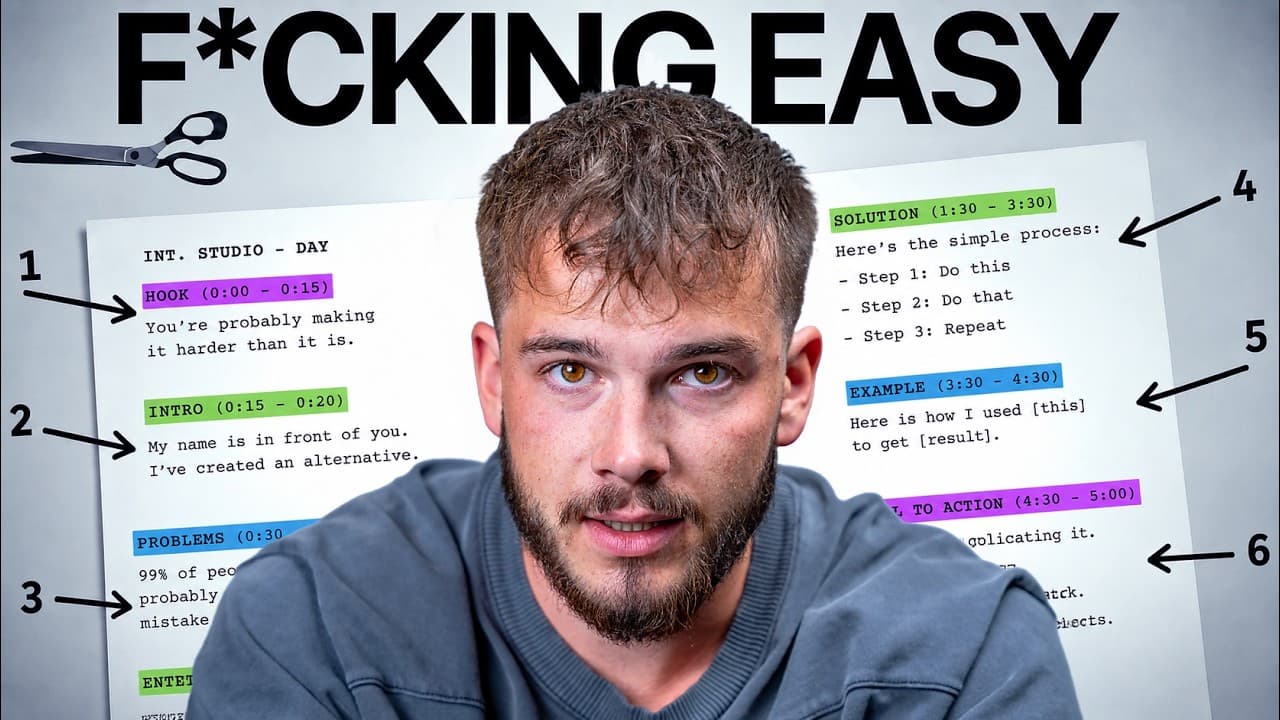
Build each video around one clear problem, open with an observable demand anchor, and make every sentence advance a single narrative. Remove repetition, undefined terms, complexity, and non-essential information because sustained viewing signals interest, while validating topics through social feeds and Reddit helps confirm that people care before production begins.
Transcript
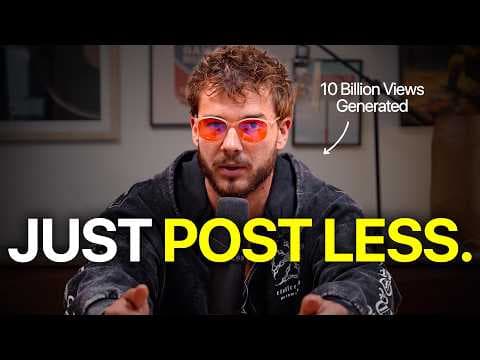
These are not algorithm hacks. These are not AI viral hooks. This is social media on easy mode. And it's the exact process I've used to generate 10 billion views for clients. Building multiple accounts past the million follower mark. There is seven laws and you need to follow each one carefully to consistently print million viewed videos. Starting ... Read More
Key Insights
- Vein theory is a scripting principle that treats a video as one continuous line of thought. The script should address one topic and solve one problem, with each idea logically advancing the viewer from the initial hook toward the ending.
- Every word in a script must earn its place by supporting the central problem. Deviations, repeated statements, and details that remain unnecessary after removal should be cut during scripting or editing because they interrupt the narrative and create opportunities for viewers to leave.
- A strong hook is the entry point to the video's narrative. If the opening does not capture attention and communicate a topic people care about, viewers may scroll before the script has any opportunity to sustain their interest.
- Undefined terms block comprehension because viewers cannot easily follow later ideas when an earlier word remains unclear. Specialized language should therefore be defined when essential or removed when it does not contribute meaningfully to the video's central point.
- Complexity slows the narrative by forcing viewers to work harder to understand the message. Clear, accessible explanations reduce friction and make it easier for an audience to continue watching instead of choosing content that requires less effort.
- Watch time and retention are central indicators of short-form engagement in the speaker's framework. When viewers watch longer, the platform may treat the content as interesting and show them, or other users, more videos that resemble it.
- A demand anchor connects a video's hook to a subject the intended audience already values. Demand can range from universal concerns such as relationships, attractiveness, fitness, health, and longevity to cultural, niche, and microniche interests with progressively smaller potential audiences.
- Observable symptoms make abstract topics more compelling by translating them into situations people recognize from real life. Creators can pre-validate these topics by studying successful posts in a trained social feed or identifying recurring problems in relevant Reddit discussions.
Install to Summarize YouTube Videos and Get Transcripts
Explore YouTube Video Summarizer or Get YouTube Transcript Extractor
Questions & Answers
Q: How do you structure a video script to keep viewers watching?
Structure the script around one clear topic and one specific problem. Begin with a hook that earns attention, then arrange each statement so it logically builds on the preceding statement and advances the viewer toward the conclusion. Remove tangents, repetition, unclear terminology, and unnecessary details. The finished script should feel like one continuous vein of thought rather than several competing directions.
Q: What is vein theory in video scripting?
Vein theory describes a video as a thin, continuous narrative that carries one idea from the opening to the ending. The creator captures viewers at the front and keeps pushing them forward through relevant information. Each sentence should support the same problem and build on what came before. Anything that changes direction, repeats an idea, or obstructs comprehension breaks that continuity.
Q: Why should a video focus on only one problem?
A single problem gives the audience a clear expectation and keeps the narrative moving in one direction. Openings that promise several tips or introduce multiple possible paths can make the destination less clear. By limiting the script to one problem, creators can judge every sentence against the same purpose and remove material that does not help deliver the promised resolution.
Q: What information should be removed from a video script?
Remove information that does not directly support the central topic, remains unnecessary for understanding, repeats an earlier point, or sends the narrative in a different direction. Undefined technical terms should be explained if essential and deleted if irrelevant. The speaker estimates that 30–50% of the words and statements in most content may be non-essential, so every word should justify its inclusion.
Q: How does watch time affect video distribution?
Watch time shows that viewers chose to remain with a piece of content instead of immediately scrolling away. In the speaker's account, watching one video longer can cause similar videos to appear within the next few swipes, sometimes on the next swipe. Strong retention therefore signals that the content is interesting and can encourage the platform to distribute it to more people.
Q: What is a demand anchor in a video hook?
A demand anchor is an opening that connects the video's subject to a concept people already care about. It should make the relevance of the topic immediately apparent and preferably describe something viewers can observe or have experienced. Without this connection, even useful information may receive little attention because the audience has not been given a compelling reason to continue watching.
Q: How can creators make an abstract topic more observable?
Creators can identify the real-life symptoms produced by an abstract problem and build the hook around those recognizable experiences. For example, a broad discussion about human rights becomes more concrete when framed around what to say to a police officer after being stopped for speeding. The underlying topic remains similar, but the observable situation gives viewers a familiar event they can immediately understand.
Q: How can creators validate video topics before recording?
Creators can train a social media feed to surface relevant videos, identify topics that already perform, and address the same problems using their own expertise and solutions. They can also examine relevant Reddit threads to find recurring problems and observable symptoms discussed by the target audience. This process provides evidence of demand before time is spent scripting, recording, and editing the content.
Summary & Key Takeaways
-
Effective video scripts follow one continuous vein of thought from the opening hook to the conclusion. Every statement should build on the previous one like stacked blocks, address the same central problem, and move the viewer forward without deviations, repeated ideas, confusing terminology, or information that the audience does not need.
-
Watch time and retention are presented as the practical goals behind content strategy. A strong hook captures attention, while clarity and relevance keep viewers watching. Longer viewing signals interest to the platform, which can lead to broader distribution, more views, more followers, greater trust, and opportunities to sell an offering.
-
A demand anchor connects the opening to something people already care about. Broad human themes have wider potential audiences than narrow specialist topics. Creators can make abstract problems observable through familiar symptoms or experiences, then validate demand by studying successful social posts and questions discussed in relevant Reddit communities before recording.
Read in Other Languages (beta)
Share This Summary 📚
Summarize YouTube Videos and Get Video Transcripts with 1-Click
Try YouTube Summary with ChatGPT & Claude or YouTube Transcript Generator
Explore More Summaries from Ronny Mitchell 📚
Summarize YouTube Videos and Get Video Transcripts with 1-Click
Try YouTube Summary with ChatGPT & Claude or YouTube Transcript Generator