How to Build a Loyal Personal Brand Audience
TL;DR
Build a loyal personal brand by repeatedly expressing your core beliefs, proving your credibility, showing your real personality, and clearly standing apart from competing voices. These elements create trust, authority, recognition, and emotional connection, helping attract followers who identify with your worldview and take your advice seriously.
Transcript
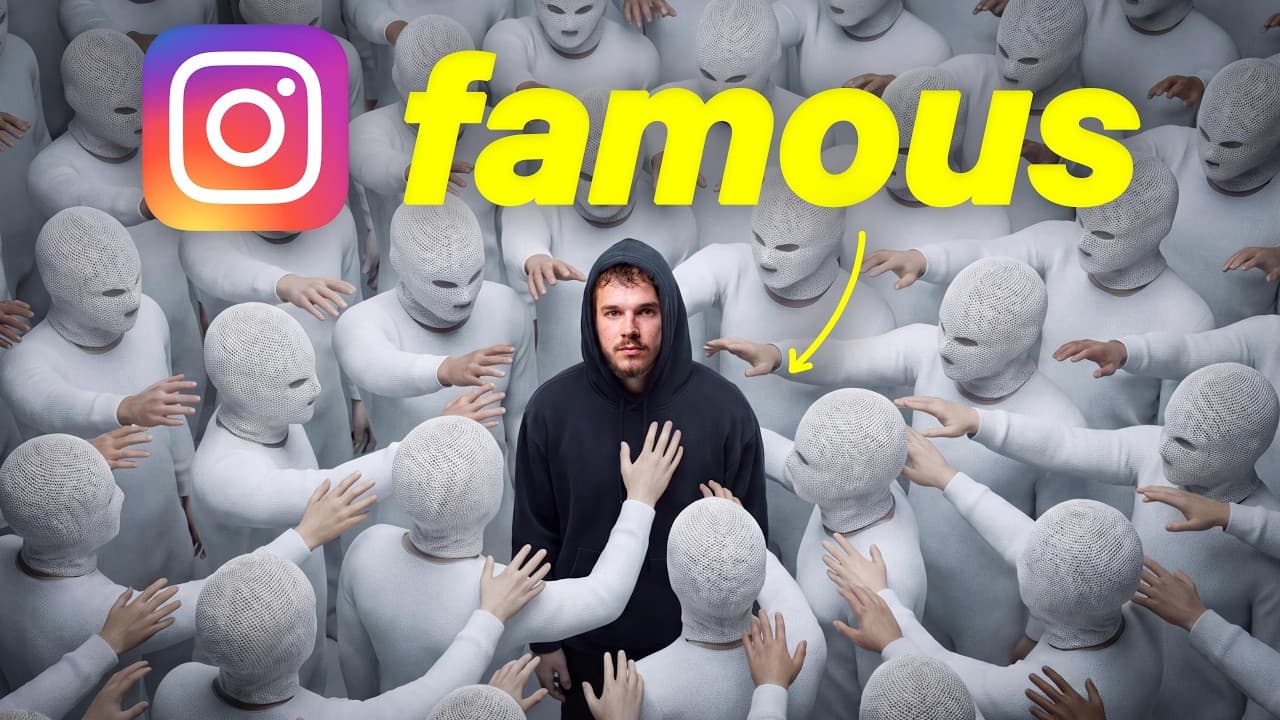
You don't just want followers. You want followers that would notice if you disappear, who would be pissed if you disappear tomorrow and would maybe even do anything you say. What this comes down to is building a cult-like personal brand. I'm Ronnie. I've generated 10 million followers and 10 billion views for clients with content. So, there's six c... Read More
Key Insights
- Dogma is the core belief a creator would bet their reputation on. Repeating beliefs formed through personal experiences helps audiences understand the creator's worldview, identify shared values, and develop the connection that supports trust over time.
- An AI-guided life-story interview is presented as a way to uncover personal dogma. A creator can narrate important memories, relationships, emotions, and transformations, then ask the AI to pose clarifying questions that reveal recurring beliefs worth expressing in content.
- Personal branding is described as the process of scaling reputation through associations. When audiences repeatedly have a positive experience with a creator, they form a favorable preconception that can make them more receptive to the creator's future educational or promotional content.
- Credibility is third-party demonstrated proof that a creator can produce the outcomes they claim. Client transformations, testimonials, before-and-after examples, and other evidence help followers see the creator as an authority whose guidance may produce a desired result.
- Liking a creator is not sufficient for accepting specialized advice. Followers also need evidence that the creator has achieved something admirable or helped people like them, because personal trust does not automatically establish competence in business, content, or fitness.
- Personality consists of the distinctive traits, behaviors, mannerisms, humor, speaking patterns, and other qualities that combine into an individual identity. Capturing those qualities naturally can differentiate content while preventing creators from becoming trapped inside an invented public persona.
- Authentic conversation is presented as a practical method for revealing personality on camera. A director or conversation partner can interact with the creator, draw out useful ideas, encourage jokes, and capture genuine moments that might disappear during a rigid performance.
- Counterpositioning works through contrast by defining both what a creator supports and what the creator opposes. Standing apart attracts attention like a contrasting mark on a plain surface, while giving audiences a clearer reason to align with or reject the creator's position.
Install to Summarize YouTube Videos and Get Transcripts
Explore YouTube Video Summarizer or Get YouTube Transcript Extractor
Questions & Answers
Q: How do you build a loyal personal brand audience?
A loyal personal brand audience is built by combining clear dogma, demonstrated credibility, authentic personality, and counterpositioning. State the beliefs that define your worldview, provide proof that you have helped relevant people, communicate as your real self, and identify what you support and oppose. Together, these elements create emotional connection, authority, differentiation, and a recognizable reputation.
Q: What is dogma in personal branding?
Dogma is the core belief or worldview that a creator would be willing to stake their reputation on. These beliefs can concern an industry, money, parenting, relationships, psychology, mindset, or life more broadly. Repeating them throughout content helps people with a similar perspective recognize the creator, feel connected, and gradually develop trust in that person's authority.
Q: How can AI help identify your core brand beliefs?
A creator can use an AI assistant to conduct an interview based on their life story. The process involves describing early memories, important relationships, emotional experiences, personal transformations, and the path leading to the present. After receiving that background, the AI can ask clarifying questions designed to identify the beliefs produced by those experiences and suitable for recurring content.
Q: Why do personal beliefs matter for a business-focused brand?
Personal beliefs matter because people continue to do business with people they like and trust. Sharing a worldview allows similar people to connect with the creator beyond purely tactical business advice. Over time, that connection can build trust and a favorable bias, making audiences more likely to take later educational content, offers, and claims of expertise seriously.
Q: What counts as credibility in personal branding?
Credibility is demonstrated proof from outside the creator's own claims that they can produce meaningful outcomes. It can include client transformations, testimonials, before-and-after examples, and other evidence of results. Such proof shows potential followers or customers that the creator has helped people like them, giving them a concrete reason to respect the creator's advice and authority.
Q: Why is being liked not enough to establish authority?
Being liked creates personal affinity, but it does not prove expertise in a specific area. Someone may trust a longtime friend deeply while still rejecting that friend's business, content, or fitness advice. Authority requires credibility, meaning evidence that the person has achieved an admired result or successfully helped comparable people obtain an outcome the audience wants.
Q: How can creators show their real personality in content?
Creators can show their real personality by recording natural conversations instead of performing an artificial content persona. A director or conversation partner can ask questions, draw out useful ideas, encourage humor, and capture characteristic mannerisms or speaking patterns. The goal is to present the same person viewers would encounter privately, including their genuine voice, jokes, energy, and behavior.
Q: What is counterpositioning in personal branding?
Counterpositioning is differentiation through contrast. A creator chooses both the ideas they stand for and the ideas they stand against, making their position distinct from surrounding voices. The transcript compares this effect to a red circle on white paper or one visibly different person in a lineup: attention naturally moves toward the element that does not match its surroundings.
Summary & Key Takeaways
-
A strong personal brand begins with dogma, the core beliefs a creator is willing to defend publicly. Sharing recurring beliefs about business, relationships, parenting, money, mindset, or life helps like-minded people connect with the creator. That connection can develop into trust and a favorable perception over time.
-
Credibility turns personal connection into authority by providing third-party proof of results. Transformations, testimonials, client outcomes, and before-and-after examples demonstrate that a creator has helped people resembling the intended audience. Being liked may earn attention, but demonstrated competence gives followers a reason to take recommendations and services seriously.
-
Personality and counterpositioning make a creator recognizable in a crowded market. Creators should capture their natural humor, speech, mannerisms, and conversational behavior instead of adopting an artificial persona. They should also define what they support and oppose, using contrast to attract attention and distinguish their worldview from surrounding content.
Read in Other Languages (beta)
Share This Summary 📚
Summarize YouTube Videos and Get Video Transcripts with 1-Click
Try YouTube Summary with ChatGPT & Claude or YouTube Transcript Generator
Explore More Summaries from Ronny Mitchell 📚

Summarize YouTube Videos and Get Video Transcripts with 1-Click
Try YouTube Summary with ChatGPT & Claude or YouTube Transcript Generator