How to Build a Personal Brand Through Real Expertise
TL;DR
Build a personal brand by developing useful skills, sharing firsthand experiences, and earning trust through repeated exposure. Treat organic discovery as an orbiting cycle rather than a linear funnel, support lessons with credible stories, address the needs of unfamiliar viewers, and edit every piece for high value per second.
Transcript
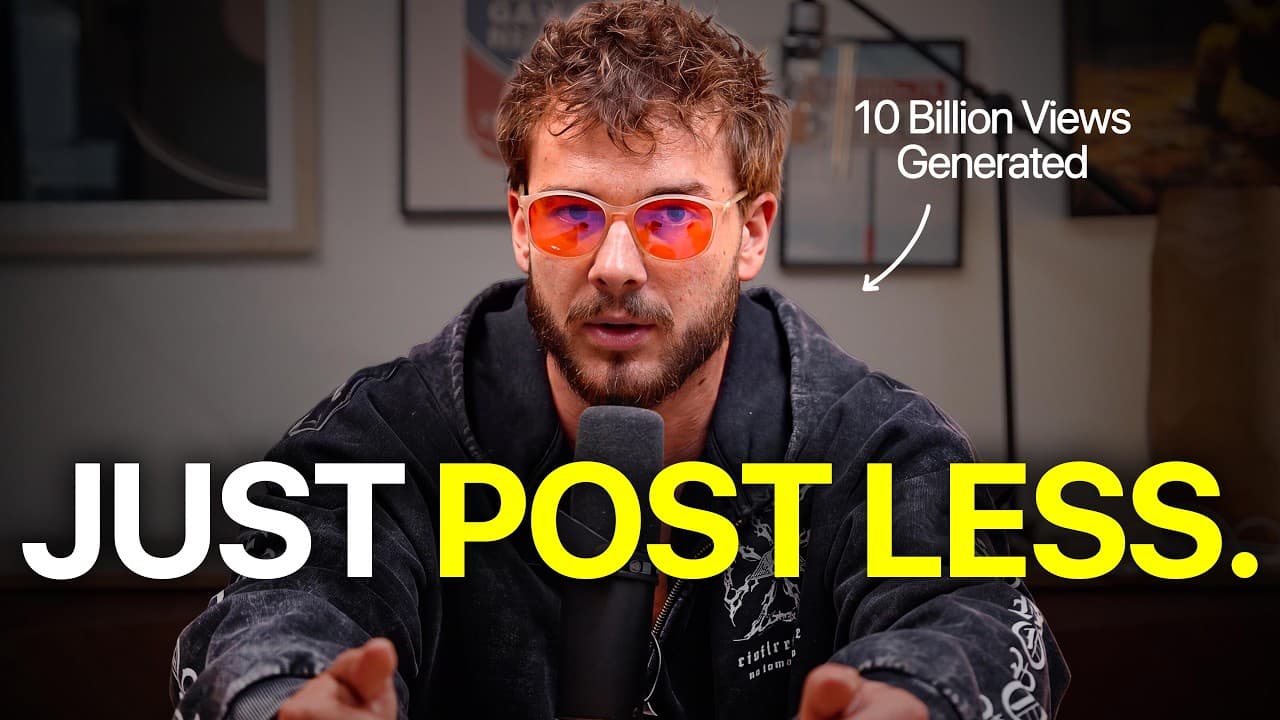
This is brutally honest content advice from growing 10 million followers and generating 10 billion views. I'm Ronnie Mitchell. I've been a creative director for the last 5 years and I've taken normal everyday people and helped them grow millions of followers. Personal branding isn't a funnel. It's an orbiting cycle. If you track the path of how peo... Read More
Key Insights
- Organic personal branding is an orbiting cycle in which people repeatedly encounter a creator while consuming content from many accounts. Each encounter is an opportunity to build recognition and trust, eventually turning some viewers into followers and a percentage of followers into customers.
- A personal brand cannot scale beyond its utility to society because attention follows usefulness. On social media, creators earn views and followers by serving people well, whether their value comes from solving practical problems, providing education, creating entertainment, or offering another benefit people genuinely want.
- Skill stacking is the process of combining several accessible abilities into a larger, more valuable capability. Effective content creation can require interesting communication, education, emotional impact, visual composition, video editing, and judgment about which recorded ideas deserve publication.
- Stories make lessons credible because audiences continually assess whether a creator has earned the right to make a claim. A principle supported by a concrete experience, measured outcome, or difficult event provides context and proof that a generic statement cannot supply by itself.
- Secondhand knowledge makes creators interchangeable because audiences can bypass a person who repeats industry leaders and visit the original source. Firsthand experiences, including recent difficulties and the lessons drawn from them, give content a distinctive basis that competing accounts cannot reproduce exactly.
- Growth content must provide enough context for people who have never encountered the creator. Instead of focusing only on existing followers and their familiar concerns, creators should understand the pain points of the audience they want and make each post accessible to those cold viewers.
- Value per second matters more than simply extending the amount of useful material. Creators should sequence recorded ideas carefully, remove repetition and filler, and retain only essential information, applying the same discipline to both short-form and long-form content.
- A creator's younger self can define a focused audience more effectively than an attempt to address everyone. Content built around specific past struggles and the ways they were overcome can resonate with people facing similar problems, while later experiences provide additional versions of that younger self to serve.
- More videos from this channel:
- More from this channel: Ronny Mitchell
Install to Summarize YouTube Videos and Get Transcripts
Explore YouTube Video Summarizer or Get YouTube Transcript Extractor
Questions & Answers
Q: How does the orbiting cycle of personal branding work?
The orbiting cycle describes how people encounter a creator repeatedly while also following many other accounts and consuming different media. They may first notice the creator, recognize them during later encounters, and gradually develop trust. That trust can turn viewers into followers, then turn a percentage of those followers into customers. Organic behavior therefore does not usually follow a tight, immediate sequence from viewing to buying.
Q: Why does usefulness determine personal brand growth?
Usefulness determines growth because people reward creators who serve them with attention, views, and follows. That service can involve solving a practical problem, teaching a valuable skill, creating emotion, or providing entertainment. The central claim is that a brand cannot scale beyond its utility to society. A creator seeking a larger audience therefore needs knowledge or abilities that enough people consider worth their attention.
Q: How can skill stacking strengthen a personal brand?
Skill stacking strengthens a personal brand by combining several smaller abilities into one rare and useful capability. Content creation, for example, involves saying interesting things, educating people, creating emotion, crafting visuals, editing footage, and deciding what to publish. Practicing these connected skills gives the creator more useful experience, while discussing the resulting lessons supplies original material that can attract and serve an audience.
Q: Why should creators teach through stories instead of isolated lessons?
Stories show how a creator reached a conclusion and give audiences evidence for evaluating the lesson. A broad claim without relevant experience can sound unearned, especially when the creator's circumstances do not support it. By contrast, a lesson connected to a real project, result, or difficult event provides context and credibility. The audience can see both what happened and why the creator believes the principle is valid.
Q: How can creators avoid producing secondhand content?
Creators can avoid secondhand content by drawing ideas from work, challenges, experiments, and lessons they experienced directly. One practical approach is to identify a hard event from the week, determine what it taught, and record a video connecting the experience to the lesson. This produces firsthand knowledge instead of repeating an industry leader's phrasing, making the creator less interchangeable with accounts that merely recycle existing information.
Q: How should content target people who do not follow the creator?
Content intended for growth should address viewers with no prior familiarity and include the context they need to understand its value. Creators can examine the audience they want, identify that audience's pain points, and speak directly to those problems. Existing followers may already understand recurring references or assumptions, but unfamiliar viewers do not. Designing for cold audiences expands the number of people who can recognize the content as relevant.
Q: What does value per second mean in content creation?
Value per second means maximizing the density of essential, useful material rather than measuring value by how many seconds a piece contains. After filming, the creator should sequence the strongest ideas and remove filler, repetition, and sections that do not justify their time. This editing principle applies to both short-form and long-form work, helping every retained segment contribute meaningfully to the audience's experience.
Q: Why should creators make content for their younger selves?
A younger self gives the creator one concrete person to address, preventing vague attempts to speak to everyone. The creator can identify specific past challenges, explain how those problems felt, and share the experiences that helped overcome them. People facing similar situations may recognize themselves in those accounts. As the creator gains more experience, additional past stages provide new versions of that younger self and support broader subject matter.
Summary & Key Takeaways
-
Organic personal branding works as a recurring cycle of exposure, recognition, trust, following, and eventual purchasing, rather than a rigid funnel. Because audiences follow many accounts and consume varied media, creators must provide value whenever they reappear. Each useful interaction strengthens the relationship and moves some viewers closer to becoming customers.
-
A personal brand grows according to the creator's usefulness and expertise. Building that usefulness requires stacking smaller abilities, such as explaining ideas, educating viewers, creating emotion, designing visuals, editing footage, and selecting what to publish. Creators can then turn lessons from practicing those skills into valuable, experience-based content.
-
Credible content combines personal stories, clear context, and efficient editing. Creators should address unfamiliar viewers while speaking to a recognizable person, such as their younger self. Removing fluff raises value per second, while sharing difficult experiences and the lessons they produced differentiates original expertise from recycled information found elsewhere online.
Read in Other Languages (beta)
Share This Summary 📚
Summarize YouTube Videos and Get Video Transcripts with 1-Click
Try YouTube Summary with ChatGPT & Claude or YouTube Transcript Generator
Explore More Summaries from Ronny Mitchell 📚
Summarize YouTube Videos and Get Video Transcripts with 1-Click
Try YouTube Summary with ChatGPT & Claude or YouTube Transcript Generator