How to Win High-Ticket Home Service Clients
TL;DR
Choose a service with a large average order value, limited customer decisions, and enough complexity to deter general handymen. To win early customers without an established track record, build a clear, professional brand, make the service immediately understandable, validate demand, respond to leads quickly, and use a focused sales process that can close valuable projects in one meeting.
Transcript
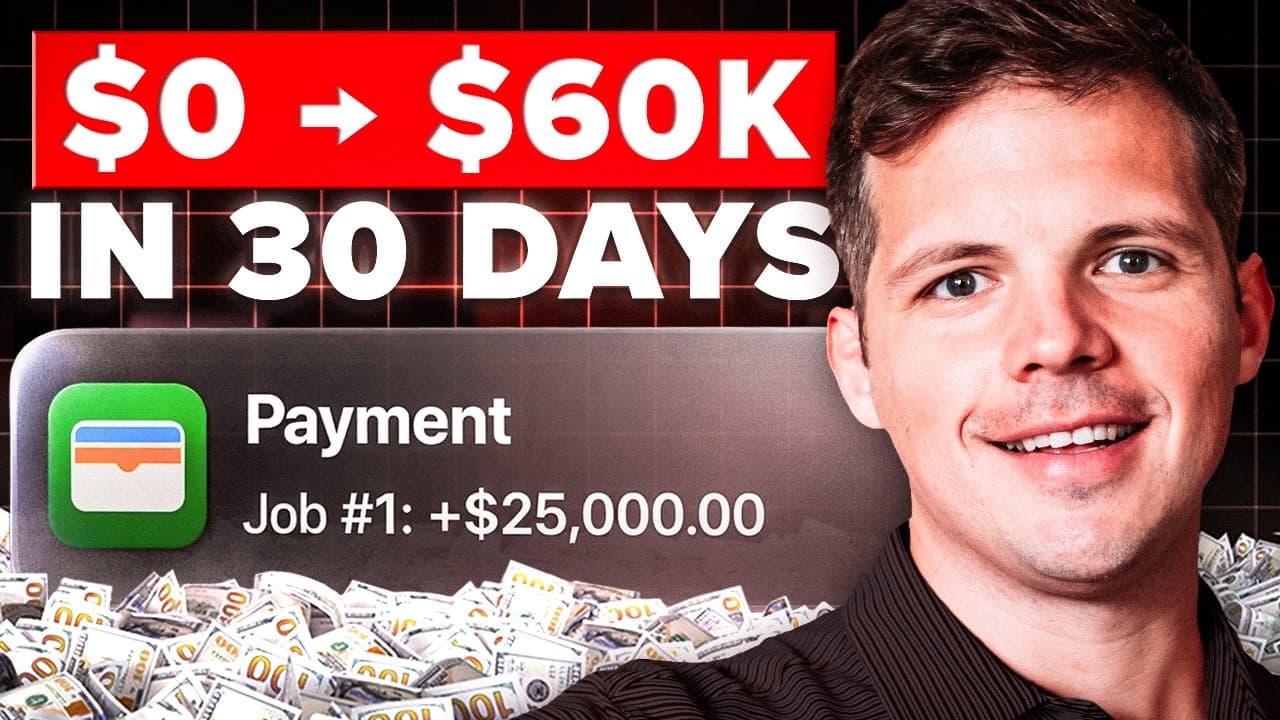
The first month I closed $60,000 in business. Three jobs, like a small one and then two mediumsized jobs. We've probably done 7 or $8 million of revenue all organic driven. >> That's basically free. >> Yeah. >> These are $50,000 jobs. >> Yeah. I didn't want to do super high volume, low ticket, something like custom home building where there are lit... Read More
Key Insights
- Service selection is strongest when a relatively large average order value is paired with a small number of customer decisions. Fewer variables reduce opportunities for mistakes and expectation mismatches while preserving the revenue potential of each completed project.
- Deck building is complex enough to discourage many general handymen but simpler than custom home construction. A basic project may require decisions about shape, material, and railing, while larger projects can involve lighting, outdoor kitchens, foundations, and more extensive project management.
- A one-meeting close is possible when the offer has few major variables. Jameson describes selling a $50,000 deck through three core decisions in roughly an hour, giving the contractor a focused sales conversation instead of a prolonged sequence of design choices.
- Jameson’s first month generated $60,000 from three projects, consisting of one small job and two medium-sized jobs. His first year produced just under $1 million, despite beginning without deck-building experience, although the source does not present these results as guaranteed.
- Brand is a tool for creating an emotional connection through appearance, presentation, and language. Its practical components include the business name, logo, colors, fonts, website, uniforms, vehicles, printed materials, and signage, all of which influence perceived professionalism.
- A local service name is clearest when it combines the service area with the service offered. A name such as Dallas Decks immediately communicates what the company does, while a generic personal or construction-company name can make the offer harder to understand.
- Affordable design exploration works by hiring five designers for $200 each to produce 20 concepts apiece. This creates 100 possible directions for $1,000, after which the strongest three concepts can be refined by another designer into a coordinated brand kit.
- Professional presentation can partially compensate for an absent track record during an early sales meeting. Jameson argues that a six-out-of-ten or seven-out-of-ten brand helps a new operator appear more credible even without prior projects, industry experience, or customer social proof.
Install to Summarize YouTube Videos and Get Transcripts
Explore YouTube Video Summarizer or Get YouTube Transcript Extractor
Questions & Answers
Q: How do you choose a profitable home service niche?
Choose a service with a relatively large average order value, a limited number of customer decisions, and enough complexity to discourage casual competitors. Jameson selected deck building because it avoids the high volume of lower-ticket work and the hundreds of decisions involved in custom homes. The model still requires craft and project management, but its narrower scope reduces opportunities for mistakes and expectation mismatches.
Q: Why can fewer customer decisions improve a service business?
Fewer customer decisions reduce the number of variables that can go wrong during selling and delivery. A basic deck may require agreement on its shape, material, and railing, while a custom home can involve four or five hundred decisions. When the scope is simpler, the operator can communicate expectations more clearly, close faster, and limit the chances that a customer interprets the finished work differently.
Q: How can a contractor close a high-ticket project in one meeting?
A contractor can structure the meeting around a small set of essential choices and present a clear, understandable offer. Jameson describes a $50,000 deck sale involving roughly three decisions within an hour. The exact process is not presented as effortless, but reducing the decision count allows the contractor to address the project’s main variables without turning the sale into a long, complicated design engagement.
Q: How should a local home service business be named?
The recommended naming formula combines the service area with the service itself, making the company’s purpose impossible to misunderstand. Dallas Decks is given as an example because a person finding it through Google immediately knows what it offers. The process should also consider whether a suitable dot-com domain is available, as domain availability helped determine the West Coast Decks name.
Q: How can a new contractor build a professional brand affordably?
Start by collecting visual references from Pinterest, Behance, Dribbble, or agency portfolios, including inspiration from industries outside construction. Then hire five designers for $200 each and request 20 concepts from each one. After reviewing the resulting 100 concepts, select three promising directions and pay another designer roughly $500 to $750 to refine them into a professional kit.
Q: What should a home service brand kit include?
A professional brand kit should coordinate the visual elements customers encounter across the business. The transcript identifies the logo, typography, colors, uniforms, vehicles, website, printed collateral, and signage as important components. Consistency across these assets helps the company create an emotional connection and appear established, which is especially valuable when the operator has no previous projects, industry background, or customer social proof.
Q: Why does branding matter before a contractor has social proof?
Branding gives a new contractor a way to signal professionalism before reviews and completed projects exist. Jameson argues that an intelligently developed six-out-of-ten or seven-out-of-ten brand can provide an early advantage. Clear language, polished visuals, suitable uniforms, and consistent materials cannot replace delivery, but they can improve how customers perceive an inexperienced business during its first sales conversations.
Q: What results did Jameson report from starting a deck business?
Jameson reported closing $60,000 in business during his first month through three projects, including one small job and two medium-sized jobs. His first year produced just under $1 million, and the business later generated about $7 million to $8 million through organic growth. These figures describe his experience only, and the description explicitly says that earnings, outcomes, and success are not guaranteed.
Summary & Key Takeaways
-
Jameson selected deck building because it combines relatively large project values with fewer customer decisions than custom home construction. A typical sale can focus on the deck’s shape, material, and railing, making expectations easier to manage while retaining enough technical and project-management complexity to discourage many general handymen from competing.
-
His first month produced $60,000 from three jobs, followed by just under $1 million in the first year. The broader business later generated about $7 million to $8 million through organic growth. These outcomes illustrate the potential of a high-ticket local service, but the description explicitly states that results are not guaranteed.
-
The launch strategy centered on creating a professional brand before having experience or social proof. Jameson recommends a clear geographic and service-based name, researching visual references, commissioning many inexpensive concepts, and refining selected ideas into a complete design kit covering the logo, typography, colors, uniforms, and related presentation materials.
Read in Other Languages (beta)
Share This Summary 📚
Summarize YouTube Videos and Get Video Transcripts with 1-Click
Try YouTube Summary with ChatGPT & Claude or YouTube Transcript Generator
Explore More Summaries from Chris Koerner on The Koerner Office Podcast 📚






Summarize YouTube Videos and Get Video Transcripts with 1-Click
Try YouTube Summary with ChatGPT & Claude or YouTube Transcript Generator