How Profitable Are Two Etsy Print on Demand Shops?
TL;DR
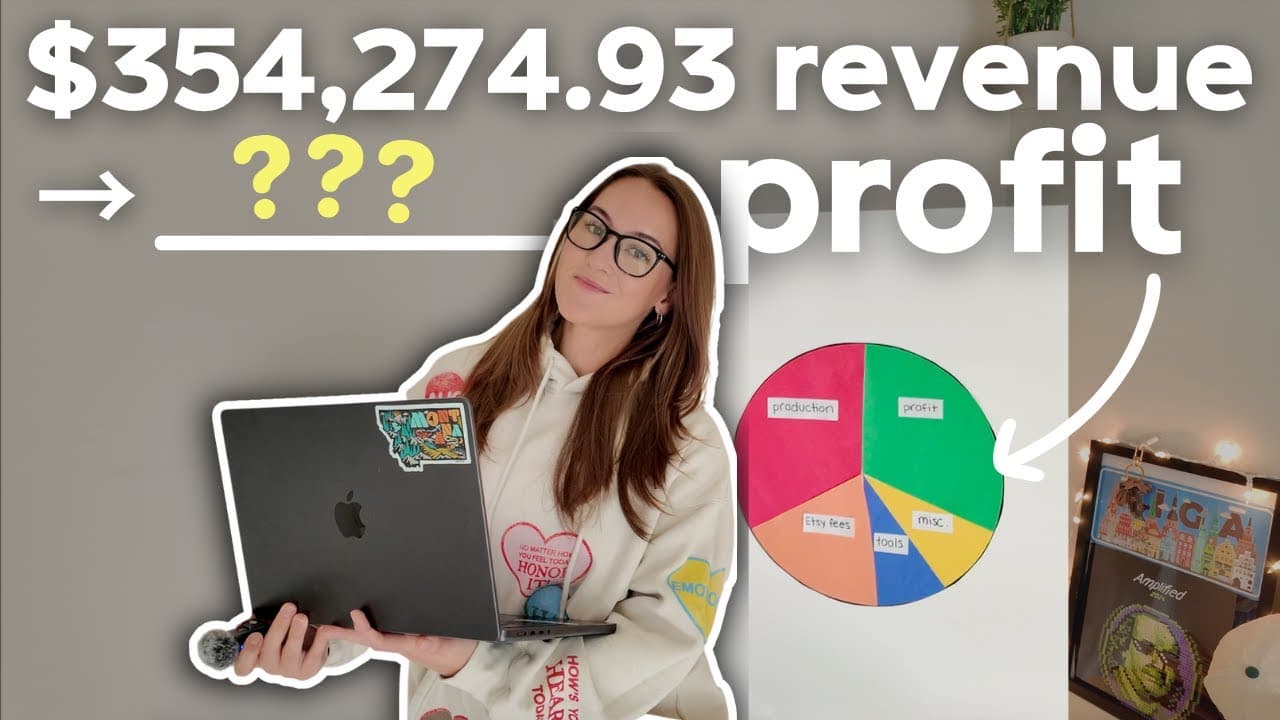
Two Etsy print-on-demand shops produced a reported gross profit of $98,160.47 from January through July after production, marketplace fees, tools, and miscellaneous expenses. The owner sets aside 30% for taxes and reported take-home income of $68,825.40, which exceeded her former corporate salary despite covering only seven months.
Transcript
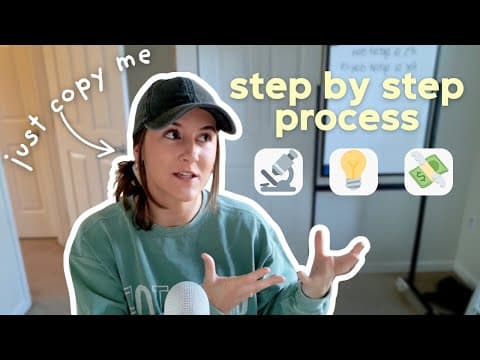
I've been sharing monthly income breakdowns of both of my Etsy shops for quite some time, but today I want to zoom out a little bit and show you the full picture. I quit my corporate job in January of 2024 and have been fully supporting myself with print on demand income for a little over a year and a half now. And in this video, I want to walk you... Read More
Key Insights
- Profit is the owner’s primary measure of business success because revenue does not show how much remains after production, marketplace fees, subscriptions, supplies, and taxes. A high-revenue operation may still fail to provide enough personal income to support its owner.
- Production and shipping are the largest reported expenses for the two shops, totaling $142,969.10 from January through July. These payments go to print providers such as Printify and Printful and represent the cash required to manufacture and deliver customer orders.
- A business credit card can earn rewards on necessary production spending, according to the owner’s cash-flow strategy. Because substantial provider charges already pass through the business, she uses the resulting points for expenses such as airfare, hotels, and other travel.
- Etsy fees totaled a reported $35,427.49 from January through July. The owner considers these fees reasonable for access to an established marketplace and incorporates the expected deductions into product prices so each sale can still reach her intended profit level.
- Paid tools are helpful but not universally necessary for starting a print-on-demand business. The owner reported spending $461.98 on tools, including Printify Premium, E-Rank, and Canva, while noting that some other subscriptions were gifted and therefore absent from her costs.
- An iPad and Canva were enough for the owner to begin her print-on-demand business. She did not own a laptop or pay for numerous tools at the start, yet she says the business eventually replaced her corporate salary, showing that limited equipment did not prevent progress.
- Gross profit was reported as $98,160.47 after production, Etsy fees, tools, and miscellaneous expenses for January through July. This amount was still before taxes, so it did not represent the owner’s final personal take-home income.
- A 30% tax reserve is part of the owner’s financial system, based on the professional guidance she personally received. She keeps the reserved money in a high-yield savings account, where it can earn interest until taxes become due.
Install to Summarize YouTube Videos and Get Transcripts
Explore YouTube Video Summarizer or Get YouTube Transcript Extractor
Questions & Answers
Q: How profitable were the two Etsy print-on-demand shops?
The two Etsy print-on-demand shops generated a reported gross profit of $98,160.47 from January through July after production, shipping, Etsy fees, paid tools, and miscellaneous business expenses. That figure was before taxes. After reserving money for taxes, the owner reported take-home income of $68,825.40, which she said exceeded her former corporate salary.
Q: What was the largest print-on-demand business expense?
Production and shipping were the largest reported expenses, totaling $142,969.10 between January and July. This category included payments to print providers such as Printify and Printful, along with shipping costs. The total illustrates why revenue alone does not reveal profitability, since a substantial portion of sales proceeds must cover manufacturing and order delivery.
Q: How much did the seller pay in Etsy fees?
The seller reported paying $35,427.49 in Etsy fees from January through July across two print-on-demand shops. She accounts for these charges when setting product prices, using the expected fee deductions to determine whether a sale will still deliver the desired profit. She views the fees as reasonable for access to Etsy’s existing marketplace traffic.
Q: How does the seller manage taxes on print-on-demand profit?
The seller sets aside 30% of her gross profit for taxes, following the guidance she personally received. She stressed that this approach is not tax, legal, or business advice and that individual circumstances differ. The reserved money is placed in a high-yield savings account so it can earn interest while waiting to be used for taxes.
Q: How much money did the seller reserve for taxes?
The seller reported setting aside $29,874.40 for taxes during the January-to-July period. She explained that reserving 30% does not necessarily mean the entire amount will ultimately be paid in taxes because personal circumstances and business structure can affect the final obligation. Her business is structured as an S corporation, and she pays herself a salary.
Q: What tools did the print-on-demand seller pay for?
The seller reported paying $461.98 for business tools, including Printify Premium, E-Rank, and Canva. She often chooses annual subscriptions because paying upfront can provide a better price. Some subscriptions she uses were gifted, so the reported total does not represent the full value of every tool involved in operating her shops.
Q: Do beginners need expensive tools for print on demand?
Beginners do not need numerous paid tools according to the seller’s experience. She started with an iPad rather than a laptop, and Canva was her main paid tool from the beginning. She recommends starting with available resources, testing free trials, and adding subscriptions only after determining which tools genuinely help the specific business workflow.
Q: Why should print-on-demand sellers focus on profit instead of revenue?
Print-on-demand sellers should focus on profit because revenue includes money that must still pay for production, shipping, marketplace fees, tools, supplies, and taxes. Large sales totals can look impressive without providing sustainable personal income. The owner therefore evaluates what remains after operating costs and tax reserves when determining whether the business supports her living expenses.
Summary & Key Takeaways
-
The breakdown covers two Etsy print-on-demand shops from January through July. The owner has earned money from print on demand for almost three years and has supported herself with it full time since leaving her corporate job in January 2024. She emphasizes that sustainable profit matters more than impressive revenue figures.
-
Production and shipping represented the largest reported expense at $142,969.10, followed by $35,427.49 in Etsy fees. Paid business tools cost $461.98, while miscellaneous expenses were estimated at about $420. The owner accounts for marketplace fees when pricing products and uses a business credit card for required production spending.
-
After the listed operating expenses, the owner reported $98,160.47 in gross profit before taxes. She sets aside 30% for taxes in a high-yield savings account and reported $29,874.40 reserved. Her stated take-home amount was $68,825.40, exceeding her previous corporate salary during the January-to-July reporting period.
Read in Other Languages (beta)
Share This Summary 📚
Summarize YouTube Videos and Get Video Transcripts with 1-Click
Try YouTube Summary with ChatGPT & Claude or YouTube Transcript Generator
Explore More Summaries from Taylor Posada 📚


Summarize YouTube Videos and Get Video Transcripts with 1-Click
Try YouTube Summary with ChatGPT & Claude or YouTube Transcript Generator