How to scale a new Etsy print on demand shop
TL;DR
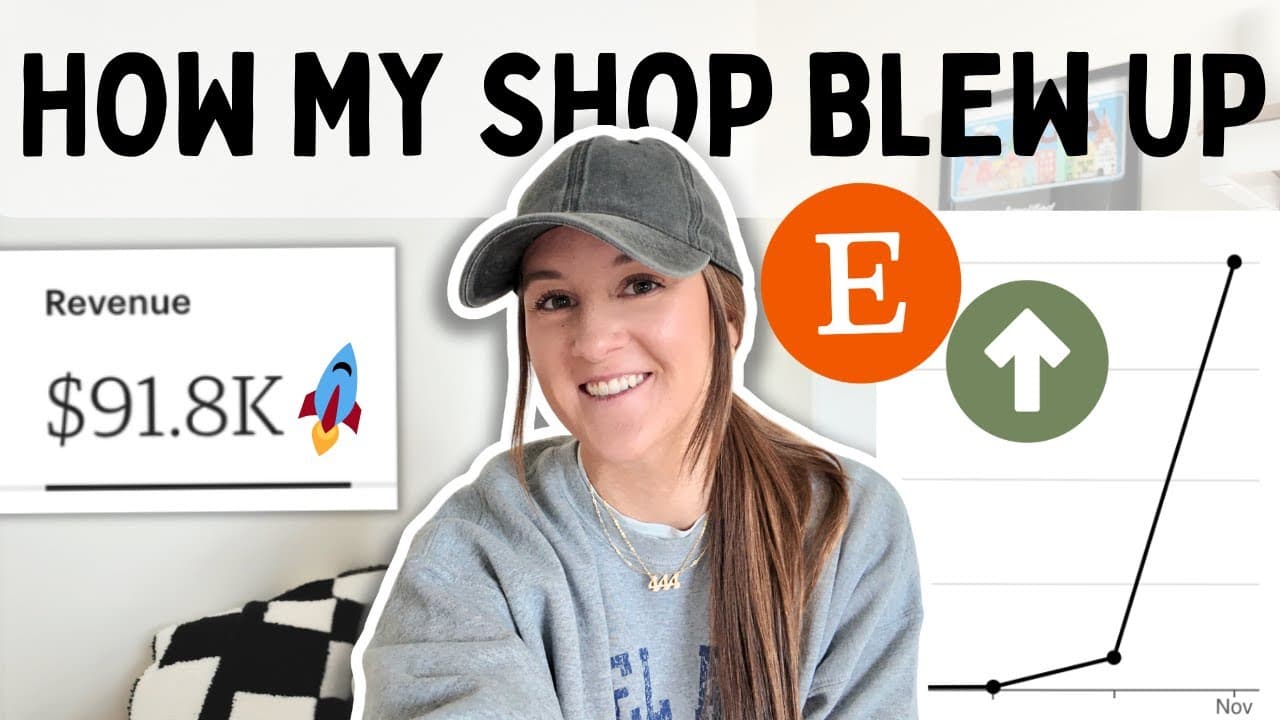
Ads data guided growth and a niche focused approach drove rapid sales. By October the shop began with a handful of listings, then five sales from a single listing, and overall momentum grew as consistent listing and design variety widened appeal. The strategy emphasizes data, visibility settings, and selective product focus to scale quickly.
Transcript
let's talk about my brand new print on demand shop I'm excited to break down all of the numbers what's been going really well what's been working the strategies I've been implementing you might have already seen But I shared a little Glimpse at what has been going on in this shop and it has absolutely blown up and I'm sure that you are probably won... Read More
Key Insights
- The shop chose a broad events niche to allow year round relevance and multiple product types without losing focus on a core theme. This enables scalable experimentation while maintaining a clear audience.
- The initial product type was signage because it carries a higher price point and aligns with events, helping test pricing, shipping, and visibility dynamics without diluting focus.
- The shipping visibility metric on Etsy influenced strategy; keeping shipping costs consistent was tested to understand its impact on search visibility rather than forcing price changes.
- The creator used Printify as the print partner for all products in this shop, ensuring consistency across listings and simplifying logistics.
- A disciplined listing cadence was maintained, listing 5 to 10 unique designs per week to build data on what thumbnails and designs perform best.
- Ad data was used as a learning tool, not just a sales channel, to extract insights on customer behavior, conversion drivers, and product performance.
- Early sales momentum began after turning on ads on October 1, with rapid uptake when one listing demonstrated strong performance.
- The strategy involved validating design styles with data before expanding into additional product types, avoiding overextension while maintaining growth potential.
Install to Summarize YouTube Videos and Get Transcripts
Explore YouTube Video Summarizer or Get YouTube Transcript Extractor
Questions & Answers
Q: A real search query question about the video (e.g. 'How to...', 'What is...', 'Why does...', 'When should...'). Question 1
How can a new Etsy print on demand shop achieve rapid growth using a niche focused strategy? The video shows that selecting a broad events niche provides year round demand and room to expand into multiple product types while keeping a tight focus on designs that resonate with the target audience. Starting with a single high value product type like signage helps validate pricing, shipping considerations, and listing performance. By maintaining a steady listing cadence and analyzing which thumbnails convert best, the shop builds a data driven path to scale. Ads are used strategically to gather customer behavior data rather than just to chase immediate sales, enabling informed adjustments and growth planning.
Q: Question 2
What role did Etsy ads play in the growth of the shop described? Ads were treated as a source of information to learn about customer behavior and product performance. They were activated on October 1 to collect data and guide decisions, not solely to generate sales. This data informed which designs, thumbnails, and product types to prioritize, helping turn initial views into meaningful optimization insights and faster scaling.
Q: Question 3
Why did the creator start with signage as the initial product type? Signage represents a higher price point and aligns well with events, allowing the shop to experiment with pricing, shipping, and visibility without overextending resources. This approach provides a test bed for understanding how product type choices influence traffic and conversions while maintaining a clear, event oriented theme.
Q: Question 4
How did the creator approach product expansion across product types? The strategy was to validate design styles and market response with one product type first, then expand once data confirms resonance with the audience. This avoids spreading efforts too thin and ensures that new product types are added only when the core designs and audience engagement are proven, enabling sustainable growth.
Q: Question 5
What was the timeline for listing activity and its impact on performance? The shop began with listing in September, reached about 31 listings, then increased activity after a trip, listing 5 to 10 items per week. This steady cadence produced growing views, which, combined with optimized thumbnails, helped convert interest into sales and provide the data needed for scale.
Q: Question 6
How did the creator interpret the October sales spike? The spike started when consistent listing and targeted ads provided data that enabled optimization. Five sales from a single listing demonstrated the power of a well chosen design, niche alignment, and visibility strategy. The takeaway is that focused, data driven campaigns can unlock rapid early growth in a new shop.
Q: Question 7
What is the recommended approach to thumbnail testing in this case? The creator tested multiple thumbnail images to determine which mockups attracted more views, then doubled down on the best performing style for subsequent listings. This data driven approach reduces guesswork and accelerates identification of winning visuals that convert in search results.
Q: Question 8
Why is it important to pace expansion after validating concepts? Validating designs and audience fit before diversifying product types prevents wasted effort and costs. It creates a reliable foundation, allowing expansion into new product types only when data confirms that designs resonate, helping sustain long term growth rather than chasing short term wins.
Summary & Key Takeaways
-
This overview explains how a newly launched Etsy print on demand shop used data driven ads and a single niche strategy to scale rapidly, reaching significant sales in a short time. It highlights the role of visibility metrics, shipping considerations, and a disciplined listing plan.
-
The creator shares how starting with a single product type, then expanding only after validating designs, helped maintain focus and avoid spreading resources too thin while still enabling growth across related product types.
-
The video emphasizes active engagement with ads as a source of actionable data, not just revenue, and outlines mindset and operational steps for POD scaling within a niche.
Read in Other Languages (beta)
Share This Summary 📚
Summarize YouTube Videos and Get Video Transcripts with 1-Click
Try YouTube Summary with ChatGPT & Claude or YouTube Transcript Generator
Explore More Summaries from Taylor Posada 📚






Summarize YouTube Videos and Get Video Transcripts with 1-Click
Try YouTube Summary with ChatGPT & Claude or YouTube Transcript Generator