1. General Overview and the Development of Numbers
Transcript
Stanford University. I'm Keith Develin. Uh, welcome to to this continuing studies course. In fact, it's in many ways it's not a course. It's a it's a a tour of different parts of mathematics. So, it's a series of somewhat disjoint lectures. There is a theme to it in so far as there's a theme to the book that I've recommend. what I've suggested if y... Read More
Install to Summarize YouTube Videos and Get Transcripts
Explore YouTube Video Summarizer or Get YouTube Transcript Extractor
Summary
This video introduces a continuing studies course on mathematics and explores what mathematics is and what it can be used for. The speaker discusses the different branches of mathematics and provides examples of their applications in various fields.
Questions & Answers
Q: What is mathematics?
Mathematics can be thought of as the study of patterns and abstract structures. It allows us to understand and make sense of the world around us by using logical reasoning and quantitative analysis. While it is challenging and intellectual, it is also a creative discipline that allows for different ways of thinking.
Q: How has the definition of mathematics changed over time?
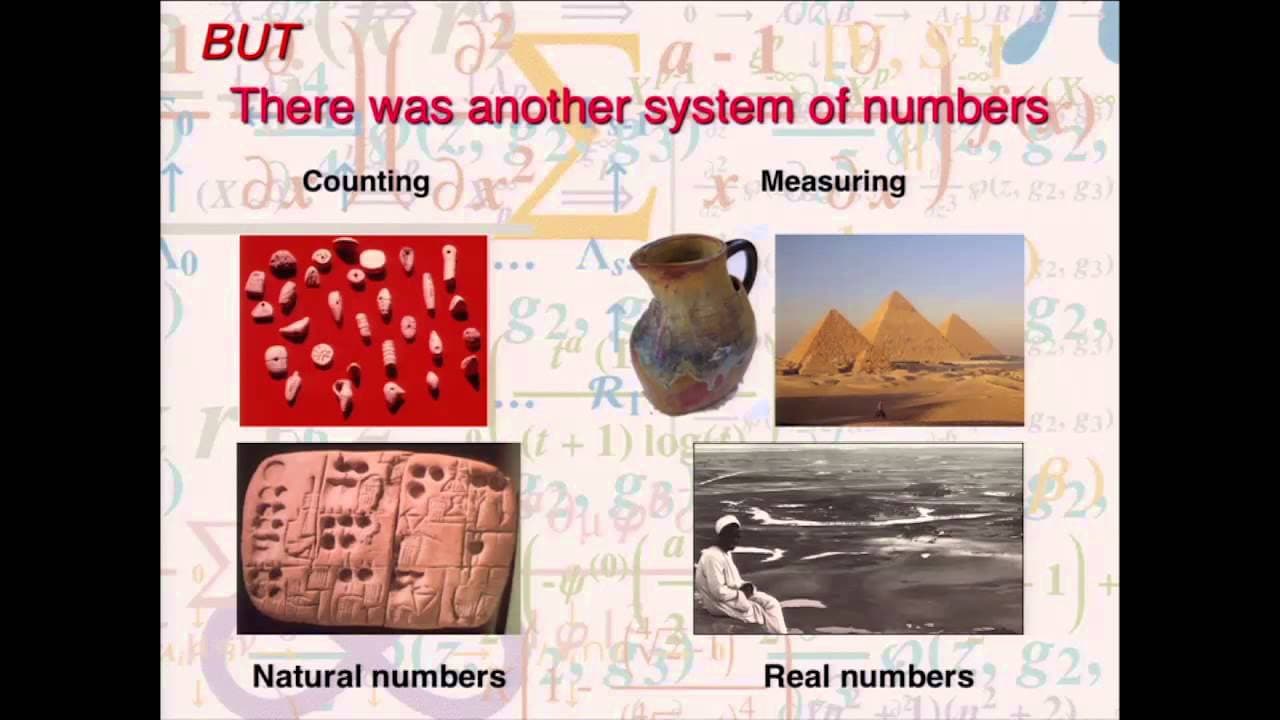
The definition of mathematics has evolved over the years. In ancient times, mathematics was primarily focused on counting and measuring. However, with the ancient Greeks, mathematics became more formalized and expanded to include the study of numbers, shapes, and algebra. In the 17th century, calculus was invented, which allowed for the study of continuous motion and change. In the 19th century, there was a shift towards understanding the foundations of mathematics, which led to new branches like real analysis and complex analysis.
Q: How is mathematics used to understand the world?
Mathematics can be used to understand the world in both an "outside in" and "inside out" manner. In the "outside in" approach, mathematics is applied to real-world phenomena, such as understanding fluid dynamics or designing aircraft. In the "inside out" approach, mathematics is used to explore and express ideas, such as in computer graphics or music encoding. By using mathematics, we can make sense of complex systems and create new technologies and innovations.
Q: What are some examples of patterns studied in mathematics?
Mathematics is a vast field that studies a wide range of patterns. Some examples include numbers and arithmetic, shapes and geometry, motion and calculus, relationships and algebra, symmetry and group theory, and reasoning and logic. These are just a few highlights, and there are many more patterns and concepts studied in mathematics.
Q: How is mathematics relevant in today's society?
Mathematics plays a crucial role in various sectors of the economy, especially in the knowledge society. It provides the tools to analyze and understand complex systems, such as networks and infrastructure. Mathematics is used in fields like finance, technology, and education to make informed decisions, improve performance, and drive innovation. It is a tool for solving problems and gaining a deeper understanding of the world we live in.
Q: How is mathematics used in athletics?
Mathematics can be used to improve athletic performance by analyzing and optimizing techniques. For example, in figure skating, mathematical analysis helped determine the correct technique for triple axel jumps. By understanding the physics and patterns of motion, athletes and coaches can make adjustments to achieve better performance.
Q: What is the misconception about lift in aviation?
One common misconception is that lift is solely due to the difference in air pressure over and under the wings of an aircraft, as explained by Bernoulli's equation. However, this explanation is incomplete and does not account for the ability of planes to fly upside down. The true explanation for lift is based on Newton's second law of motion, which states that every action has an equal and opposite reaction. By tilting the plane slightly and forcing the air downwards, there is a net flow of air downwards, creating lift.
Q: What were the origins of numbers and counting systems?
The origins of numbers can be traced back to the development of monetary systems in ancient civilizations, such as in Sumeria around 5000 BCE. Numbers were first used to represent quantities of goods and currency. This initial use of numbers for practical purposes eventually led to the development of more abstract concepts in mathematics.
Takeaways
Mathematics is a creative and logical discipline that allows us to make sense of the world through the study of patterns and abstract structures. Its applications can be found in various fields ranging from science and technology to finance and athletics. Mathematics has evolved over time, and its definitions and concepts have changed to reflect new discoveries and challenges. By understanding mathematics and its applications, we can leverage its power to solve complex problems and drive innovation in our society.
Read in Other Languages (beta)
Share This Summary 📚
Summarize YouTube Videos and Get Video Transcripts with 1-Click
Try YouTube Summary with ChatGPT & Claude or YouTube Transcript Generator
Explore More Summaries from Stanford 📚




Summarize YouTube Videos and Get Video Transcripts with 1-Click
Try YouTube Summary with ChatGPT & Claude or YouTube Transcript Generator